Hi there,
Welcome to FinSoar! Google’s parent company Alphabet, just took out the first century bond since Motorola for AI expenditure, Pinterest stocks are tumbling, and a slightly cool inflation report gazes expectantly towards the Fed:
Google Bets Investors on a Century
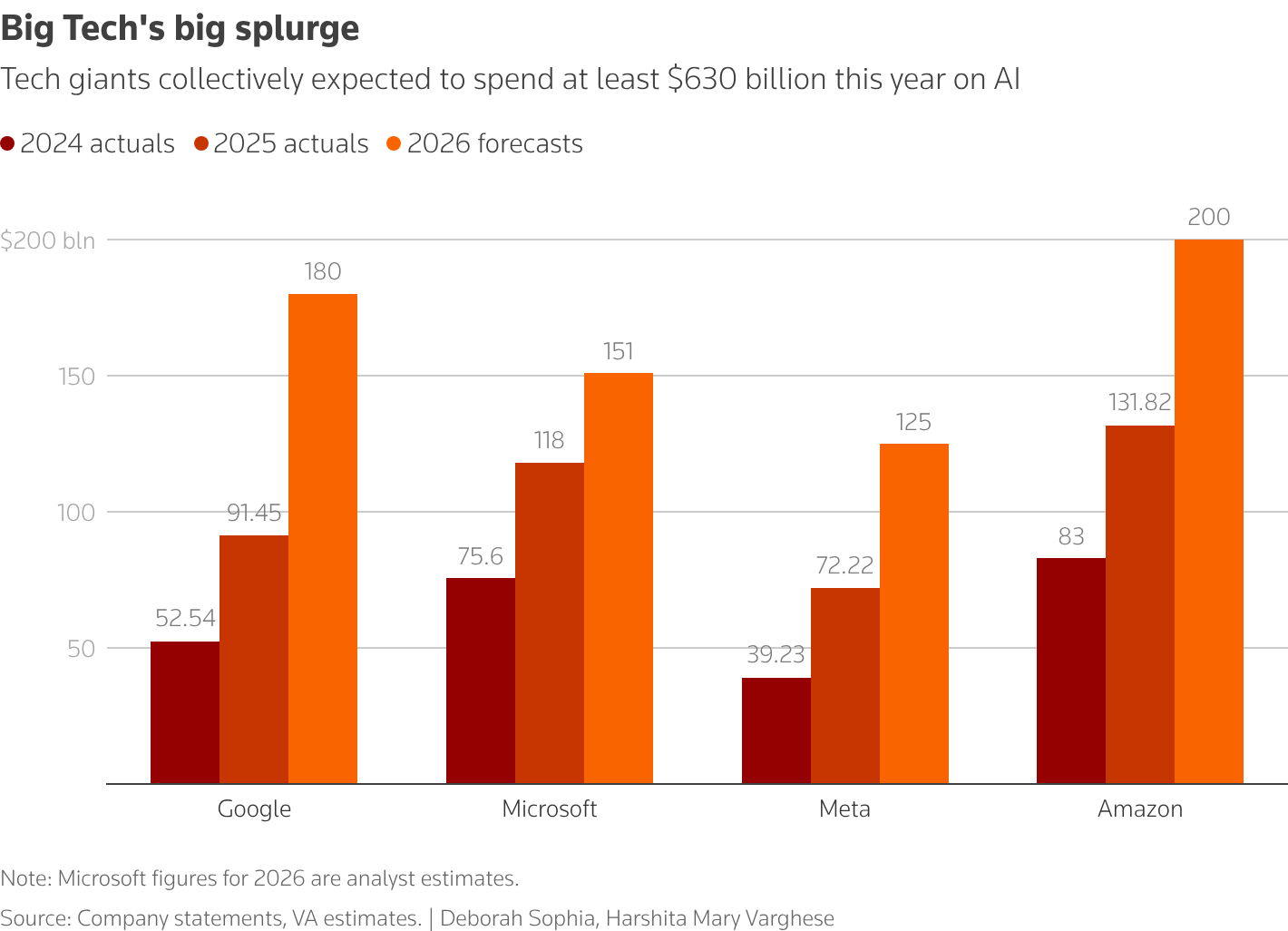
Alphabet raised nearly $32 billion in less than 48 hours this week. The headline figure was a $20 billion dollar-denominated bond sale Monday, followed by sterling and Swiss franc tranches on Tuesday. The standout piece is a £1 billion 100-year bond carrying a 6.125% coupon, the first century bond from a tech company since Motorola issued one in 1997. Demand was emphatic. The century tranche attracted nearly £9.5 billion in orders for the £1 billion on offer. Buyers are primarily pension funds and insurers seeking long-dated assets to match their liabilities, a structural pocket of demand that has few corporate options at that maturity. The money funds Alphabet's planned $185 billion in capital expenditure this year, nearly double last year's spending. Even with over $73 billion in annual free cash flow and $126 billion in cash on hand, that kind of number requires external financing. Alphabet is rated Aa2 by Moody's and AA+ by S&P, making it one of the few corporate names credible at that maturity. Alphabet isn't alone in the borrowing spree. The five major AI hyperscalers issued $121 billion in US corporate bonds last year. Oracle completed a $25 billion bond sale in early February. Barclays forecasts total US corporate bond issuance will hit $2.46 trillion in 2026, up nearly 12% from last year. The historical precedent for tech century bonds is sobering. IBM issued one in 1996 before Microsoft, and Apple eroded its dominance. JC Penney's 1997 century bond eventually sold for pennies on the dollar in bankruptcy. Of 17 surviving century bond issuers since 1990, only eight beat the S&P 500 after issuance. Bill Blain at Windshift Capital called the deal "off-the-historical scale" and described the broader AI debt boom as late-cycle frothiness. "If you're looking for a signal of a top," he told CNBC, a 100-year bond "does look a bit like a signal of a top." The bulls counter that Alphabet's position is structurally different. Last year a court ruled it was violating antitrust law but stopped short of forcing a business model overhaul. As Interactive Brokers' Steve Sosnick put it: "If you're going to lend money to someone for 100 years, a proven monopoly is probably not a bad place to go." |
Inflation Cools, But the Fed Isn't Moving Yet
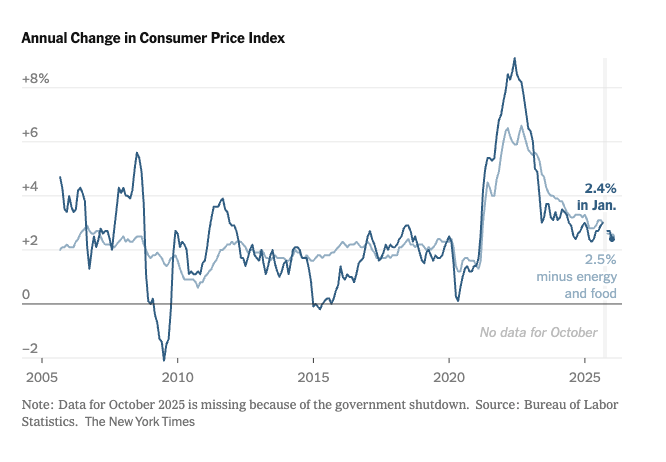
January brought better news on prices. The Consumer Price Index rose 2.4% annually, down from 2.7% in December and the lowest reading since May 2025. Economists had forecast 2.5%. On a monthly basis, prices rose just 0.2%, below the 0.3% expected. Core CPI, which strips out volatile food and energy, came in at 2.5% annually, the lowest since March 2021. Housing costs, which make up over a third of the overall index, rose just 0.2% for the month, bringing the annual increase down to 3%. Energy prices fell 1.5%. Used car prices dropped 1.8%. The softer headline number masks some pressure points. Airfares jumped 6.5% for the month. Beef prices are up 15% year over year, coffee up 18%. Tariff-sensitive categories showed continued strain. Apparel rose 0.3%, laundry equipment jumped 2.6% and computers rose 3.1%. The tariff picture is stark. Research published Thursday by the Federal Reserve Bank of New York found that 90% of the costs from Trump's 2025 tariffs landed on US firms and consumers. The average tariff rate on imports rose from 2.6% to 13% last year. The Tax Foundation estimates the 2025 increases cost the average household $1,000, rising to $1,300 in 2026. Markets took the data positively. Treasury yields slipped, with the 10-year falling to around 4.06%. Traders raised June cut odds to roughly 83% according to CME FedWatch. The Fed will not be rushing. Rates currently sit at 3.5% to 3.75% after three cuts late last year. One caveat on January's data is that CPI has overshot expectations every January in recent years due to seasonal pricing patterns. Economists also warn that companies still have tariff costs to pass through as pre-tariff inventory stockpiles run dry. Barclays' Jonathan Hill told the FT the report "lays the groundwork" for cuts, but pencilled in June and December as the most likely windows. Goldman Sachs Asset Management also sees two cuts this year, the first in June. The Fed receives one more CPI report before its March meeting. Unless something breaks sharply, it won't move then. |
Pinterest's Double Trouble: Tariffs and AI
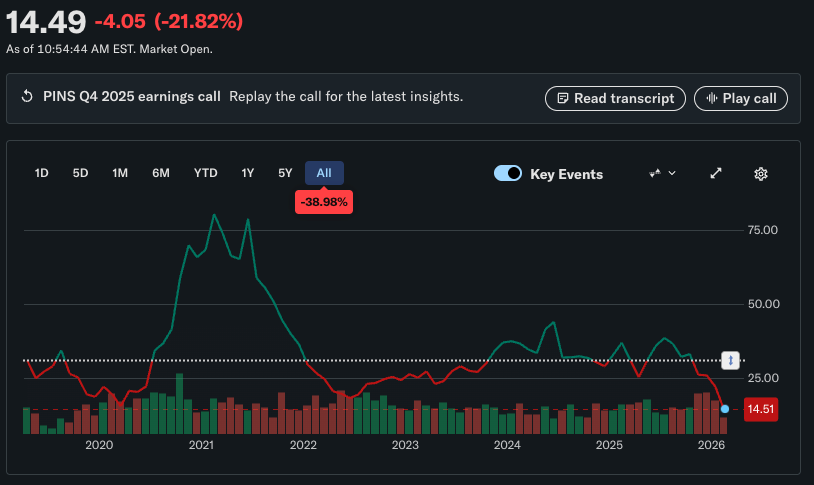
Pinterest shares plunged more than 20% in after-hours trading Thursday after the company missed earnings expectations and issued weak forward guidance. The stock had already lost 52% over the past year heading into results and is now on track to open at its lowest level since April 2020. The numbers were close but short where it mattered. Q4 revenue came in at $1.32 billion against the $1.33 billion expected. Adjusted EPS was 67 cents versus 69 cents forecast. First quarter guidance of $951 million to $971 million trailed analyst estimates of $980 million. At least 16 brokerages cut their price targets on the stock after the results. CEO Bill Ready pointed to tariffs as the main culprit. The trade war forced large US retailers to pull back on advertising spend, both domestically and in Europe. CFO Julia Donnelly warned the headwinds "may become slightly more pronounced in Q1," including in the UK and Europe. Pinterest is now pushing to expand its advertiser base toward smaller businesses to reduce reliance on the retail cohort. The advertising backdrop is intensifying. Meta highlighted strong e-commerce advertising momentum in January. Google has expanded its commerce push through shopping-focused Gemini updates. OpenAI has entered the digital ad market with slots on ChatGPT. Bernstein analysts noted bluntly: "We'll probably see AI-powered Pinterest clones from Meta, OpenAI, and Amazon soon." That points to the deeper concern. Jefferies analyst James Heaney said Pinterest faces a "tangible AI bear narrative" that is harder to dismiss than most. The worry is that AI increasingly combines discovery and purchase in one step, removing the need for a middle layer where Pinterest sits. Heaney wrote that the AI risk is "more immediate" for Pinterest even if AI capabilities plateau at current levels. There was one genuine bright spot. Monthly active users hit 619 million, a 12% year-over-year increase and an all-time high, exceeding the 613 million expected. But with the company also absorbing a January restructuring that cut under 15% of its workforce, strong user growth alone isn't enough to reassure investors when revenue conversion remains the core problem. |
That’s all for today!
