Welcome back to a new week with FinSoar! We’re looking at lawsuits in light of the Supreme Court’s tariff decisions, Standard Chartered replacing human capital with financial capital, and the Wednesday NVIDIA earnings report we’ve all been waiting for:
Standard Chartered Trades 7,800 Back-Office Jobs for AI
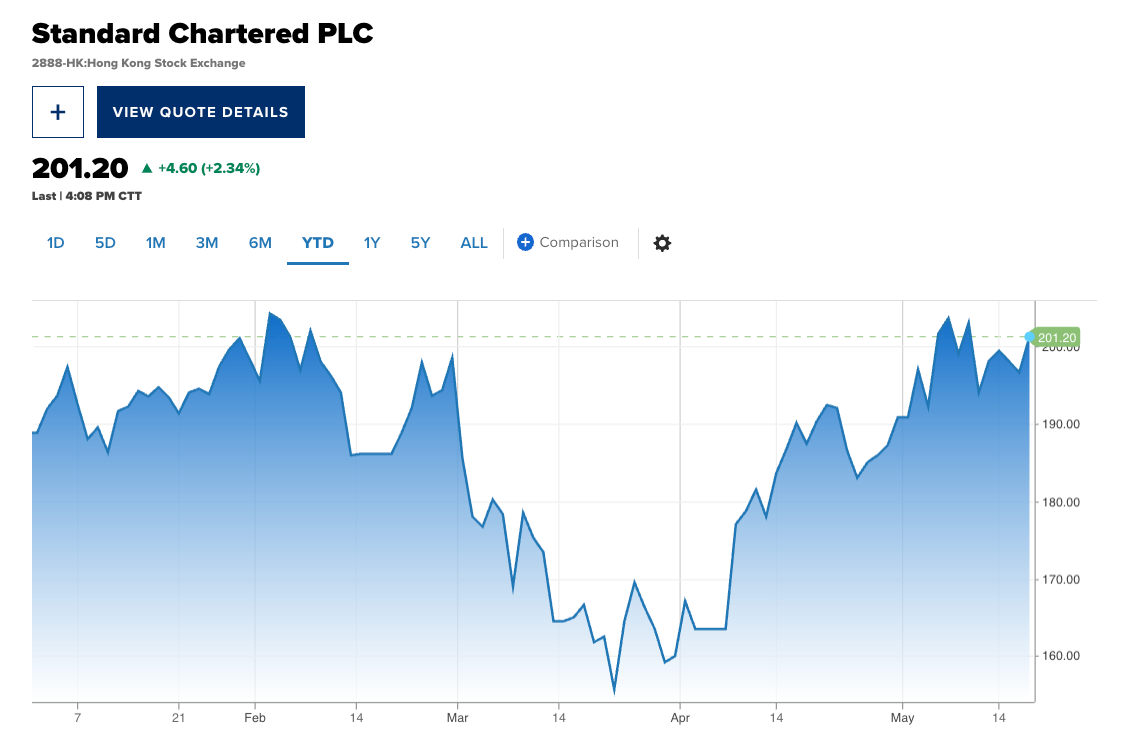
Standard Chartered announced on Tuesday that it will cut more than 7,800 jobs by 2030 as it scales up AI and automation. The London-headquartered bank said it would eliminate 15% of back-office roles, out of roughly 52,000 staff in support functions and a total global headcount nearing 82,000. The most affected hubs are Chennai, Bengaluru, Tianjin, Kuala Lumpur, and Warsaw. CEO Bill Winters chose blunt framing. "It's not cost-cutting. It's replacing in some cases lower-value human capital with the financial capital and the investment capital we're putting in," he told reporters. He added that the reductions would be "in favour of machines, and that will accelerate as we go forward into AI." The strategic targets behind the cuts are aggressive. StanChart raised its 2028 return on tangible equity target to 15%, up from a prior "higher than 12%" benchmark, with 18% by 2030. The bank wants to lift income per employee by 20% by 2028 and pull forward its $200 billion net new money target to 2028 from 2029. The dividend payout ratio is rising to 30%. Jefferies' Joseph Dickerson called the targets "conservatively struck" and told CNBC the framework would deliver mid-teens EPS growth. The stock has gained roughly 65% over the past 12 months. The bigger signal is industry-wide. Morgan Stanley estimated last year that AI could put more than 200,000 European banking jobs at risk by 2030, roughly 10% of industry roles. StanChart is now one of the first major global banks to put concrete numbers behind that thesis. Japan's Mizuho announced up to 5,000 job cuts over a decade in March. Singapore's DBS in February said it expects to cut about 4,000 contract and temporary roles over three years. The bank's framing puts AI displacement on the financial industry's record in a way most peers have avoided. The macro overlay is the Iran war. StanChart set aside $190 million in precautionary provisions linked to the Middle East conflict in Q1, while still posting record quarterly pre-tax profit of $2.5 billion, up 17% year over year. The bank generates roughly 6% of revenue from the Middle East and has been betting on growing Asia-Middle East trade flows. Winters told reporters the bank was "extremely resilient" against geopolitical risk. For investors, the equation is to replace human capital with code, raise income per employee 20%, and target an 18% ROTE. |
NVIDIA Earnings Carry the Weight of the AI Trade
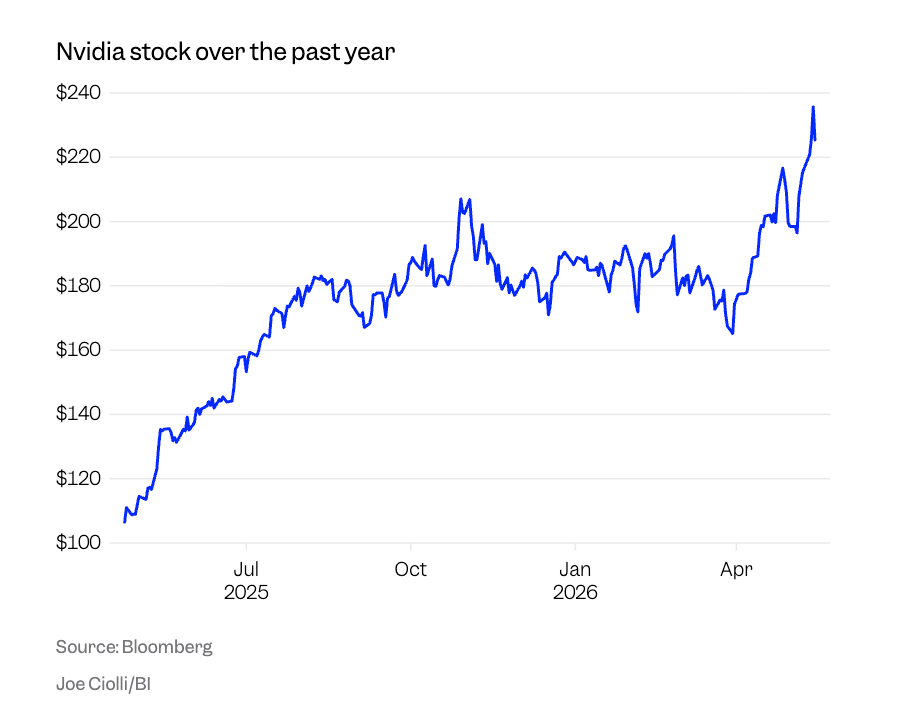
Nvidia reports fiscal Q1 2027 earnings on Wednesday after the bell, and the print will be the single most important data point for the AI trade this month. The company's own guidance was $78 billion in revenue and adjusted EPS around $1.71, implying 77% revenue growth and 111% EPS growth year over year. Wall Street consensus sits slightly higher at $79.17 billion in revenue and $1.78 EPS. The setup is favorable. Nvidia has beaten Wall Street earnings estimates in 21 of the past 23 quarters, with a 100% beat rate over the last four quarters at an average magnitude of 5.2%. The bigger driver is hyperscaler spending. Alphabet, Amazon, Microsoft, and Meta collectively guided to roughly $725 billion in 2026 capex on their Q1 earnings calls, up 77% from $410 billion last year. Most of that money is earmarked for AI infrastructure, with Nvidia the primary beneficiary. Wall Street is positioned bullishly. Of 61 analysts covering Nvidia per LSEG data cited by CNBC, 57 have a buy or strong buy rating. Morgan Stanley's Joseph Moore raised his price target to $285 from $260 on Monday, implying 26% upside from Friday's close. He cited Nvidia's $95 billion in purchase commitments as evidence the company has secured enough supply to cover much of what it intends to ship over the next 18 months. KeyBanc's John Vinh and D.A. Davidson's Gil Luria both raised their price targets to $300, per Barron's. The risks are clearly defined. China sales remain excluded from guidance, with Nvidia's fiscal Q1 outlook assuming no data center AI chip sales to China. The chip stock selloff tied to the Trump-Xi summit failing to deliver a clear China chip breakthrough is still fresh. Friday's inflation print at 3.8% pushed bond yields higher and triggered selling in AI-exposed tech per Business Insider. Competition is also building, with Cerebras Systems debuting on public markets last Thursday and AI inference becoming a contested category. The historical pattern shows weak correlation between the magnitude of an earnings beat and next-day stock performance. Last quarter's 5% beat produced a 5.5% drop. What will move the stock is guidance. Wall Street consensus for fiscal Q2 sits at $87.06 billion in revenue. Anything materially above that, paired with confirmation of the $1 trillion cumulative data-center revenue forecast through 2027, sets up the path to $300. Anything below, against the backdrop of hot inflation and the unresolved China chip question, and the AI trade has a real problem heading into summer. |
The Tariff Refund Fight Has Reached the Cash Register
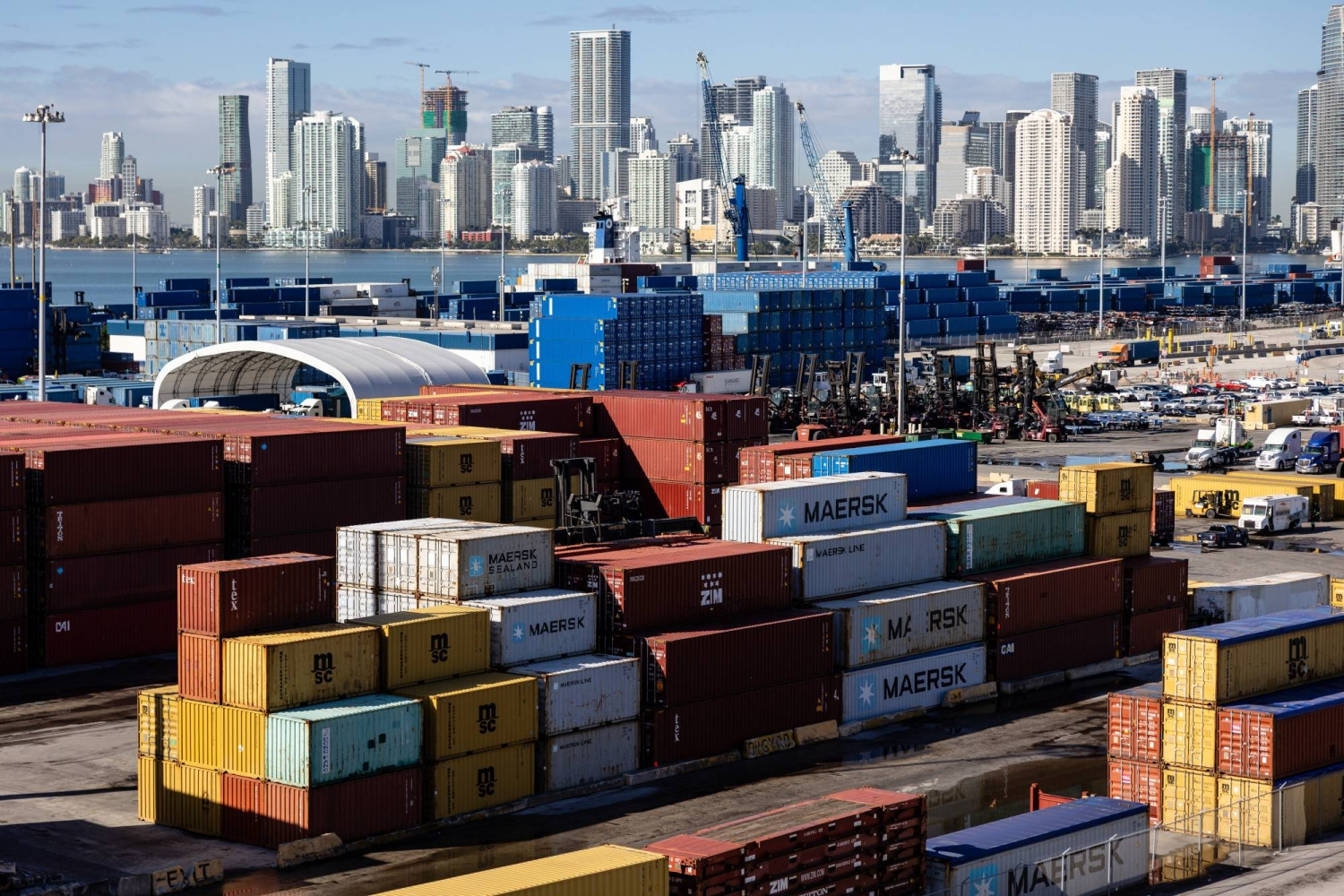
The first wave of tariff refunds began flowing to companies this week, four months after the Supreme Court struck down President Trump's IEEPA tariffs as unconstitutional. US Customs and Border Protection said in a court filing it anticipates paying $35.46 billion in refunds across 8.3 million shipments. Oshkosh Corporation CFO Matt Field confirmed to CNBC that payments began Tuesday on the company's initial filing. Basic Fun, maker of Care Bears and Tonka trucks, also began receiving refunds Tuesday, though CEO Jay Foreman said the amount so far represented just 5% of the company's total claim on early invoices. The Supreme Court ruled 6-3 in February that Trump had overstepped his authority by using the International Emergency Economic Powers Act of 1977 to impose his sweeping tariff regime. Thousands of companies have since filed for refunds through a CBP portal called the Consolidated Administration and Processing of Entries. Trump made his position clear in a WABC radio interview Tuesday, calling the refund situation "crazy" and saying he would "fight" having to pay the money back. The political fight has now extended to a consumer-facing one. Amazon was sued Friday in federal court in Seattle, with plaintiffs alleging the company collected hundreds of millions of dollars in unlawful tariff costs by raising prices on imported goods. The lawsuit alleges Amazon's failure to refund consumers is "not because it lacks a legal basis to do so, but because it seeks to curry favor with Trump." The complaint cites an April 2025 incident when Amazon faced White House blowback over a report that it had considered displaying how much of a product's cost came from IEEPA tariffs. Costco filed Monday to dismiss its own class action, arguing in a Chicago federal court filing that the lawsuit was speculative and that the customer "got what he paid for." Similar consumer lawsuits have been filed against Nike, FedEx, and others. UPS, FedEx, and DHL have publicly committed to file for refunds on behalf of customers without further action required from them. The asymmetry is the crux of the consumer cases. Companies that imported goods can claim refunds from the government. Individual consumers who absorbed higher retail prices cannot, the Amazon lawsuit notes. That leaves the retailers as the bottleneck. The first phase of refunds covers only entries finalized within the past 80 days, and full distribution could take months. Basic Fun has chosen to use the funds for salary increases and merit raises. Costco has not committed, with CEO Ron Vachris saying the company will make a plan "if and when we receive any refunds." The legal answer will set the template for how $35 billion gets distributed across the US economy. |
That’s all for today!/
