Let’s end another week with FinSoar! This weekend, I’m finally seeing consumers bear the brunt of rising memory costs as Apple hikes prices, Washington’s fingers in all the AI-pies are now holding back the new OpenAI model from release, and dating app Bumble is looking to turn profit from a sale:
Apple Hikes Mac and iPad Prices as Memory Costs Bite
Apple raised prices on its MacBooks and iPads on Thursday, and the stock had its worst day in more than a year. Shares closed down more than 6%, the sharpest drop since April 2025. The price changes took effect immediately, with the MacBook Air up $200 to $1,299 and the MacBook Pro up $300 to $1,999. Apple lifted prices across its Mac and iPad lines, with Evercore's Amit Daryanani noting jumps of 17% to 25% on base configurations, plus a 54% rise on the Apple TV box to $199. The selloff wiped out about $265 billion in market value, though Apple remains above $4 trillion. The culprit is AI-driven memory inflation. Apple said the rapid expansion of AI data centers created an extraordinary surge in demand, adding it had "never seen a component price increase this much, this quickly." Memory and storage prices have quadrupled over three quarters. CEO Tim Cook had flagged the move last week, telling the Wall Street Journal the squeeze was a "hundred-year flood," unlike anything in his 40-year career. The timing surprised analysts, who expected Apple to wait for its next product cycle rather than hike mid-cycle. The pain is one company's windfall. Memory maker Micron just reported revenue quadrupling to $41.5 billion with an 84.9% gross margin, surpassing Nvidia and Meta. Its shares jumped 16%, and the company said its 2026 high-bandwidth memory supply is sold out with $100 billion in contracted revenue. Micron's blowout briefly lifted the Nasdaq 2% at the open before Apple dragged it lower. Sandisk rose nearly 20% while Dell and Microsoft fell, the latter also hiking Xbox prices on memory costs. Suppliers are steering capacity toward high-bandwidth memory for AI servers, where margins run near 80%. With hyperscalers spending more than $725 billion on capex, the crunch is expected to last through 2027, eroding Apple's bargaining power. More hikes may follow. Apple left the door open, and experts estimate higher memory could add $150 to $200 to the iPhone. Apple spared the iPhone, Watch, and AirPods this round, protecting its cornerstone product before September's refresh. As Barron's noted, no one forced tech firms into an expensive AI race, and after memory, another bottleneck will likely emerge. |
Washington Joins The Model Queue
OpenAI's next major model release is turning into a test case for AI governance in real time. The Trump administration has asked the company to limit the initial release of GPT-5.6 to a small group of government-approved partners. Sam Altman told employees that access would be approved "customer by customer," with a broader rollout planned a couple of weeks later if the preview goes well. The request came from the White House's Office of the National Cyber Director and Office of Science and Technology Policy, with other agencies also involved. Commerce Secretary Howard Lutnick also discussed the launch with Altman, seeking assurance that relevant agencies had reviewed the model. The concern is capability. GPT-5.6 is being viewed by the administration as comparable to Anthropic's Mythos, a powerful model that raised alarms over cybersecurity risks. Anthropic recently pulled Mythos and Fable after a Commerce Department directive barred foreign nationals from accessing the models, a restriction that proved difficult to implement cleanly. For AI companies, the awkward part is less the restriction and more the lack of procedure. President Trump signed an executive order earlier this month calling for a voluntary pre-release review system for advanced AI models, but the framework has not yet been established. That leaves frontier labs negotiating model launches agency by agency, model by model. Markets should care because release speed is part of the AI valuation story. If the most capable models now need staged access, government review, and customer vetting, the path from research breakthrough to commercial revenue could get less linear. |
Bumble Swipes Toward The Exit
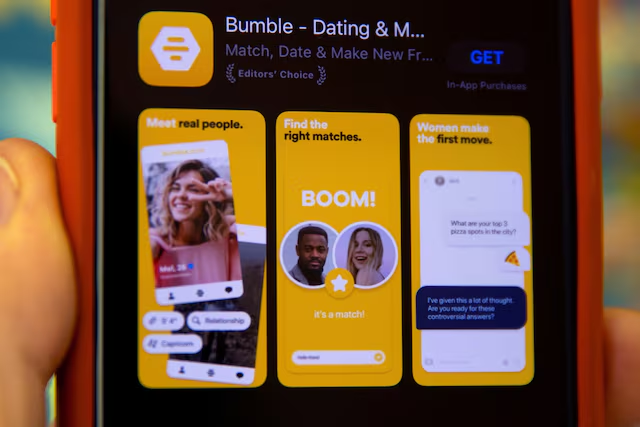
Bumble is reportedly testing buyer interest after a rough stretch for online dating. The company is working with Morgan Stanley on a possible sale process, though sources cautioned that no deal is certain and Bumble could remain independent. The valuation reset is stark. Bumble went public in 2021 at a valuation above $7 billion. Reuters now puts its market value at about $388 million, after a 48% share-price decline over the past 12 months. Blackstone, which bought a majority stake in Bumble's former parent MagicLab in 2019 at a roughly $3 billion valuation, still owns about 22% of the company. The user numbers explain why the sale story is landing. Bumble's 2025 revenue fell nearly 10% to about $966 million, while total paying users dropped more than 11% to roughly 3.7 million. The first quarter of 2026 looked worse. Inc. reported that revenue fell 14.1% from a year earlier to $212.4 million, with paying users down 21.1% to 3.2 million. Bumble has managed to squeeze more from the users who remain — average revenue per paying user rose 8.9% in the first quarter — but that is a difficult equity story when the paying base is shrinking. The broader dating-app category is not equally weak. Data shows Hinge has grown US daily active users for at least eight straight quarters, while Bumble's daily active users have declined in six of the past eight. Bumble also had the weakest engagement among major US dating apps, with the lowest average time spent per user and the only year-over-year decline in that metric in the second quarter. Founder Whitney Wolfe Herd returned as CEO in March 2025 and is trying to reposition Bumble around AI, personalization, and fewer swipe-based habits. The company has teased an AI assistant called Bee and tools meant to move users toward in-person dates faster. That sounds sensible. And challenging. Bumble's original women-first positioning once gave it a clear identity. Now the company has to prove that product changes can rebuild engagement before buyers decide the app is cheaper than it is fixable. |
That’s all for today!/
