Hi there!
Welcome to FinSoar. Today, we’re looking at what’s sending Billionaires packing from California,
When Greenland Broke Wall Street's Calm
Markets had been unnervingly quiet to start 2026. Volatility across US bonds, equities and the dollar had sunk to the lowest since at least 1990. Then came Greenland. President Trump's weekend threat to impose tariffs on eight NATO allies over control of Greenland sent S&P 500 futures down 1.7%, erasing gains for the year. The VIX fear gauge topped 20 for the first time since November. Tech stocks led the selloff, with Nvidia, Meta and Alphabet all down around 2%. The tariffs would start at 10% on February 1 and rise to 25% by June. They target Denmark, Norway, Sweden, France, Germany, the Netherlands, Finland and Britain. All already face existing US levies from trade deals struck last year. Gold surged past $4,700 per ounce for the first time. The dollar fell against the euro and sterling. Treasuries came under pressure as Japanese bond yields spiked, with 40-year debt topping 4%. The timing couldn't be worse for investor psychology. Bank of America's latest survey showed investors at their most bullish since July 2021, with record low cash levels. Nearly half reported no protection against a sharp equity decline. Europe is already signaling retaliation. French President Emmanuel Macron said Europeans would respond in a "united and coordinated manner" if tariffs proceed. Germany called the threats a red line. The EU could target $100 billion of US goods, potentially accelerating inflation and forcing the Fed to hold rates higher. Citigroup downgraded European equities for the first time in over a year, citing "transatlantic tensions and tariff uncertainty." Trade-exposed sectors underperformed sharply. The Supreme Court is expected to rule soon on Trump's tariff authority. But even an unfavorable ruling might not stop him. The administration has indicated it would use other laws to impose levies. One year into his second term, markets are learning that tariff risks never really went away. |
California's Billionaire Tax Is Fracturing Silicon Valley
California's roughly 200 billionaires face an unusual dilemma. A proposed ballot measure would impose a one-time 5% tax on residents worth over $1 billion, measured retroactively from January 1, 2026. The levy could raise $100 billion between 2027 and 2031 for healthcare and education programs. The mechanics are straightforward. Billionaires would have five years to pay, with a 7.5% annual charge on unpaid balances. The tax applies to stocks, bonds, private businesses, and intellectual property. Real estate gets a pass. But the implementation reveals complications. Tax Foundation analysis shows several founders could face bills exceeding 5% due to how voting rights are valued versus actual ownership. DoorDash's Tony Xu owns 2.6% of his company but controls 57.6% of votes. Under current language, his tax bill could hit 173% of his ownership stake. The response has been swift. Google cofounders Larry Page and Sergey Brin moved multiple entities out of California in late December. Peter Thiel donated $3 million to the California Business Roundtable fighting the measure. White House AI czar David Sacks announced his move to Austin. Yet Nvidia CEO Jensen Huang stands apart. He told Bloomberg he hasn't thought about the tax once and is "perfectly fine with it." His potential $7.75 billion bill doesn't faze him. The political landscape is equally fractured. Governor Gavin Newsom vowed to defeat the measure, warning it would drive investment from the state. The SEIU union sponsoring the initiative argues that federal healthcare cuts make the tax necessary. Congressman Ro Khanna supports it, while most Democratic establishment figures oppose. California's top 1% of taxpayers contribute 40% of personal income tax revenue. Venture capitalist Michael Moritz warns that this concentration creates dangerous dependence on volatile capital gains. The proposal needs 875,000 signatures by June to reach November's ballot. Whatever happens, the debate has exposed how fragile California's tech economy may be when push comes to tax. |
The Department Store Model Just Died at Saks
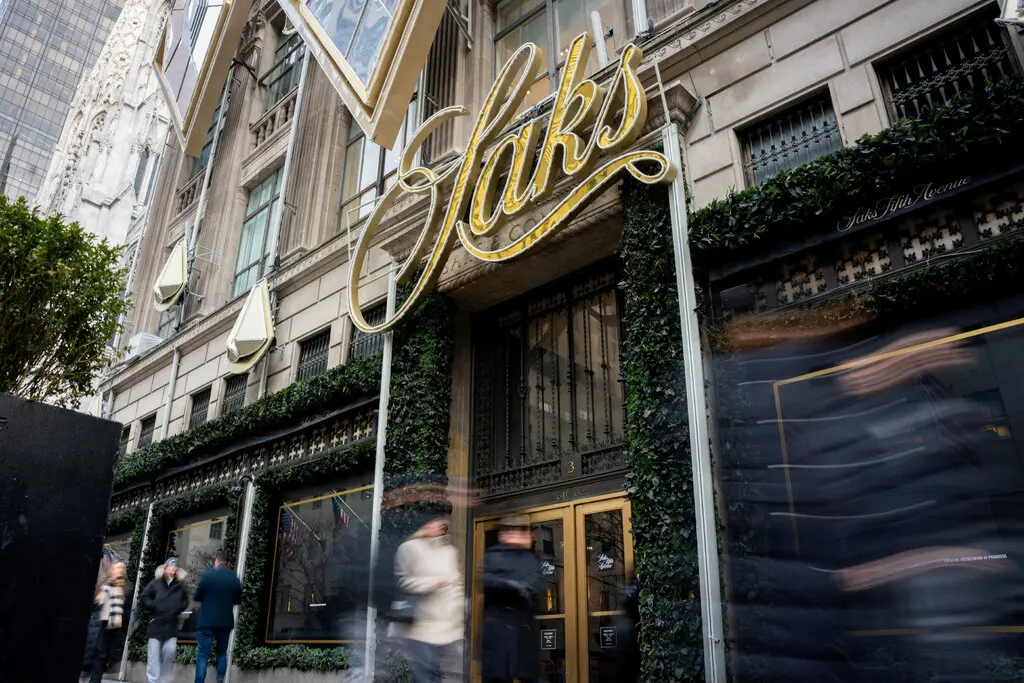
Image Credits: Angelina Katsanis/Reuters Saks Global filed for bankruptcy protection on Wednesday with $2.5 billion in debt and a business model that no longer works. The parent company of Saks Fifth Avenue, Neiman Marcus, and Bergdorf Goodman secured $1.75 billion in financing to keep stores open during Chapter 11 reorganization. The collapse wasn't about weak luxury demand. Bank of America reported an 8% jump in luxury spending in early October. LVMH, owner of Louis Vuitton and Dior, posted 1% growth in its latest quarter. Department stores specifically are the problem. The end began with the 2024 Neiman Marcus acquisition. Saks took on billions to fund the $2.65 billion deal, expecting synergies that never materialized. Instead, the company stopped paying vendors on time. By February 2024, CEO Marc Metrick told suppliers that overdue payments would be made in 12 installments. Brands responded by cutting shipments. Finance firm Hilldun, which guarantees orders for 130 brands, stopped approving new Saks orders in November. One vendor told the BBC he's still owed $20,000 in late payments, with another $35,000 in unfilled orders held since October. Customers noticed. Shoppers found fragrance products out of stock across Boston and New York locations. Sales at Saks Fifth Avenue stores fell by double digits almost every quarter for two years. The company missed a $100 million debt payment in late December. Amazon, which invested $475 million to back the Neiman acquisition, called its stake "presumptively worthless." The underlying issue runs deeper than debt. Luxury brands increasingly connect directly with customers, both online and through their own boutiques. Analyst Luca Solca expects most luxury brands to aim for 95% direct sales, with only 5% through wholesale channels like department stores. Department stores "used to be the gateway to luxury," Vogue editor Jenna Rennert told NBC. "Today, they're kind of the middleman that luxury brands no longer need." The bondholder group led by Bracebridge Capital and Pentwater Capital expects to take control. Store closures are likely, particularly at Saks Off Fifth locations. |
That’s all for today!
