Hi there!
Welcome to FinSoar. Let’s start this week off by trying to keep warm in this snow storm despite gas prices, wince at the beating health insurers are taking from the market, and celebrate a potential Barnes & Noble comeback.
P.S: Help me get to know you more by filling this survey and telling me what you’d like to read more.
When Winter Storms Cost More than Cold Weather
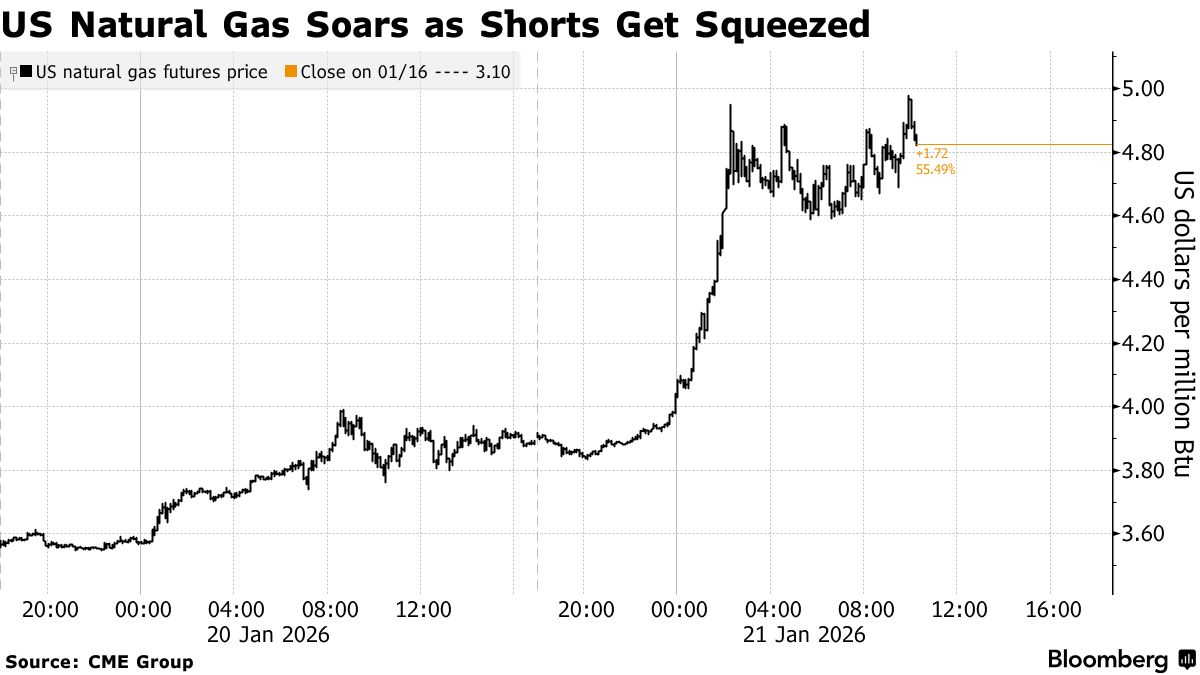
Winter Storm Fern is turning into one of the costliest weather events in recent US history. AccuWeather estimates total damage and economic losses between $105 billion and $115 billion, making it the priciest severe weather event since the Los Angeles wildfires earlier this month. The storm dumped over a foot of snow across 19 states and left more than 700,000 homes and businesses without power by Monday evening. Tennessee bore the brunt, with 246,000 customers in the dark. Power outages alone cost the US $44 billion annually, according to the Department of Energy's National Laboratories. Natural gas markets went haywire. Prices surged above $6 per million British thermal units on Monday for the first time since late 2022, up 68% year-to-date. The February contract jumped 17.7% in a single session. Earlier in the week, futures climbed more than 50% in just two days, marking the biggest weekly gain in over three decades. The price spike reflects two pressures. Heating demand surged as wind chills hit minus 50 degrees Fahrenheit across the eastern US. Production disruptions loom as water freezes inside pipelines, particularly in Texas where infrastructure weatherization remains incomplete despite upgrades following the deadly 2021 freeze. Top gas producers reaped the benefits. Expand Energy and EQT shares rose 6.6% and 7.1% respectively as the broader market gained. Consumers face mounting costs beyond energy bills. Average winter storm insurance claims run $15,000 for water damage and freezing, while wind and hail claims average $14,700. Airlines canceled over 12,500 flights on Sunday alone, the highest cancellation rate since the pandemic. The storm draws comparisons to 2021's Winter Storm Uri, which crippled Texas's grid. This time, grid operators insist they're prepared. But rising power demand from data centers has tightened system buffers, leaving less room for error when extreme weather strikes. |
Medicare Advantage Insurers Face Payment Squeeze
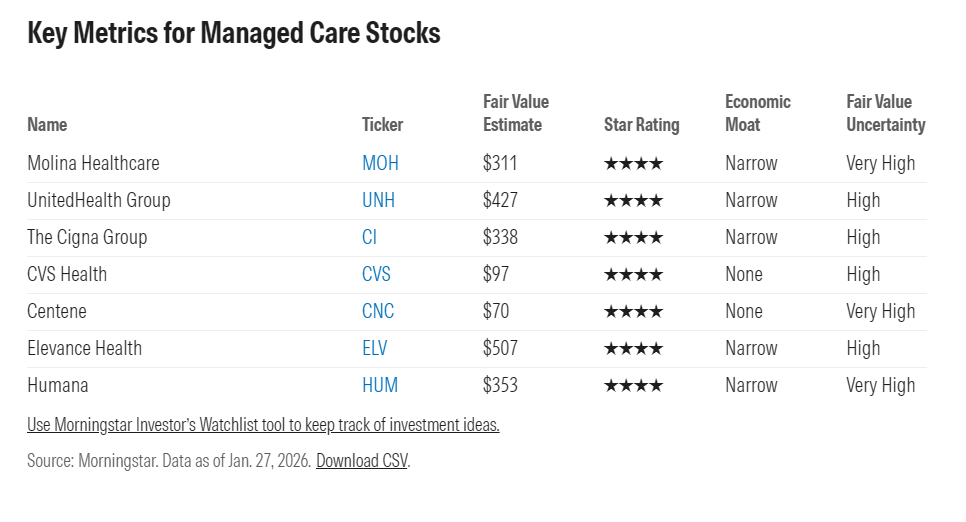
Health insurers took a beating on Tuesday after the Trump administration proposed a near-flat payment increase for Medicare Advantage plans. The selloff wiped out more than $90 billion in market value as investors fled what was once considered a defensive sector. The Centers for Medicare and Medicaid Services proposed a 0.09% average payment increase for 2027. That's worth roughly $700 million total to the industry. Wall Street had expected increases between 4% and 6%. Last year, insurers received a 5.06% bump. UnitedHealth shares plunged 19% while Humana dropped 20%. CVS Health fell 12% and Elevance shed nearly 13%. Even insurers with less Medicare Advantage exposure got hit. Centene declined over 10%. UnitedHealth compounded its troubles by forecasting that revenue would fall 2% to $439 billion this year, marking its first annual revenue decline in more than three decades. The company serves 9.9 million people on Medicare Advantage plans and faces a Justice Department investigation into its Medicare billing practices. The proposed rates fell short partly because federal actuaries estimated lower spending growth in traditional Medicare, which affects Advantage plan payments. But the bigger factor was CMS's move to crack down on industry billing practices. The agency wants to eliminate insurers' use of certain medical chart reviews to document diagnoses not linked to specific medical services. That change alone cut 1.53 percentage points from the proposed rate. Government watchdogs have long criticized these so-called unlinked chart reviews. A 2021 Inspector General report singled out UnitedHealth as benefiting disproportionately from such payments. More than 35 million Americans are enrolled in Medicare Advantage plans, drawn by lower premiums and extra benefits. The insurance industry warned the rate proposal could force benefit cuts and higher costs for seniors. CMS typically finalizes rates in early April, leaving room for the industry to lobby for changes. Medicare officials noted that overall payments should rise an additional 2.45% based on underlying billing trends, which would push the total 2027 increase to 2.54%. |
Barnes & Noble Eyes IPO After Improbable Comeback
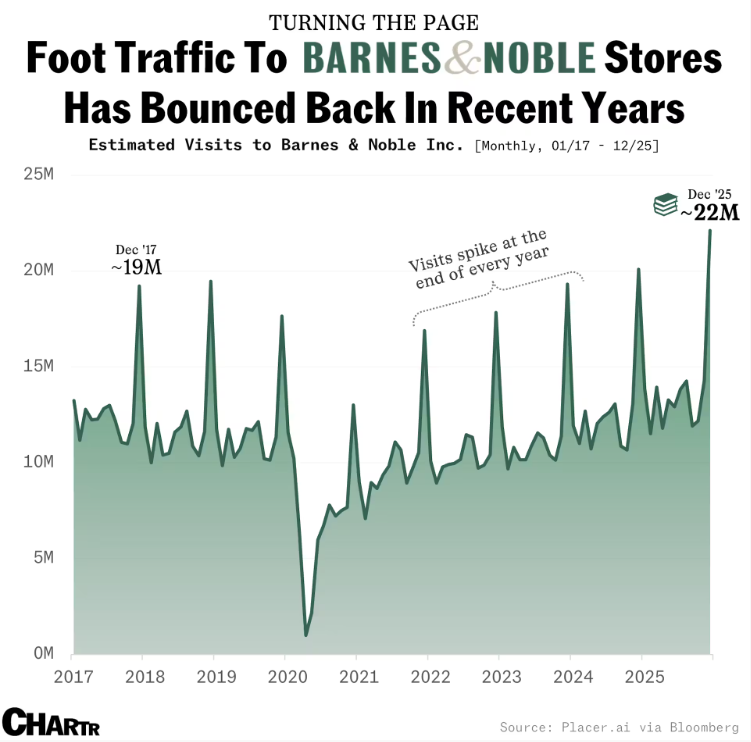
Elliott Investment Management is considering an IPO for Barnes & Noble and UK chain Waterstones as soon as the second half of 2026. The hedge fund is in talks with banks about a potential listing in London or New York, though no underwriting syndicate has been chosen. The public offering would cap a remarkable turnaround for a retailer that seemed destined for obsolescence. When Elliott acquired Barnes & Noble for $683 million in 2019, the chain had lost over $1 billion in market value since 2014 and posted a $125.5 million loss on $3.7 billion in revenue. Same-store sales were down over 5%. Today the business looks dramatically different. The combined companies generated approximately $400 million in profits on roughly $3 billion in sales last year. Barnes & Noble now operates 702 stores, up from 627 when Elliott took over, after opening more than 60 locations in 2024. The chain plans to add another 60 stores in 2026. CEO James Daunt reversed the decline by returning to indie bookstore principles. He stripped out toys and games, gave local managers autonomy over merchandising, and let stores reflect their communities. Visits to Barnes & Noble stores last December hit 22 million, up 15% from 2017. The strategy worked partly because the shift to digital books stalled. A recent survey found 65% of readers prefer physical books compared to 21% who favor ebooks. Social media trends like BookTok, which has accumulated 370 billion views, unexpectedly boosted demand for physical books among younger readers. A successful IPO would validate the staying power of brick-and-mortar bookselling despite Amazon's dominance. It could also provide a welcome boost to London's stock market, which has struggled to attract major new listings. Elliott is thought to prefer London over New York for the offering. The listing would test whether public market investors buy Daunt's thesis that local autonomy can coexist with chain economics, and whether books remain immune to the forces killing other physical retail. |
That’s all for today!
