Welcome to FinSoar!
Pun fully intended in the subject line. Today, I’ve got market movers for you, UnitedHealth delivered more than what anyone expected, and Tim Cook is stepping down as Apple’s CEO.
UnitedHealth's Turnaround Finds Its Footing
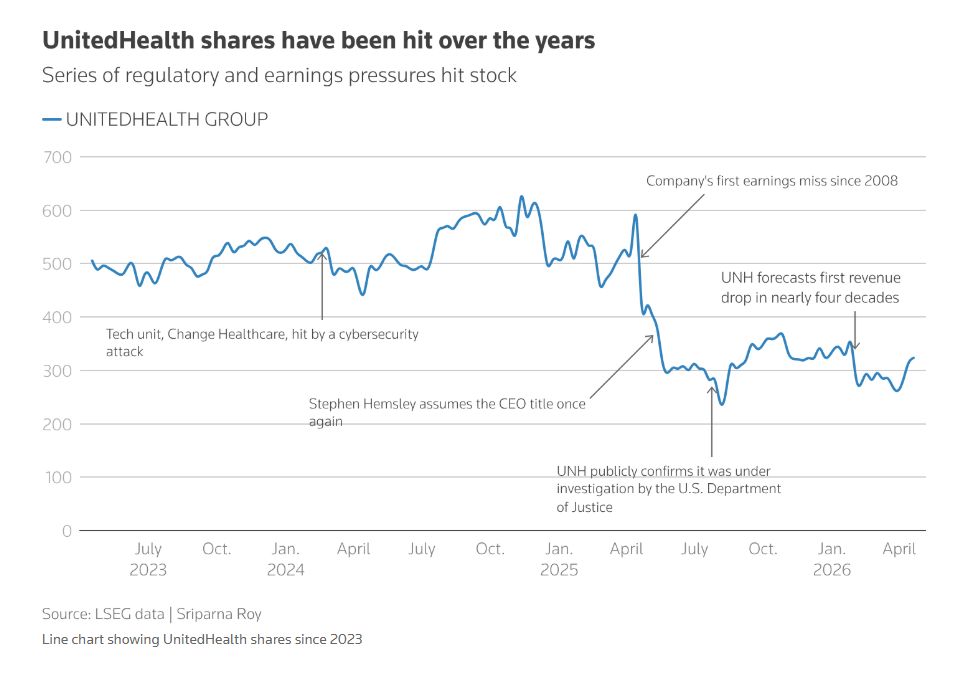
UnitedHealth Group delivered a first quarter that gave investors the clearest signal yet that its turnaround plan is gaining traction. The country's largest private insurer posted adjusted earnings of $7.23 a share against a FactSet consensus of $6.58, with revenue climbing to $111.7 billion from $109.6 billion a year earlier. Shares jumped more than 7% in premarket trading, dragging CVS, Humana, and Elevance up with them. The number Wall Street cared about most was the medical cost ratio. At 83.9%, it came in nearly 160 basis points below analyst estimates of 85.5% and marked the lowest reading in two years. For context, the figure hit 91.5% in the fourth quarter of 2025, a level that would typically wipe out operating margins in this business. Every basis point below premium revenue drops to the bottom line, so the swing matters. Management raised full-year adjusted earnings guidance to more than $18.25 a share, up 50 cents from the January forecast and above the $17.86 Street consensus. CFO Wayne DeVeydt told Barron's the company is being deliberately cautious, saying management wants "a few more months" before revising further. After last April's guidance withdrawal and roughly 50% share-price collapse, credibility is the scarcest resource UnitedHealth has to rebuild. The turnaround playbook under returning CEO Stephen Hemsley is straightforward: shrink, divest, and automate. The company has replaced nearly half of its top 100 executives, exited unprofitable Medicare Advantage counties and ACA markets, sold its Optum UK business, and plans to buy back at least $2 billion in stock by quarter-end. UnitedHealthcare shed 965,000 Medicare Advantage members in the quarter alone, and DeVeydt told Reuters the company expects to lose 1.3 million Medicaid members over the year. The AI bet is the forward-looking piece. UnitedHealth plans to spend at least $1.5 billion on AI in 2026, framed explicitly as a counterweight to a $6 billion revenue headwind from Medicare Advantage reimbursement changes. DeVeydt said payback windows on those initiatives are short. Optum Health remains the soft spot. Operating income there fell 15% to $3.3 billion, and the segment's $1.3 billion in adjusted operating earnings leaves it tracking below the $1.6 billion full-year guide. Margins may have troughed, but the rebuild is a multiyear project. Today's Market Movers
|
Cook's Exit Hands Ternus a $4 Trillion AI Problem
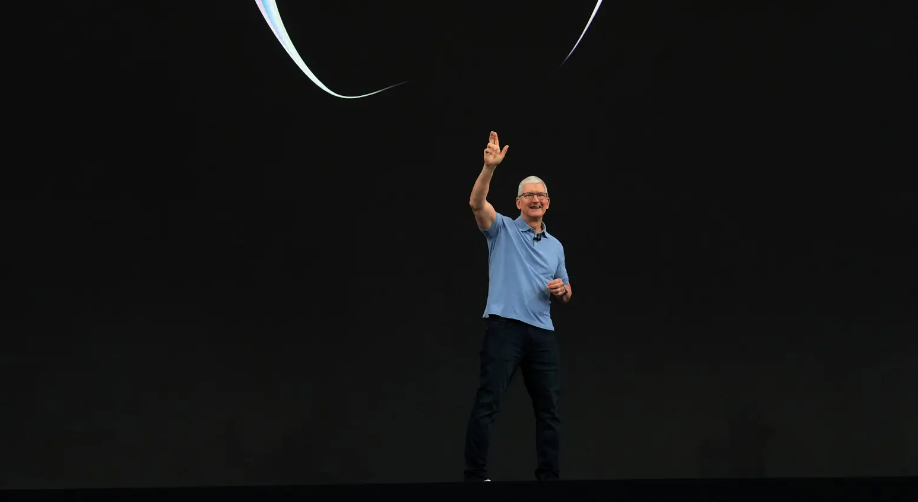
Tim Cook is stepping down as Apple's CEO on September 1 after nearly 15 years in the job, with hardware engineering chief John Ternus taking over and Cook shifting to executive chairman. The New York Times called it one of the most successful management runs in American business history, and the numbers back that up. Apple's annual profit quadrupled to more than $110 billion during Cook's tenure, and its market value ballooned from roughly $350 billion to more than $4 trillion. The financial record is close to unimpeachable. Services revenue alone grew from about $3 billion a quarter at the end of 2011 to roughly $30 billion in the final three months of last year, now making up over a quarter of total sales. The accessories unit built around the Apple Watch and AirPods generated nearly $36 billion in revenue last fiscal year. Cook's signature achievement was turning a hardware company into a recurring-service juggernaut while building what analysts describe as the most efficient supply chain on the planet. But Ternus inherits a structural problem that cash-generating iPhones have been papering over. Apple has largely sat out the AI capex arms race that Microsoft, Google, Amazon, and Meta are collectively funding to the tune of hundreds of billions annually. On iPhones, the top free apps are ChatGPT and Claude, with Gemini at fourth and Meta AI at eighth. Apple's own AI features lean on Google's Gemini for a delayed Siri upgrade. The company's bet is that workloads will eventually run on the phone itself, playing to its silicon integration strengths. Wedbush analyst Dan Ives told Barron's the pressure now sits squarely on June's WWDC to produce an AI roadmap. Morgan Stanley's Erik Woodring expects a path to $300 a share by September. The iPhone business remains extraordinary, with revenue up 23% year over year to $85.3 billion in the latest quarter, but mature categories need successors. Bloomberg has reported Apple is accelerating three Siri-built AI wearables, including smart glasses, a pendant, and camera-equipped AirPods, alongside a foldable phone. Choosing a hardware engineer as CEO signals Apple still believes the future of AI runs through tightly integrated devices. The valuation now rests on Ternus proving that thesis before investor patience runs out. |
That’s all for today!/
