Hi there!
Welcome to FinSoar. Today, I’m looking at stocks dip in what seems like a correction to some and a crash to others, and an end to the partial government shutdown that crippled US airports.
Markets Plunge as Iran War Crushes Investor Confidence
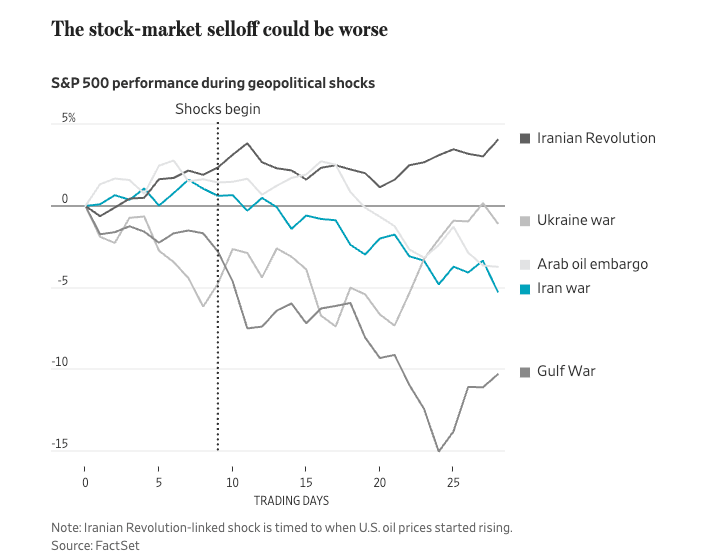
US stocks suffered their biggest drop since the Iran war began on Thursday, with the Nasdaq falling 2.4% into correction territory after declining more than 10% from its October peak. The S&P 500 tumbled 1.7% while the Dow closed 450 points down, marking the fifth straight week of losses for the first time in four years. Oil prices continued climbing despite Trump's mixed signals. Brent crude rose 5.7% to $108.01 per barrel while US crude hit $94.48. Average gas prices reached $3.98 per gallon nationwide. Trump claimed at a cabinet meeting that prices "have not gone up as much as I thought" and predicted they would fall "probably lower" once the conflict ends. Markets weren't buying it. The selloff deepened after Trump warned Iranian negotiators to "get serious, before it's too late" and threatened to "just keep blowing them away, unimpeded." Hours later he announced "very substantial talks" and said Iran allowed 10 tankers through Hormuz as a "present." After markets closed, the White House extended the pause on energy strikes by 10 days until April 6. "There's really no clarity on when this war will end, despite a lot of confusing commentary," said Adam Turnquist, chief technical strategist at LPL Financial. The volatility prompted Citigroup to cut US equity exposure to neutral. "The incentives for both Iran and Israel do not necessarily align with a quick end," Citi strategists wrote. What makes this market slide unusual is that traditional safe havens are falling alongside stocks. Gold dropped 4% Thursday and is down nearly 17% this month, on track for its worst month since October 2008. Bond prices have fallen too, pushing the 10-year Treasury yield to 4.42%, its highest since July. That has driven mortgage rates to 6.38%, the highest level since early September. "Volatility persists when uncertainty is high," said Mitch Hamer of Intersecting Wealth. "It's elevated everywhere you look." The combination of rising oil prices and inflation fears means investors face higher-for-longer interest rates, raising the opportunity cost of holding gold and bonds that don't generate income. Consumer confidence reflects the damage. A University of Michigan survey released Friday showed sentiment fell 6% in March to its lowest level since December 2025. Inflation expectations for the year jumped from 3.4% to 3.8%, the largest one-month increase since Trump's tariff announcement last April. The OECD revised projections downward on Thursday, predicting US inflation will average 4.2% this year compared with 2.6% in 2025. The group warned that the conflict "will test the resilience of the global economy" as higher energy prices ripple through supply chains. Markets opened Friday with another selloff that briefly pushed the Dow into correction territory as Brent crude hit $110 per barrel. Asian markets fell overnight, with Korea's Kospi sliding 3.2% and Hong Kong's Hang Seng dropping 1%. "The Strait of Hormuz remains essentially shut, the conflict is not over, and Truth Social posts are not a replacement for concrete diplomatic discussions," said Anthony Saglimbene, chief market strategist at Ameriprise Financial. |
Senate Ends Airport Chaos, Leaves Immigration Fight for Later
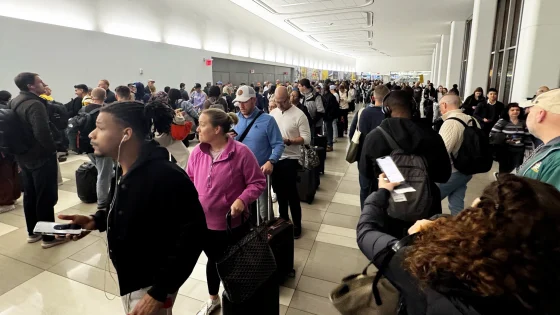
The Senate voted unanimously early on Friday to fund most of the Department of Homeland Security except immigration enforcement, ending a 42-day partial shutdown that crippled US airports but sidestepping Democrats' demands for reforms to ICE operations. The measure restores funding for TSA, the Coast Guard, FEMA, and cybersecurity operations while omitting Immigration and Customs Enforcement and Customs and Border Protection. It also excludes restrictions Democrats sought on immigration raids after federal agents killed two US citizens in Minneapolis in January. The bill now moves to the House, which could vote as soon as Friday before lawmakers leave for a two-week recess. Senate Republicans said they plan to pursue ICE funding separately through a party-line bill that could also include Iran war funding and Trump's SAVE America Act voter ID legislation. The shutdown devastated airport operations. Over 450 TSA agents have quit since mid-February, while call-out rates exceeded 11% nationally and topped 40% at some airports. Wait times at Houston's Bush Intercontinental stretched beyond four hours this week, with only a third to half of security checkpoints operating. "Travellers are experiencing the longest wait times ever in the TSA's 24-year history," acting TSA chief Ha Nguyen McNeill told Congress on Wednesday. Airports in Houston and Atlanta warned passengers to expect four-hour waits at checkpoints on Friday morning. Trump announced Thursday he would sign an order to pay TSA agents immediately, though it remained unclear what legal authority he could invoke. The White House earlier rejected an offer from Elon Musk to cover the estimated $250 million cost, citing "great legal challenges due to his involvement with federal government contracts." Senate Minority Leader Chuck Schumer said Democrats achieved their goal. "Senate Democrats were clear: no blank check for a lawless ICE and Border Patrol," he said after the vote. Senate Majority Leader John Thune blamed Democrats for the impasse: "President Trump should never have had to step in to rescue TSA workers and US air travel." The deal represents a compromise neither side wanted. Democrats failed to secure restrictions on ICE operations they demanded after the Minneapolis killings, including bans on masked agents, requirements for judicial warrants to enter homes, and limits on enforcement at hospitals and schools. Republicans criticized the approach as damaging to security. "Congressional Democrats have done real damage to the appropriations process by repeatedly forcing government shutdowns and refusing to fund entire agencies," said Senate Appropriations Chair Susan Collins. ICE and Border Patrol can continue operating using billions from last year's tax and spending bill. But securing new funding through budget reconciliation would require near-unanimous Republican support in an election year, which many lawmakers doubt is achievable. This marks the second shutdown Democrats have forced in six months, and neither delivered their desired results. |
That’s all for today!/
Attio is the AI CRM for modern teams.

Connect your email and calendar and Attio instantly builds your CRM. Every contact, every company, every conversation — organized in one place. Then ask it anything. No more digging, no more data entry. Just answers.
