Welcome to FinSoar!
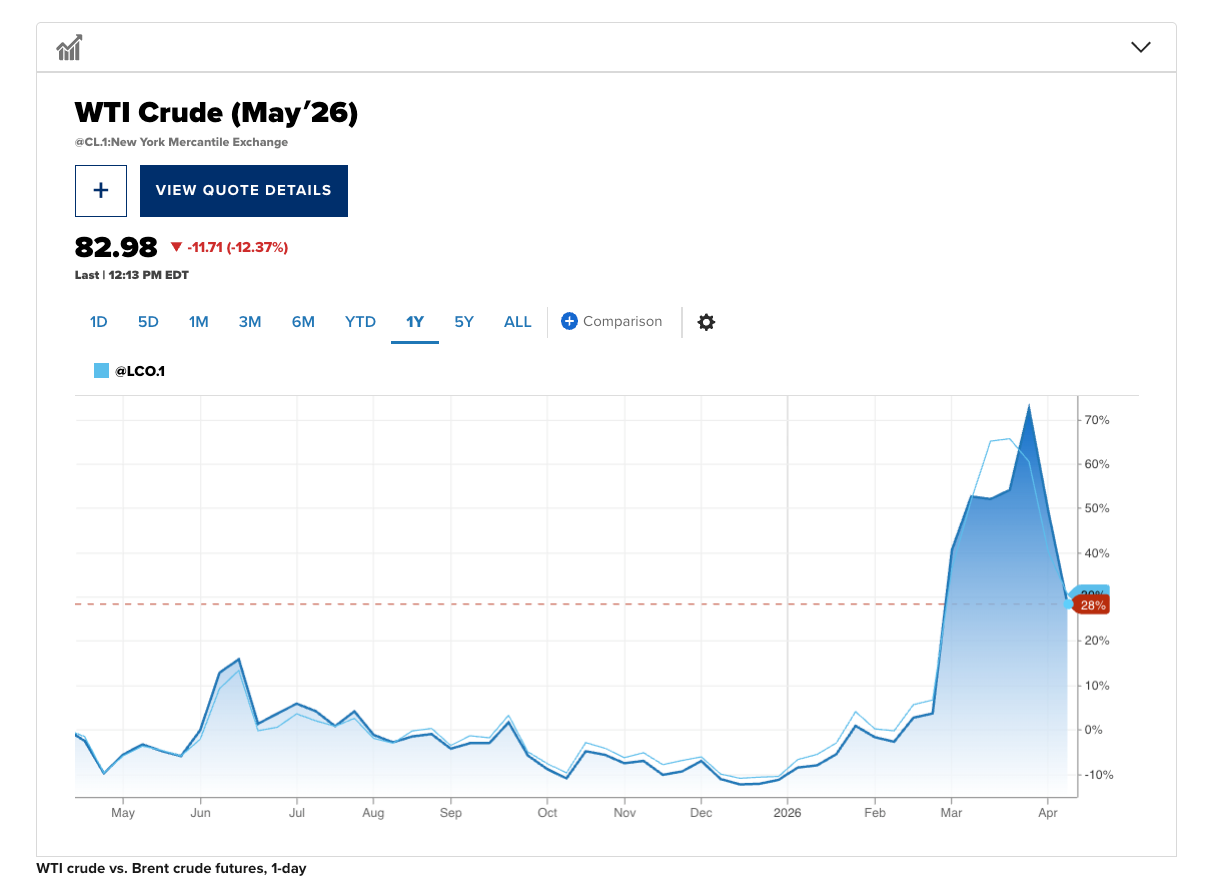
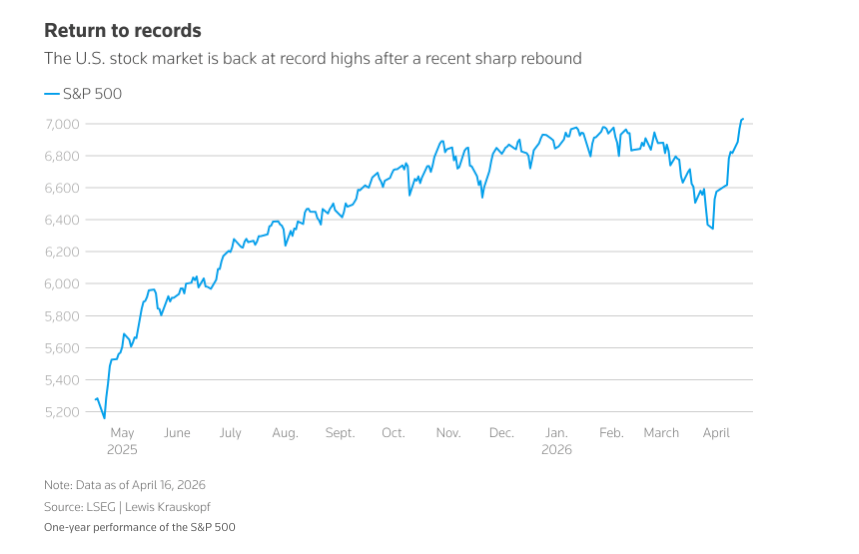
Iran declared the Strait of Hormuz open on Friday, sending oil down 10% and pushing U.S. stocks to fresh records in a rally that has erased the war-driven selloff faster than any pullback since 1928.
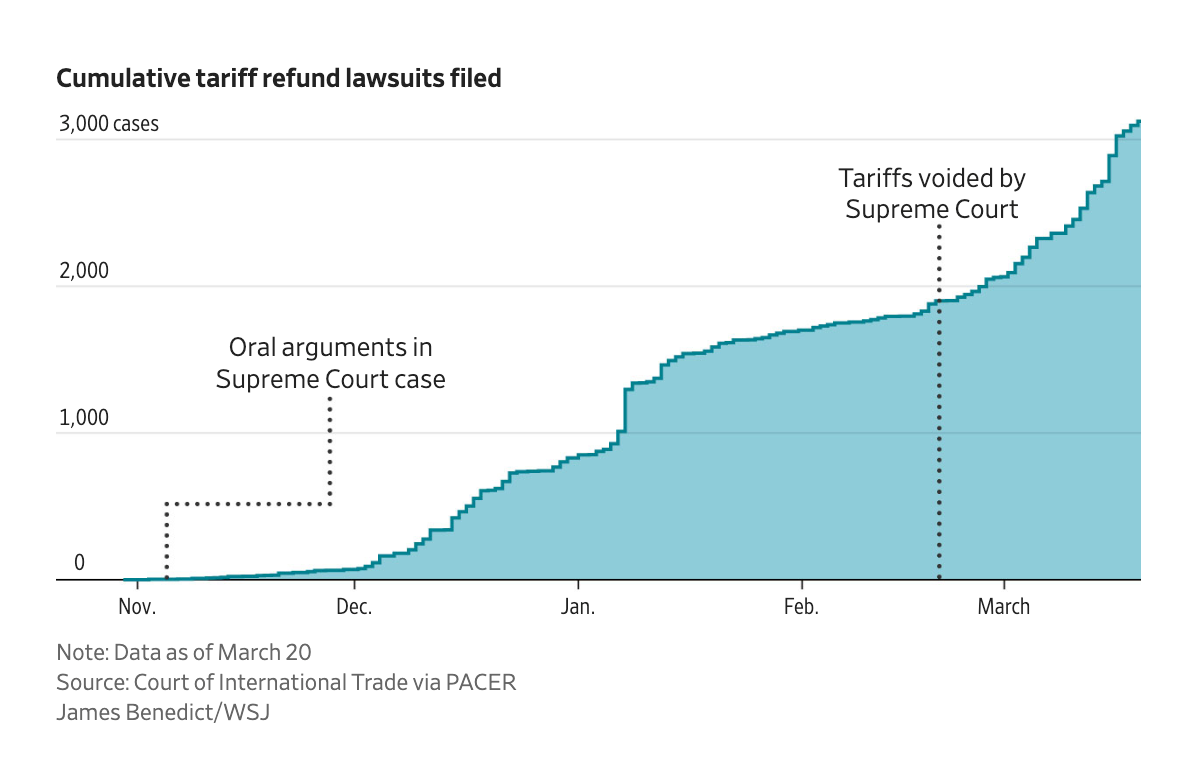
On Monday, the government launches a portal to refund $166 billion in tariffs the Supreme Court struck down, but CFOs say consumers won't see a dime. And as tech stocks lead the charge back to all-time highs, analysts warn the rebound may be getting ahead of itself.
Iran Declares Strait of Hormuz Open as Oil Plunges and Stocks Hit Record Highs
Iran announced Friday that the Strait of Hormuz was "completely open" for commercial vessels, sending oil prices tumbling and pushing US stocks to fresh all-time highs. The announcement came hours after a 10-day ceasefire between Israel and Lebanon took effect. Brent crude dropped more than 10% to below $90 per barrel, its lowest level in more than a month. The S&P 500 crossed 7,100 for the first time, and the Dow surged 1,100 points. The Russell 2000 also hit a record high. Iranian Foreign Minister Abbas Araghchi said passage would be on a "coordinated route" designated by Iran's maritime authorities. A senior Iranian military official told state media that vessels would still require permission from Iran's Revolutionary Guard Corps Navy. Military vessels remain prohibited. Trump posted that the strait was "COMPLETELY OPEN AND READY FOR BUSINESS" but added that the US naval blockade of Iranian ports would remain in place until a deal with Tehran was "100% complete." He claimed Iran had agreed to never close the strait again, though Iranian officials did not confirm this. Major shipping companies responded cautiously. Hapag-Lloyd said the announcement "doesn't change anything" for now and convened a crisis meeting to assess the situation. One tanker operator told the BBC it would not be "the first to go through the strait." Around 900 ships remain stranded in the Persian Gulf. Before the war, roughly 130 ships per day passed through the strait, which handles about 20% of global oil and LNG. Analysts expect it will take weeks, not days, for traffic to normalize. Questions remain about sea mines. Trump claimed Iran was removing them with US help. According to US officials, Iran had not been able to locate all the mines it laid. In Paris, leaders from France, Britain, Germany, and Italy met to discuss an international mission to protect commercial shipping once conditions allow. The US was not invited. Macron described the effort as "strictly peaceful and defensive." Trump said a final deal with Iran could come as soon as this weekend. Iranian officials struck a different tone: "We do not negotiate while being humiliated." |
Tariff Refund Portal Opens Monday, But Don't Expect the Money to Reach Consumers
The US government will launch an online portal on Monday to process refunds for up to $166 billion in tariffs the Supreme Court ruled illegal in February. More than 56,000 importers have registered to receive payments. None of them plan to share the money with customers. In a CNBC CFO Council survey, not a single chief financial officer said their company intended to pass tariff refunds directly to consumers. Six said they would not share any portion. Seven were unsure. The rest said the question did not apply to them. The refund system, called CAPE, will allow importers to file claims electronically rather than on an entry-by-entry basis. US Customs and Border Protection said it expects to process refunds within 60 to 90 days of approving valid claims. Around 82% of IEEPA duty payments, totaling $127 billion, are eligible for electronic refunds in the first phase. Importers must register, submit bank account information, and upload a spreadsheet listing each tariffed good and the amount owed. Some businesses have already encountered friction. One toymaker told Reuters it took five tries to register due to minor differences like "company" versus "co." Smaller businesses are in a bind. Keval Kantaria, owner of luxury pen retailer Endless Pens, said bankruptcy is a real possibility if he doesn't receive his $175,000 refund by July. He borrowed $320,000 in high-interest loans and laid off half his staff. He cannot afford to hire a lawyer to sue for faster payment. Some importers are selling their claims to hedge funds rather than waiting. Early offers were 15 to 30 cents on the dollar. They have since risen to around 70 cents. Meanwhile, the Trump administration is preparing to reimpose tariffs under different legal authority. Treasury Secretary Scott Bessent said levies could be back near previous levels by July under Section 301, which analysts view as stickier than the emergency powers the Supreme Court struck down. US Trade Representative Jamieson Greer said the new tariff framework was "almost ready." |
Wall Street Hits Record Highs in Historic Snapback as Tech Leads the Charge
US stocks surged to fresh records Friday after Iran declared the Strait of Hormuz open, capping a rally that has erased the war-driven selloff in record time. The S&P 500 jumped 0.8% to extend its gains, while the Dow rose 678 points. Oil plunged more than 10%. The speed of the rebound has been unprecedented. Looking at S&P 500 pullbacks between 5% and 10% since 1928, Bespoke Investment Group found the index had never before rallied back to all-time highs in just 11 trading sessions. The benchmark fell 9% from its January peak after the war began. It has surged 11% since hitting bottom on March 30. Tech stocks have led the charge. The Nasdaq closed higher for 12 straight sessions through Thursday, its longest winning streak since the 2009 bounce that followed the financial crisis. The PHLX semiconductor index also rallied for 12 consecutive days. Intel, Sandisk, and Micron have gained 66%, 61%, and 42% respectively since the market's low. The shift back to tech reflects a reassessment of risk. Hardware giants have benefited from AI-driven demand, with Micron reporting quarterly revenue that nearly tripled. Flash memory maker Sandisk said AI demand is outpacing supply. Jay Hatfield, CEO of Infrastructure Capital Advisors, called tech stocks "the ultimate safe haven", arguing they remain insulated from oil price volatility. Not everyone is convinced the rally has legs. Oil remains above $80, still elevated compared to $67 in late February. Bank of America and Piper Sandler both warned that software stocks, despite their bounce, face "months of technical damage to repair." The iShares Expanded Tech-Software Sector ETF has gained over 12% this week but remains down 19% year-to-date. Earnings season is providing support. Banks reported soaring trading revenues after a volatile quarter. PepsiCo, J.B. Hunt, and Taiwan Semiconductor all beat expectations. Tesla reports Wednesday, followed by Microsoft, Alphabet, and Meta the week after. The market is treating the war "as if it has just woken up from a bad dream," said Michael Mullaney of Boston Partners. Whether that optimism holds depends on what happens next in the Gulf. |
That’s all for today!/
When Pressure Rises, Here’s Where Leaders Turn

Costs rise. Clients delay. Pressure builds.
The Survival Hub gives you practical ways to respond from cutting costs to tightening operations and staying on top of revenue.
Built to help you take control when things feel uncertain.
