Sponsored by

Hi there!
Welcome to FinSoar. This week farmers across the U.S are attempting to mitigate tariff and war blowback, the Senate just passed a major housing bill to revive the sector, and consumers are more or less holding on:
Fertilizer Costs Surge 30% as Farmers Face Perfect Storm
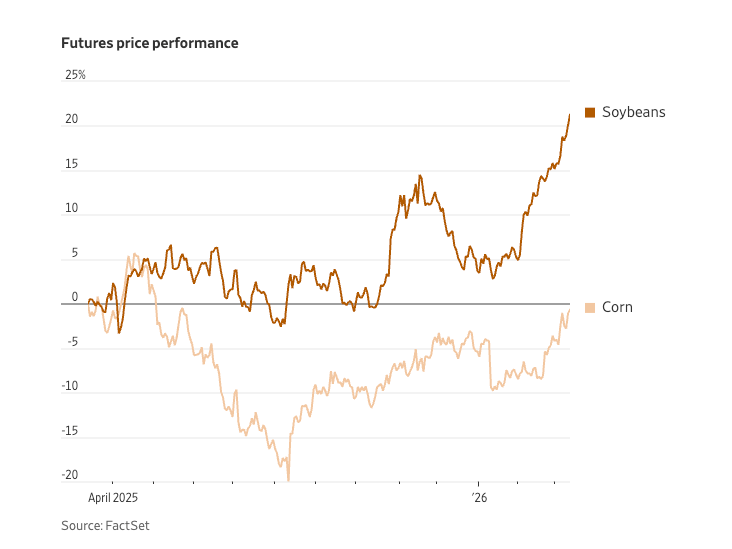
US farmers already battered by trade wars and low crop prices now confront soaring fertilizer costs just as spring planting begins. The Strait of Hormuz closure sent urea prices jumping nearly 30% per ton between late February and early March. A ton of urea at New Orleans port now sells for $585, up from $470 before the war. About 33% of global fertilizer transits from the Strait of Hormuz. The US imports 35% of its fertilizer, including phosphorus and nitrogen, from the Middle East. Qatar, the second-largest urea exporter, and Iran, the third-largest, have effectively stopped shipments. "When we look at ammonia, we're looking at almost 30% of global production being either involved or at risk," Veronica Nigh, chief economist at The Fertilizer Institute, told Wired. "It gets worse when we think about urea. Urea is almost 50%." March traditionally starts spring planting planning, with orders placed now arriving by early April. "If we lose several weeks here, we are talking about limiting the number of tons that arrive in our most important month," said Josh Linville, vice president of fertilizer at StoneX. Many farmers delayed purchases hoping for lower prices or waiting for Trump's $12 billion bailout checks. Those who waited now face 30% higher costs. "Because of the poor farm conditions we were already in, a lot of people didn't pre-buy," said John Newton, chief economist at the American Farm Bureau Federation. Diesel compounds the damage. The national average hit $4.83 per gallon on Wednesday, up more than a dollar in less than a month. Tennessee farmer Will Hutchinson burns 500 gallons of diesel daily during planting and 1,500 gallons during fall harvest, plus 5,000 gallons of liquified petroleum gas. Farmers are pivoting strategies. Some locked in modest profits by selling stored grain from last year's harvest as commodity prices jumped. Soybean futures touched a May 2024 high above $12 per bushel Thursday. Corn reached the highest level since May 2025. "I was doing the farmer happy dance," said Illinois farmer Dave Kestel, who sold 40% of his 2025 harvest. Others are shifting acres from corn to soybeans, which fix their own nitrogen and need less fertilizer. "There's going to be more beans planted," said Keith Sanders, who farms 2,000 acres near the Illinois-Missouri border. Bayer executives expect the shift will hurt their bottom line since corn tends to be more profitable. Nearly 75% of farmers surveyed in January before the war said the crop sector was in recession. Farm bankruptcies hit 315 Chapter 12 filings in 2025, a 46% increase from 2024. The Farm Bureau is calling for Navy escorts for fertilizer shipments through the strait. Fertilizer stocks soared as investors bet US producers with access to cheap domestic natural gas can capture market share. CF Industries surged 76% to an all-time high this year. Mosaic and Nutrien rose 30% and 36% respectively. |
Senate Passes Major Housing Bill as Mortgage Rates Climb
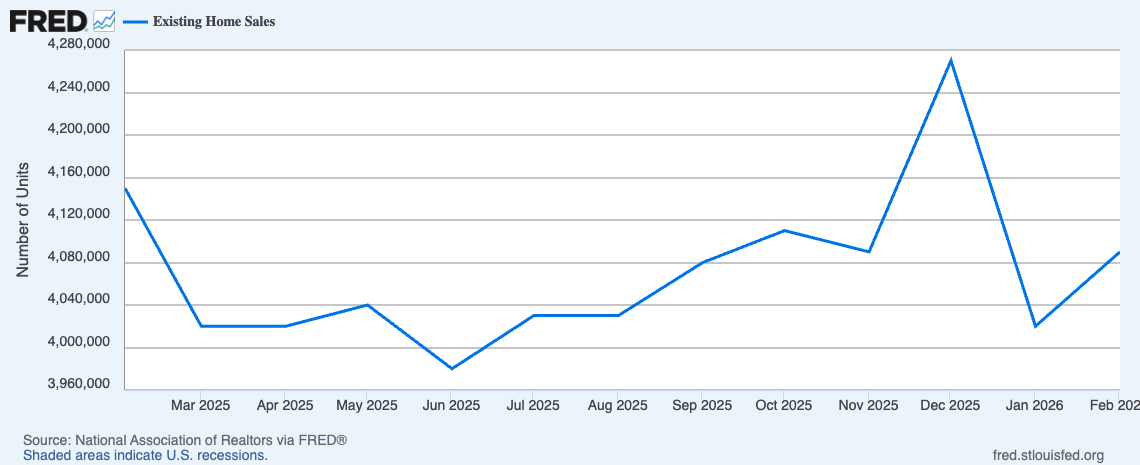
The Senate overwhelmingly passed the largest housing affordability legislation in three decades on Thursday by a vote of 89-10, but the measure faces major hurdles in the House. The bipartisan bill aims to address a 4 million home shortage through deregulation, expanded financing, and limits on institutional investors. The timing is critical because home prices have risen 60% since 2019, according to Harvard's Joint Center for Housing Studies. The median single-family home now costs five times the median household income, well above the affordable ratio. Meanwhile, mortgage rates jumped to 6.11% this week from below 6% in late February as the Iran war drove up Treasury yields. Senators Tim Scott and Elizabeth Warren led the effort. "We need more housing of every kind," Warren said. "More housing for first-time homebuyers, more housing for renters, more housing for seniors, more housing for people with disabilities, more rural housing, more urban housing." The bill streamlines environmental reviews, expands financing for affordable housing, and eliminates the requirement that manufactured homes be built on a permanent chassis. That change could cut costs $5,000 to $10,000 per home. It also raises loan limits for federally-backed multifamily mortgages and creates grants for converting vacant buildings into housing. The most contentious provision bans institutional investors owning 350 or more single-family homes from buying additional properties. Investors could still build single-family rentals but must sell them after seven years. Trump pushed the ban, writing in January: "People live in homes, not corporations." Industry groups erupted. 79 organizations including the National Association of Home Builders warned the seven-year requirement would "effectively eliminate" build-to-rent housing, which accounts for 7% of new single-family construction. "The restrictions placed on new rental units must be removed from the bill," said Adrianne Todman, CEO of the National Rental Home Council. Even some Democrats balked. Senator Brian Schatz, who voted against the bill, called the 350-home cap "bananas" and warned it would "screw up" the rental market. Large investors owning more than 100 properties make up less than 1% of the market nationwide, according to the American Enterprise Institute. House passage looks uncertain. Speaker Mike Johnson told Republicans the bill would likely need formal conference negotiations to reconcile differences with the House version passed in February. House conservatives oppose the investor restrictions and want a permanent ban on central bank digital currency versus the Senate's temporary prohibition. Trump complicates matters further. He declared on Sunday that he won't sign any legislation until Congress passes the SAVE America Act requiring voter ID and ending most mail-in balloting. Democrats oppose that measure, leaving the housing bill's fate uncertain despite White House support. Construction data shows the urgency. Single-family housing starts fell 2.8% in January to 935,000 units annually. Building permits for single-family homes dropped to the lowest since August. Home sales have hovered near a 4 million annual pace since 2023, well below the historical norm of 5.2 million. |
Consumers Hold Steady as Stagflation Threat Looms
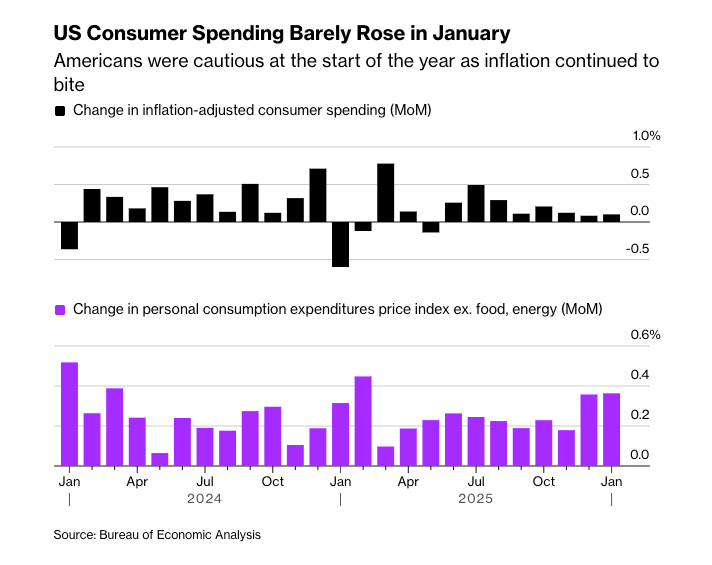
US consumer spending barely rose in January while the economy grew at a weaker-than-expected 0.7% annualized rate in the fourth quarter, down sharply from an initial estimate of 1.4%. The downgrade came from weaker consumer spending, business investment, exports, and government outlays hammered by last year's 43-day shutdown. Inflation-adjusted consumer spending increased just 0.1% in January from the prior month. Nominal spending rose 0.4%, meeting expectations, as consumers pulled back on goods after the holiday season but continued spending on essentials like healthcare. The saving rate jumped by the most in a year, suggesting households tucked away extra income rather than spending it. Core PCE inflation, the Fed's preferred gauge, rose 0.4% monthly and climbed 3.1% year-over-year in January, the largest gain since March 2024. Services inflation excluding energy and housing rose at one of the strongest paces in a year. "The big downward revision in GDP is a gut check going into this energy crunch, increasing the risk of stagflation," said David Russell, global head of market strategy at TradeStation. The Iran war threatens to worsen the picture. Retail gasoline prices have soared more than 20% to $3.60 per gallon since the conflict started. If oil settles at $83 per barrel or above for much of the year, that would cancel out the average household's gains from tax refunds, according to Bloomberg Economics. Consumer sentiment already reflects the damage. The University of Michigan's sentiment gauge declined 2% this month to 55.5. "Interviews completed prior to the military action in Iran showed an improvement in sentiment from last month, but lower readings seen during the nine days thereafter completely erased those initial gains," said survey director Joanne Hsu. The data presents the Fed with an impossible choice. Markets now anticipate just one rate cut this year in September, down from two cuts previously expected. "We now see a steep rise in inflation and weaker economic activity in the second quarter," said Kathy Bostjancic, chief economist at Nationwide. Some corporate data offers modest relief. Bank of America's card spending data shows spending up 4.6% last week with normal seasonal patterns. BofA co-president Dean Athanasia noted clients "on the lower end are still in good shape. They still have a lot of deposits. They have greater than 13% more deposits than they had in pre-Covid." Executives from Visa and Mastercard struck similar notes at recent conferences. "The watch words are stability and resilience," said Jack Forestell, Visa's chief strategy officer. He rejected the K-shaped recovery narrative: "I don't really see K-shaped. It's probably a little bit more letter E-shaped." But wealthier consumers are carrying the load. Investors accounted for 30.2% of home purchases in 2025, nearly double their pandemic share, not from increased activity but from traditional buyers pulling back. The job market adds to concerns. February's loss of 92,000 jobs and 4.4% unemployment rate threaten to undermine confidence further. |
That’s all for today!
Your Retirement Savings Need to Outlast You

Most retirement plans underestimate two things: how long your savings need to last, and how quietly inflation erodes them along the way.
The 15-Minutes Retirement Plan helps you close both gaps with practical guidance on longevity risk, purchasing power, and building a financial plan that doesn't run out before you do.
If you have $1,000,000 or more saved, download your free guide to start.
