Welcome to FinSoar! This week we’re looking at Congress finally moving to fix housing, Americans are leaning towards home ownership over renting, and against all hype, Michael Burry is snubbing SpaceX.
Americans Tilt Toward Buying Over Renting for the First Time Since 2023
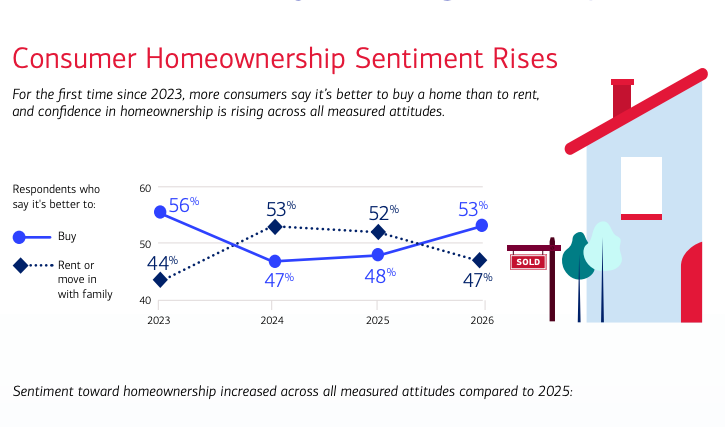
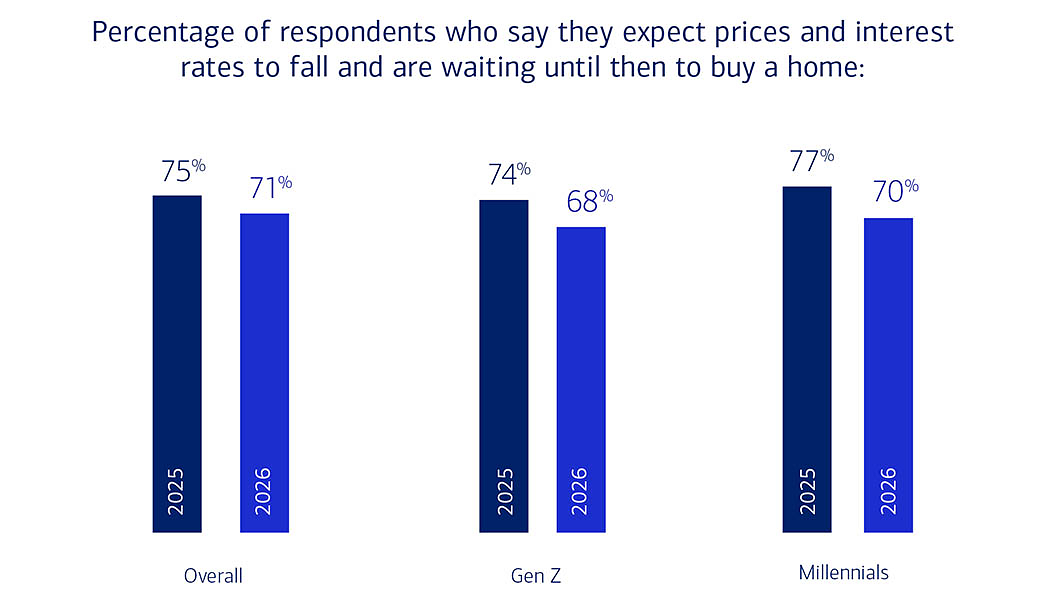
A majority of US consumers now say buying a home beats renting or moving in with family, the first such shift since 2023, according to Bank of America's latest Homebuyer Insights Report. The survey of 2,000 adults found 53% favor buying, with 47% preferring to rent or live with family. Gen Z and millennials led the change. Some 90% of respondents called a home a valuable investment, up from 79% in 2025, while 94% said homeownership provides stability, up from 83%. Confidence in the ability to buy rose to 32% from 27%. The main obstacles remain steep. The share citing expensive home prices as a barrier jumped to 58% from 46% a year earlier, while those pointing to high interest rates rose to 47% from 40%. Rent payments are declining as renters trade down to smaller units and shared living. The share of buyers holding out for lower prices and rates fell to 71% from 75% in 2025. Among homeowners, 22% now plan to buy within a year, up from 15%. The driver appears to be acceptance, not relief. BofA's Matt Vernon told HousingWire that current rates have become a "new normal," a clear inflection point after the shock of the post-pandemic climb toward 7%. BofA expects mortgage rates to hold in a 6.25% to 6.75% range this year. The lock-in effect is loosening too. More prospective buyers said they would accept a higher rate to reach a more affordable area, 76% versus 71% in 2025, or to land their dream home. AI is now part of the process too. One in five buyers and owners used AI tools or chatbots in the past year to estimate costs, scout neighborhoods, and track market trends, rising to 32% of Gen Z and 28% of millennials. Buyers still prefer human expertise for touring homes and legal advice. Younger buyers are stretching to get in. Nearly a third of Gen Z are considering co-buying with friends or family, 28% are taking on extra jobs, and 31% plan to use assistance programs. Vernon noted Gen Z faces "social pressures" as they watch peers buy.
|
Wall Street Gets A Housing Cap
The Senate gave Washington's housing push a rare bipartisan win on Monday, passing the 21st Century ROAD to Housing Act by an 85-5 vote and sending it to the House, where lawmakers are expected to move quickly. The headline piece is simple enough: large institutional investors that already own 350 or more single-family homes would be blocked from buying additional ones, with a carve-out for some build-to-rent projects. That makes for clean politics. Housing affordability is a midterm issue, and blaming Wall Street is easier to explain than zoning, permits, mortgage rates, construction labor, and a decade-plus of underbuilding. The bill also lands in a market where buyers are still stretched. The average 30-year fixed mortgage rate is 6.47%, and pending home sales rose in May to their highest level this year, though the recovery remains uneven by region. The bill would streamline environmental reviews, expand grant programs for local housing production, support manufactured housing, and create a pilot program for smaller mortgages of $100,000 or less. It would also raise limits on public housing units that can use private financing through Section 8 to rehab properties. The question is how much this changes prices. Several housing experts are cautious because institutional investors are a small slice of the total single-family market. Urban Institute estimates that institutional investors own just 3% of single-family rentals and less than 0.5% of the total single-family housing stock. That suggests the cap may be more useful as a political signal than a price lever. Congress has struggled to do much on housing for years, and this package shifts the federal role toward supply incentives, manufactured homes, and local production rewards. |
That’s all for today!/
