Hi there! Happy Friday.
The DOJ folded its criminal probe of Jerome Powell, clearing the runway for Kevin Warsh's confirmation and ending a months-long pressure campaign on Fed independence.
Intel posted its biggest single-day stock move since 1987 after a blowout quarter that finally validated the AI-CPU thesis.
And Samsung's largest-ever worker rally is threatening to take memory chip supply offline just as AI demand hits new highs.
Powell Probe Dropped, Warsh Path Cleared
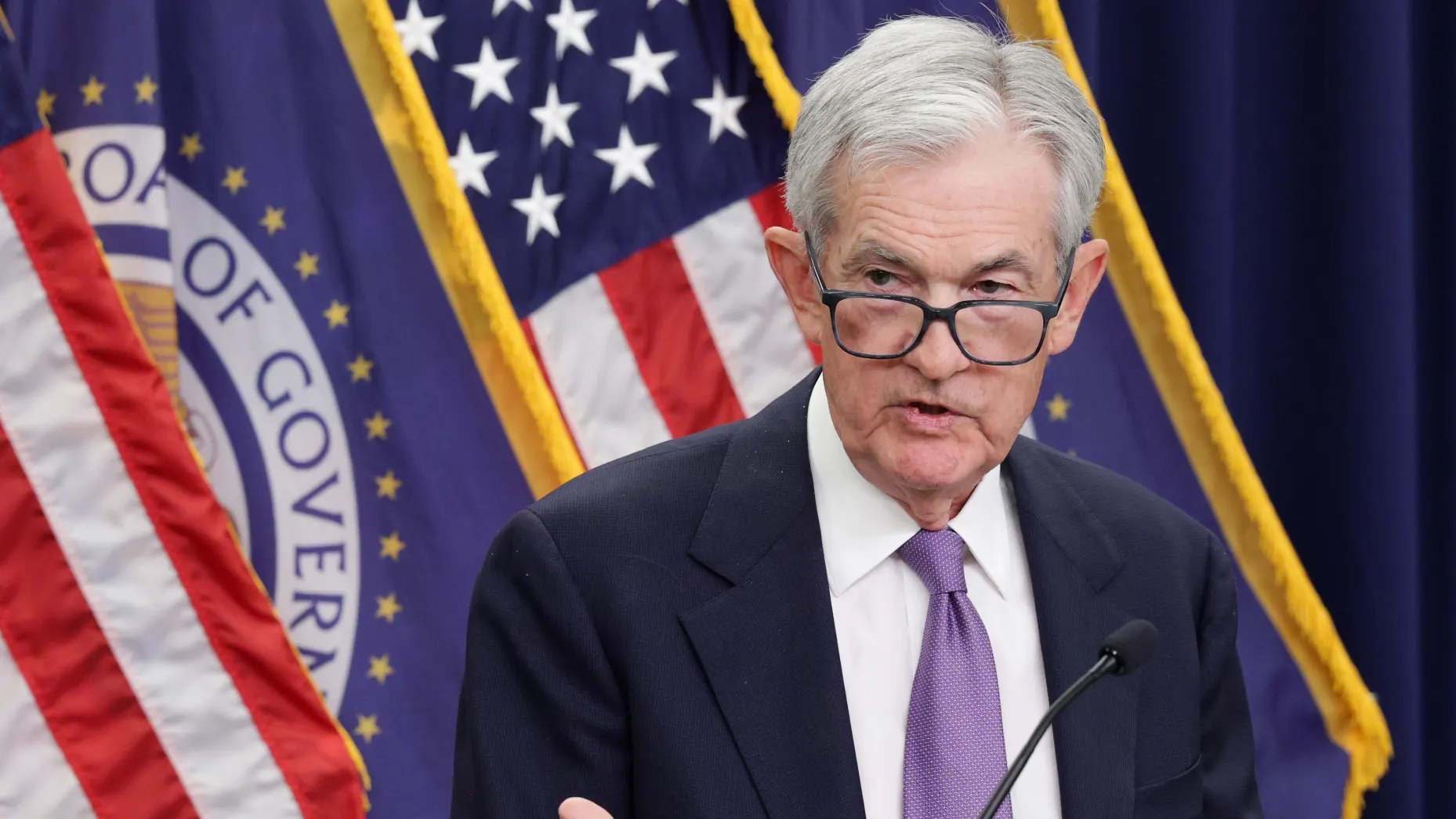
The Department of Justice dropped its criminal investigation of Federal Reserve Chair Jerome Powell on Friday, removing the final procedural hurdle to confirming Kevin Warsh as Powell's successor. US Attorney Jeanine Pirro announced the decision on X, saying the Fed's inspector general would instead investigate cost overruns at the central bank's $2.5 billion headquarters renovation. Pirro added that she would not hesitate to restart a criminal probe "should the facts warrant doing so." The investigation had been on shaky legal footing for weeks. On March 13, Chief Judge James Boasberg of the DC District Court blocked subpoenas Pirro's office had served on the Fed, writing that the government had produced essentially zero evidence to suspect Powell of a crime. Boasberg added that a mountain of evidence suggested the subpoenas were designed to pressure Powell into voting for lower rates or resigning. The Fed's inspector general had already reviewed the renovation project twice and found no wrongdoing, with a third review requested by Powell himself in 2025. The political stalemate broke once Senator Thom Tillis made clear he would not advance Warsh's nomination while the criminal probe remained open. Tillis had branded the investigation "bogus" in January and held firm through Warsh's April 21 confirmation hearing. Banking Committee Chair Tim Scott told CNBC this week that switching the probe to congressional oversight was essential to getting Warsh confirmed, adding that he believed Powell "was incompetent, not criminal." Warsh, a former Fed governor and Wall Street executive, would be the wealthiest Fed chair in history, with disclosures showing he is worth over $100 million. He has signalled alignment with Trump on lower rates, raising Democratic concerns about institutional independence. Senator Elizabeth Warren called the move "an attempt to clear the path" for installing what she described as Trump's "sock puppet." Powell's term ends May 15. He has indicated he will remain in the chair until Warsh is confirmed, with one more FOMC meeting on his calendar this week where rates are expected to hold steady. The Lisa Cook case remains unresolved at the Supreme Court, with a ruling expected by June on whether Trump's attempted firing of the Fed governor was constitutional. The pressure campaign on Fed independence is shifting venue, not ending. |
Intel's Comeback Goes From Hope to Trajectory
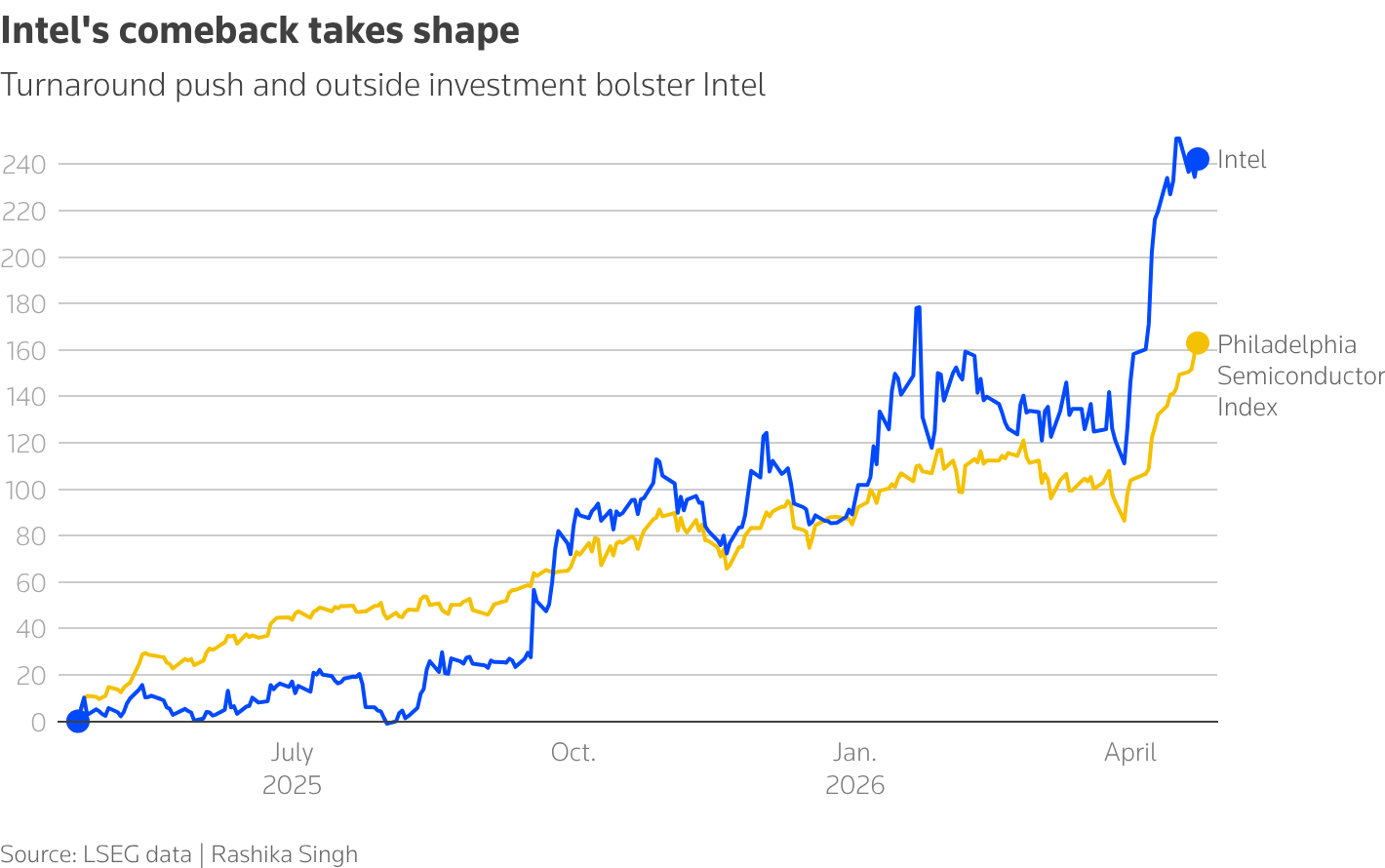
Intel delivered the kind of quarter that rewrites narratives. The chipmaker reported first-quarter revenue of $13.58 billion against a $12.42 billion estimate, with adjusted earnings of 29 cents per share crushing the 1-cent consensus. Second-quarter guidance came in at $13.8 billion to $14.8 billion, well above the $13 billion Street view. Shares jumped roughly 24% on Friday, surpassing the company's dot-com peak from 2000 and pushing market value above $416 billion. According to Sherwood, the move was Intel's best single day since October 1987. The thesis underneath the move is structural. CPUs are reasserting themselves in AI workloads as the industry shifts from training to inference and agentic applications. Data center revenue climbed 22% to $5.1 billion, and CFO David Zinsner told analysts that demand was so strong Intel had to dig into shelved inventory and sell de-spec chips it had previously written off. The CPU business is now expected to post double-digit growth in 2026, up from prior guidance of slight growth just six months ago, according to Citi. Foundry revenue rose 16% to $5.4 billion, though much of that still consists of Intel making chips for itself. The valuation has rerated accordingly. Intel now trades at roughly 90 times forward earnings, its highest on record and well above AMD's 37 and Nvidia's 22. At least 23 brokerages raised price targets after the print, lifting the median to $75 from $46.50 a month ago. Evercore moved its target to $111 from $45, while Citi went to $95 from $48. Of 47 analysts covering the stock, 34 still carry only a hold rating, suggesting Wall Street has been slow to mark its work to market. The Trump administration's August 2025 deal looks better by the day. The government acquired roughly 10% of Intel for $8.9 billion. That stake is now worth nearly $35 billion according to the New York Times. CEO Lip-Bu Tan, who took over in early 2025, has cut 15% of the workforce, secured Nvidia and SoftBank as investors, and just landed Tesla as a 14A foundry customer through Musk's Terafab project. Operating margins have improved 500 basis points and net debt has improved by $17 billion since Tan arrived. Net loss still widened to $4.28 billion in the quarter, a reminder that the manufacturing buildout is expensive. |
Samsung's Labor Revolt Threatens AI Chip Supply
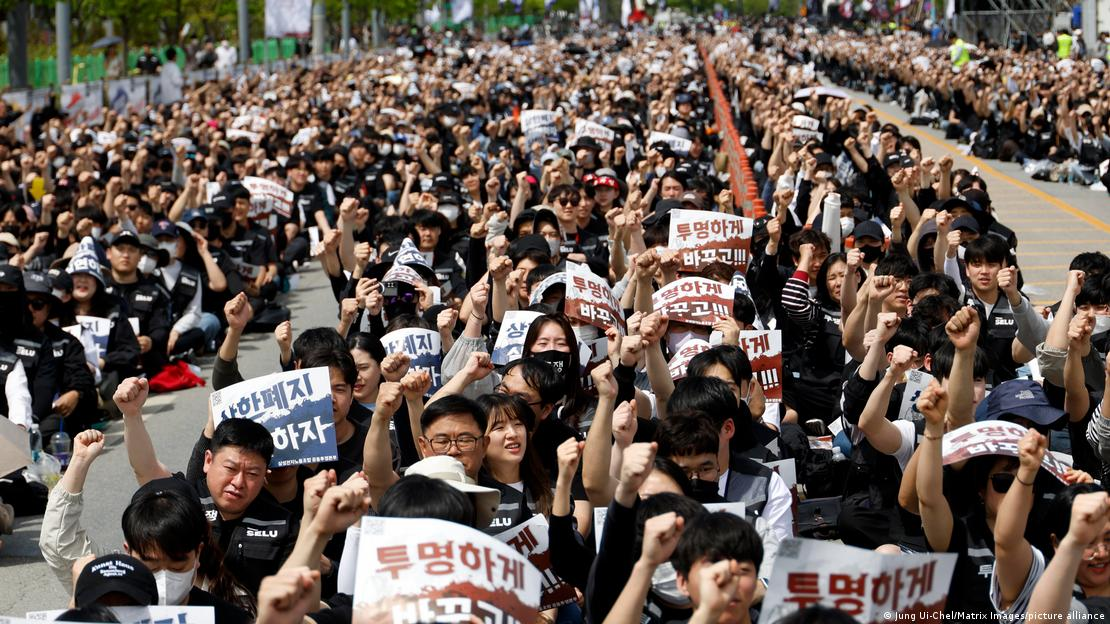
Roughly 40,000 Samsung Electronics workers staged the largest rally in the company's history on Thursday at its Pyeongtaek complex south of Seoul, demanding pay parity with rival SK Hynix and threatening an 18-day strike from May 21 that could disrupt global AI chip supply. The union said foundry output dropped 58% and memory production fell 18% during the Thursday-to-Friday overnight shift as workers skipped their stations to attend the protest. The grievance is about who captures the AI windfall. SK Hynix beat Samsung to delivering high bandwidth memory to Nvidia and other AI chip clients after ChatGPT's late-2022 release, and it has been rewarded for it. The Korean rival posted record quarterly operating profit of 37.6 trillion won ($25.4 billion) on Thursday. Samsung's own Q1 operating profit guidance is even larger at 57.2 trillion won, but compensation hasn't followed. The union claims a chip division employee with 76 million won in base pay would receive 38 million won in 2025 bonuses, less than a third of what an SK Hynix counterpart would earn. SK Hynix accepted its union's demand to scrap bonus caps in September, and Samsung membership has surged in response. The union now represents over 90,000 workers, more than 70% of Samsung's South Korean workforce. The specific demands are concrete. The union wants a 7% base salary hike, 15% of annual operating profit allocated to bonuses, removal of the current bonus cap set at 50% of annual base salary, and transparency on how bonus pay is calculated. Management has countered with 10% of operating profit and additional memory division top-ups. The optics around the rally were unusual for Samsung's traditionally hierarchical culture — workers walked over a banner bearing Chairman Jay Y. Lee's face with mocking nicknames written across it. The market is largely shrugging for now. Samsung shares rose 3% to a record close on Thursday, riding SK Hynix's blowout numbers. But the strike math matters. The union claims a walkout would cost the company more than 1 trillion won ($676 million) per day, and a Samsung official warned anonymously that even a single strike-driven production halt could damage customer trust for years. With Samsung and SK Hynix together making roughly two-thirds of global memory chips, any sustained disruption tightens an already constrained AI supply chain and pushes prices higher. The May 21 deadline is now a hard catalyst for memory pricing. |
That’s all for today!/
