Welcome to another week with FinSoar, and what a week it’s already been. It’s Tuesday, I know. Apple announced its return to the AI race with Siri, horror movies seem to be more successful than any other genre since 2025, and Trump’s H1B visa fees were struck down as unlawful. Let’s take a look:
A Judge Strikes Down Trump's $100,000 H-1B Visa Fee
A federal judge struck down the Trump administration's $100,000 fee on new H-1B visas yesterday, ruling it an unlawful tax that Congress never authorized. US District Judge Leo Sorokin in Boston sided with 20 states, finding the policy violated both the Administrative Procedure Act and the Constitution. The Trump administration plans to appeal. The core finding was about taxing power. Sorokin wrote that "the substance and application of the $100,000 payment reveal that it is a tax," regardless of what it is called, and that Congress had not delegated that power to the executive branch. He rejected the administration's argument that the fee was a lawful penalty or "regulatory payment," calling that claim "mere ipse dixit," meaning offered without evidence. The tariff parallels are hard to miss. Sorokin cited the Supreme Court's February ruling striking down Trump's tariffs, in which the high court ruled that levies assessed by the Department of Homeland Security amount to taxes under the Constitution's Taxing Clause. DHS is also a defendant in the H-1B case, and Sorokin applied the same logic. Trump implemented the fee by proclamation last September, arguing the H-1B program had been "deliberately exploited to replace, rather than supplement, American workers." Before the proclamation, H-1B fees typically ran $2,000 to $5,000 per application. The fee landed hardest on the sectors that rely most on the program. Tech companies are the biggest users, with nearly three-quarters of approvals going to workers from India. The states argued the fee would increase shortages of teachers, academic researchers, and medical workers. American Medical Association president Bobby Mukkamala called the ruling "a victory for patients," noting international medical graduates play a vital role in underserved and rural areas. The chilling effect was visible in the numbers: as of February 15, USCIS had received just 85 payments of the $100,000 fee. Sorokin's ruling contradicts a December decision by Judge Beryl Howell, who allowed the fee to proceed. With the US Chamber of Commerce appealing in Washington and another suit pending in San Francisco, the question is set up for divided rulings across three appellate circuits. Trump, asked about the decision, said "these federal judges are really giving us a hard time." For the tech, healthcare, and university employers who depend on high-skilled foreign labor, the immediate cost barrier is gone — but the appellate uncertainty means the workforce planning whiplash is far from over. |
Apple Finally Reveals Its Siri AI Overhaul
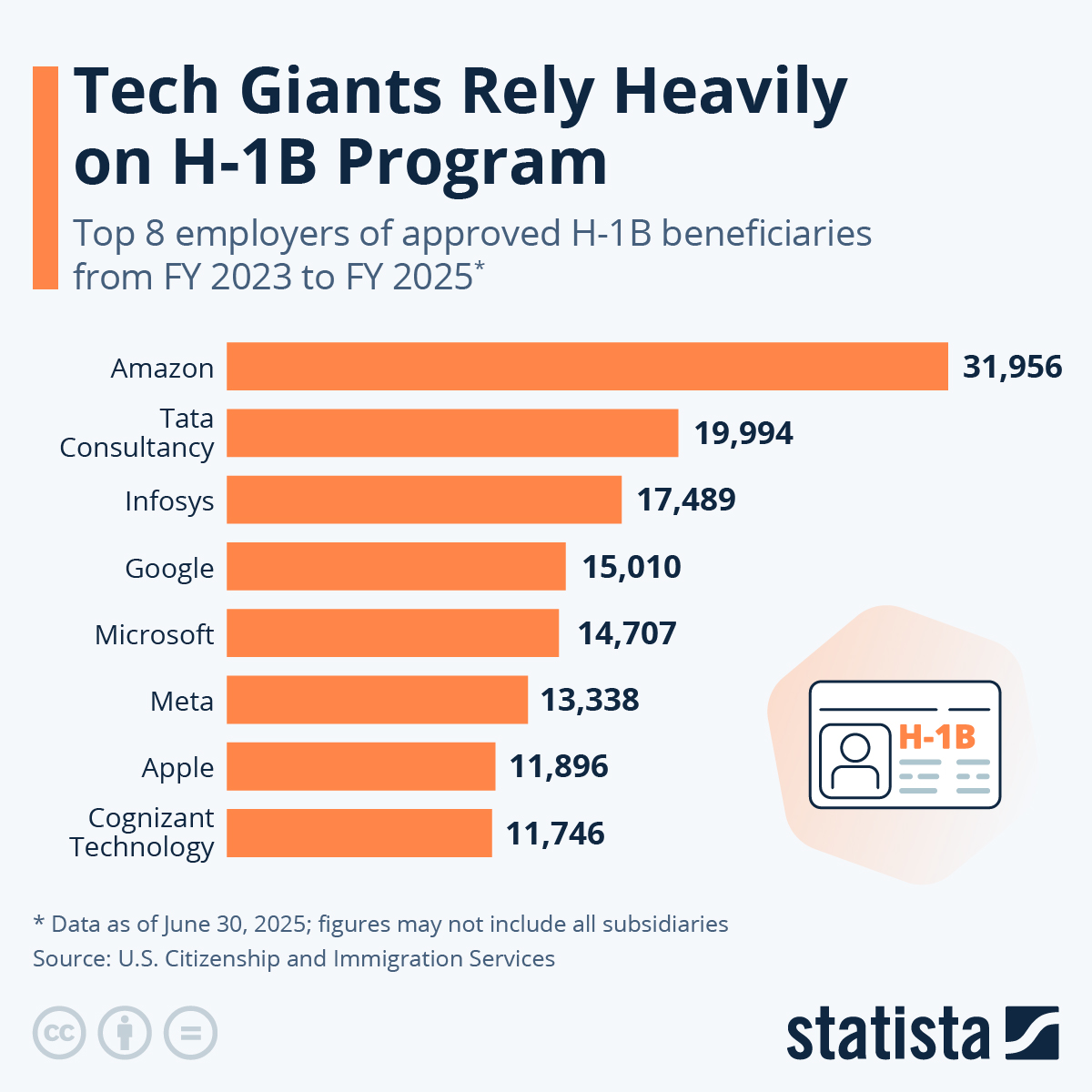
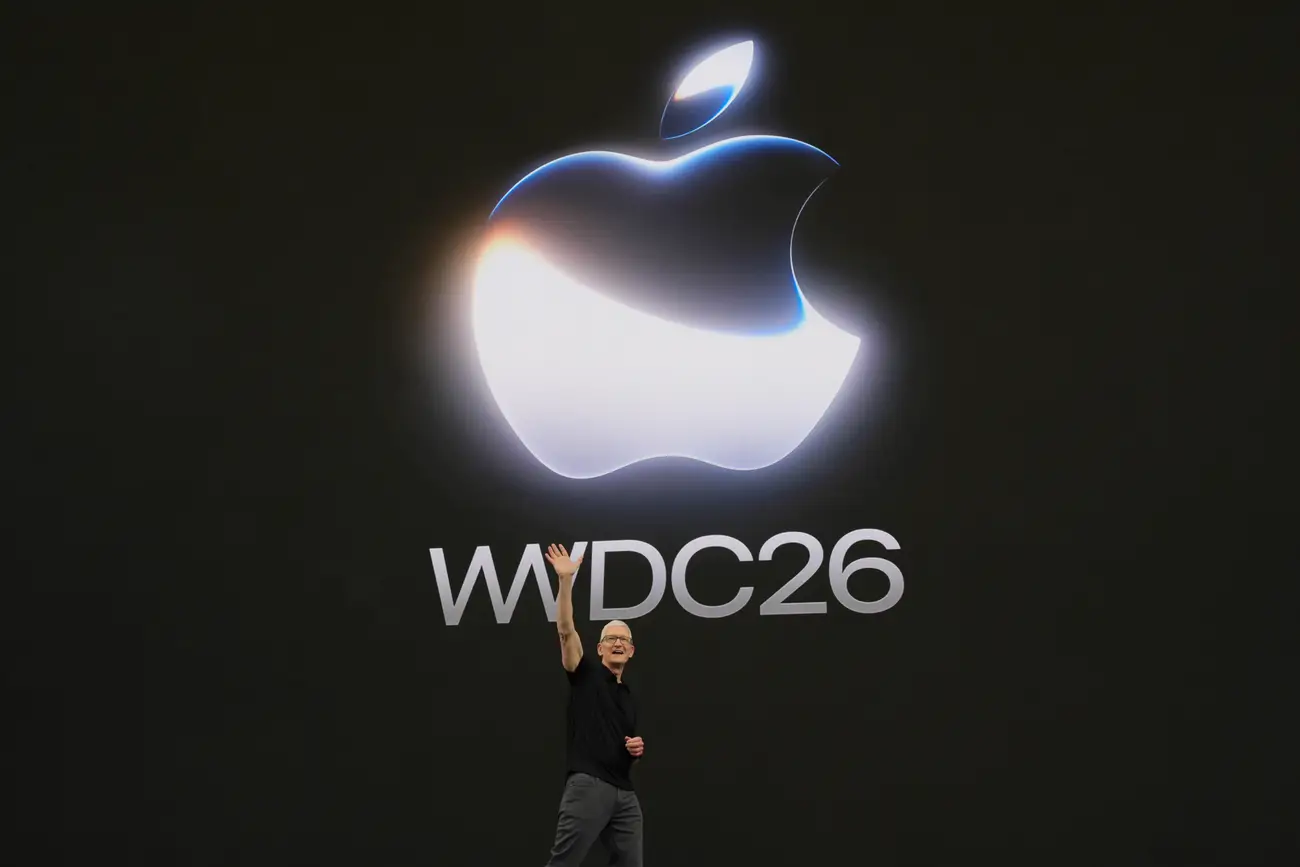
Apple unveiled a long-delayed overhaul of Siri at its Worldwide Developers Conference on Monday, introducing "Siri AI" as it scrambles to catch up with rivals like ChatGPT and Google's Gemini. The revamped assistant will work across Apple products and apps and arrive as a standalone app. A beta launches later this year. The new Siri draws on personal context. Apple says it can analyze what is on a user's screen and pull information from a person's Apple devices, such as referring to photos when answering queries. Users can have back-and-forth chatbot-style conversations and revisit previous threads. A new Siri mode in the camera app can answer questions based on what the camera is pointing at, like calculating a split bill at a restaurant. The underlying engine is borrowed. The new Siri is powered by a January partnership with Google, under which Gemini models form the basis of Apple's AI systems. Investors may like that Apple is "just paying rent to Google" for Gemini rather than shoveling money into self-made AI development like many tech peers. Apple's Siri overhaul has faced repeated delays, and some features shown Monday were initially slated for last year. The company first announced a personalized Siri at WWDC 2024, then delayed it in March 2025, and last month agreed to pay $250 million to settle a class-action lawsuit accusing it of misleading customers about AI features. Apple's share price fell close to 2% after the news. Apple's edge lies in sheer scale. More than 2.5 billion Apple devices are in use globally, and about 1 billion iPhones currently don't support Apple Intelligence. That installed base is a built-in upgrade market. Deepwater's Gene Munster put it bluntly: "They're not going to mess it up. They've got too much at stake to drop the ball." Siri AI will not launch initially in the European Union or China, two major markets, due to regulatory disputes. This was Tim Cook's last WWDC as CEO before he steps down in September after 15 years, handing the reins to hardware chief John Ternus. Cook's tenure saw Apple's share price soar roughly 2,000% on a split-adjusted basis. The Siri overhaul lets Cook close the chapter on Apple's AI stumbles and hand Ternus a clearer runway. For Apple, the bet is that integration and privacy, layered across billions of devices, can convert a late start into an advantage. |
Horror Is Outrunning Hollywood's Blockbusters
Two micro-budget horror films directed by Gen Z YouTubers have become the box office story of 2026, both clearing $100 million and exposing how out of step the studio playbook has become. "Obsession," directed by former YouTuber Curry Barker, has grossed $152.1 million in North America and nearly $200 million globally, making it Focus Features' most successful film ever. The economics are staggering. "Obsession" was made for a reported $750,000 in 20 days, grossing $224 million by early June, roughly 330 times its budget — putting it among the highest return multiples in film history, alongside "Paranormal Activity" and "The Blair Witch Project." The most unusual record was its trajectory. Films are typically judged by how much they drop in their second weekend, but "Obsession" actually grew, with ticket sales jumping 39% in its second weekend — something that had never happened for a wide-release horror movie. "Backrooms," directed by 20-year-old Kane Parsons and based on a 4chan meme turned viral YouTube series, opened to $81 million in North America, breaking distributor A24's opening weekend record. The common thread is not film school but the audience. As the New York Times noted, these creators "brought an audience, built from the grass roots," along with them to theaters. Viewers came because they had already bought into the creators' work, not because they saw a trailer. The contrast with legacy IP is brutal. "Masters of the Universe," the He-Man adaptation with production costs reportedly as high as $200 million, grossed just $29.3 million in its opening weekend. A micro-budget horror film made for less than 1% of that figure is lapping a fully marketed franchise tentpole. Horror is typically youth-driven at the box office, less capital-intensive than blockbusters, and has long served as a proving ground for new voices outside the studio system. The genre had a record-breaking 2025, with multiple films crossing $50 million domestically. The structural lesson cuts against the streaming-first instinct. "Obsession" distributor Blumhouse shelved its planned June 2 digital release indefinitely as the film kept growing in theaters. The takeaway is not to throw money at copycats, but to find creators who have organically built younger audiences and give them creative freedom. For an industry that spent years insisting phone-addled Gen Z would never fill a theater, the data says the opposite. The audience is there — it just wants to follow people it already trusts to the big screen. |
That’s all for today!/
