Welcome back to FinSoar!
Gas prices posted their largest monthly jump on record, pushing U.S. inflation to a two-year high as the Iran war squeezes global oil supplies. Amazon finally put a number on its AI business.
And tonight, four astronauts splash down after traveling farther from Earth than any humans in history.
Consumer Inflation Hits Nearly Two-Year High as Iran War Drives Gas Prices to Record Surge
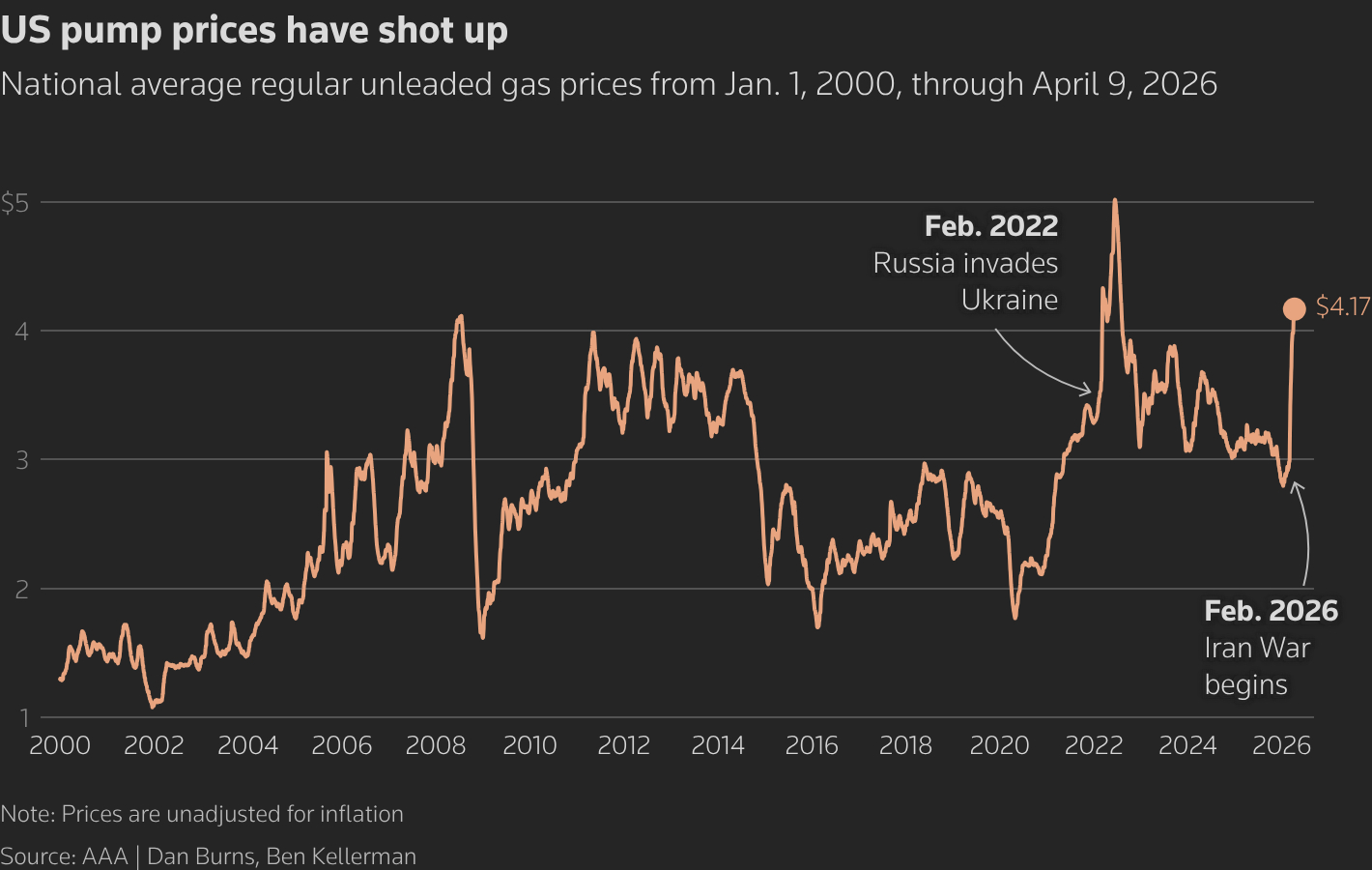
US consumer prices jumped 0.9% in March, the largest monthly increase since June 2022, as the war with Iran sent gasoline prices soaring. The Consumer Price Index rose 3.3% year-on-year, up from 2.4% in February and the highest annual rate in nearly two years. Gasoline was the story. Prices at the pump surged 21.2% from February to March, the biggest monthly increase since the government started tracking the data in 1967. Diesel and other motor fuels rose 30.8%, also a record. Together, gas prices accounted for nearly three-quarters of the month's overall inflation increase. The spike traces directly to Iran's blockade of the Strait of Hormuz, a waterway that normally handles about a fifth of the world's oil supply. Global crude prices surged more than 30%, with Brent hitting $118 per barrel by the end of March, up from roughly $70 before the conflict began. The national average price of gasoline broke above $4 a gallon for the first time since 2022, when Russia's invasion of Ukraine triggered a similar shock. Core inflation, which strips out volatile food and energy, painted a calmer picture — rising just 0.2% for the month and 2.6% year-on-year. But economists warn this won't last. Jet fuel costs will push airline fares higher. Diesel will raise prices for anything transported by road. Fertilizer, another key export through the strait, threatens to lift food costs. Amazon announced it will start levying a 3.5% fuel and logistics surcharge for third-party sellers later this month. Consumer sentiment collapsed to a record low, with the University of Michigan's April reading falling to 47.6, lower than anything seen during the Great Recession, the pandemic, or the post-pandemic inflation surge. Inflation expectations for the year ahead jumped a full percentage point to 4.8%. The Federal Reserve now faces a difficult position. Minutes from its March meeting showed a growing group of policymakers believe rate hikes might be necessary if inflation persists. The central bank left rates at 3.50%-3.75%, but the prospect of cuts this year has all but evaporated. Trump announced a two-week ceasefire on Tuesday, conditional on Iran reopening the strait. But the truce looks fragile, and even if it holds, economists say it could take months for prices to normalize. As one J.P. Morgan economist described it: prices go up like a rocket and come down like a feather. |
Amazon Reveals $15 Billion AI Revenue, Defends $200 Billion Spend
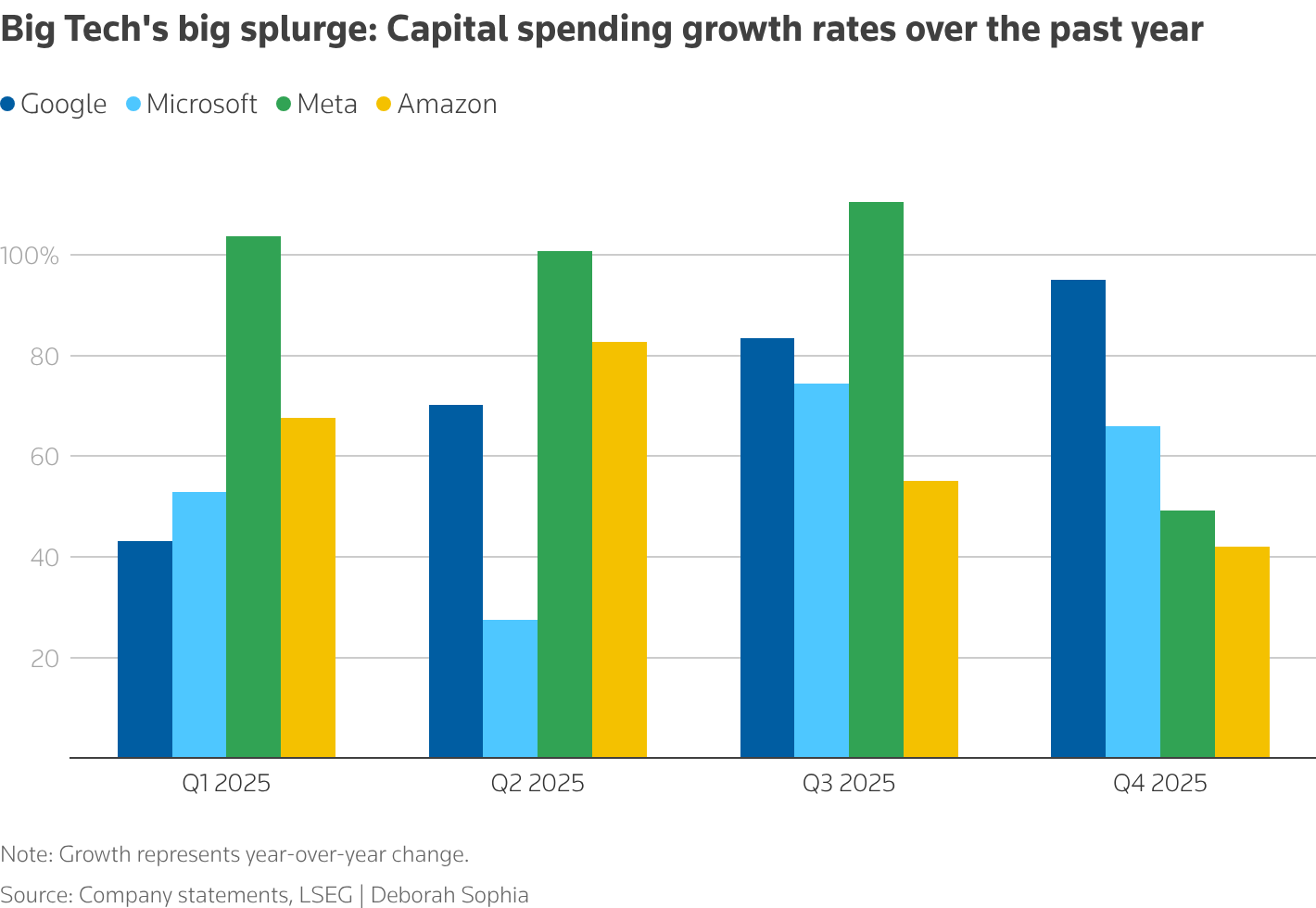
Amazon finally gave investors what they've been asking for: a number. In his annual shareholder letter, CEO Andy Jassy disclosed that AWS's AI business hit a $15 billion annual revenue run rate in the first quarter. It was the first time the company had put a figure on the AI services business it has poured billions into building. The disclosure landed at a useful moment. Amazon's stock has struggled this year as investors grew increasingly skeptical of the company's aggressive AI spending plans. The company projected $200 billion in capital expenditure for 2026, nearly 60% higher than last year, with most of it going toward AI infrastructure. That figure spooked Wall Street and fueled talk of an AI bubble. Jassy pushed back directly. "We're not investing approximately $200 billion in capex in 2026 on a hunch," he wrote. He noted that Amazon already has customer commitments for a substantial portion of that spending, including an agreement worth over $100 billion from OpenAI. Much of the outlay will be monetized in 2027 and 2028. The custom chip business looks even hotter. Amazon's in-house processors — including Graviton, Trainium, and Nitro — now have an annualized revenue run rate exceeding $20 billion, double the $10 billion figure disclosed alongside fourth-quarter results. Growth is running at triple-digit percentages year over year. Jassy hinted at bigger ambitions. He suggested Amazon could eventually sell its chips to outside customers, estimating that if the chip unit were a standalone business selling to third parties, it could generate $50 billion in annual revenue. That would put Amazon in direct competition with Nvidia and Broadcom. Google has already gone down this path, striking a deal last October to supply Anthropic with one million of its custom AI chips. The market responded. Amazon shares rose 5.6% on Thursday, the stock's biggest single-day gain since October 2025. The $15 billion AI run rate represents roughly 10% of AWS's $142 billion overall revenue run rate. For context, Microsoft said in January that its AI business had crossed a $13 billion run rate in late 2024. Jassy framed the opportunity in familiar terms. He invoked the early days of AWS, when Amazon invested heavily in cloud infrastructure while remaining unprofitable for years. Investors who stuck around were rewarded. Whether AI follows the same trajectory remains the $200 billion question. |
Artemis II Set for Splashdown as NASA Proves It Can Still Send Humans to the Moon
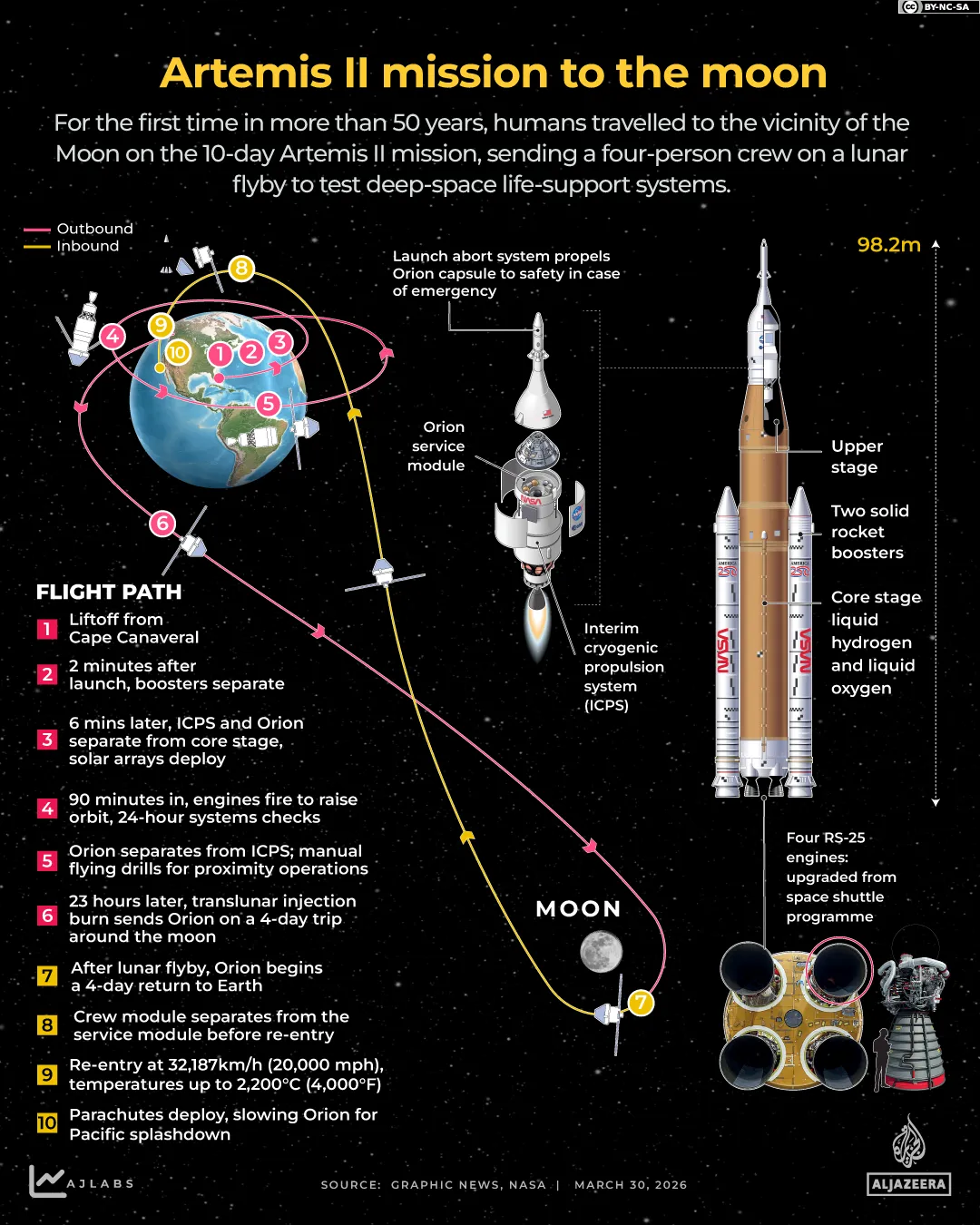
NASA's Artemis II crew is scheduled to splash down in the Pacific Ocean tonight at 8:07 PM ET, ending a 10-day mission that took humans farther from Earth than ever before. The four astronauts traveled 252,756 miles from home, breaking a record set by Apollo 13 more than five decades ago. The return is the most critical phase of the mission. The Orion capsule will hit Earth's atmosphere at roughly 25,000 mph, generating temperatures up to 5,000°F around the heat shield. A sequence of 11 parachutes will then slow the spacecraft to about 17 mph for a relatively gentle landing off the coast of San Diego. All eyes will be on the heat shield. During the uncrewed Artemis I mission in 2022, engineers found the shield had lost more material than expected, including pitting and missing sections. The same design flew on Artemis II. Rather than replace the shield and face major delays, NASA adjusted the re-entry trajectory. A steeper, more direct path will reduce the time spent in peak heating conditions. The mission validated systems NASA needs for future lunar landings. The agency is targeting a crewed moon landing in 2028 and has plans for a $20 billion moon base within a decade. Friday's splashdown marks the first recovery of a crewed spacecraft returning from the moon since Apollo 17 in December 1972. There will be a six-minute communications blackout during the most intense part of re-entry, when superheated plasma surrounds the capsule and blocks radio signals. Recovery teams aboard the USS John P. Murtha are positioned to retrieve the crew within two hours of splashdown. NASA coverage begins at 6:30 PM ET on the agency's website and YouTube channel. |
That’s all for today!/
Stack BTC while you sleep

YieldClub puts your savings on autopilot, depositing into a yield account that automatically converts earnings into Bitcoin around the clock. No charts, no timing the market, no minimums.
