Happy weekend with FinSoar! This Friday, I’m thinking about the world’s most showy but vague summit, California feels a medicaid funding freeze, and Starbucks is cutting down on corporate employment.
Trump-Xi Summit Delivers Atmospherics Over Substance
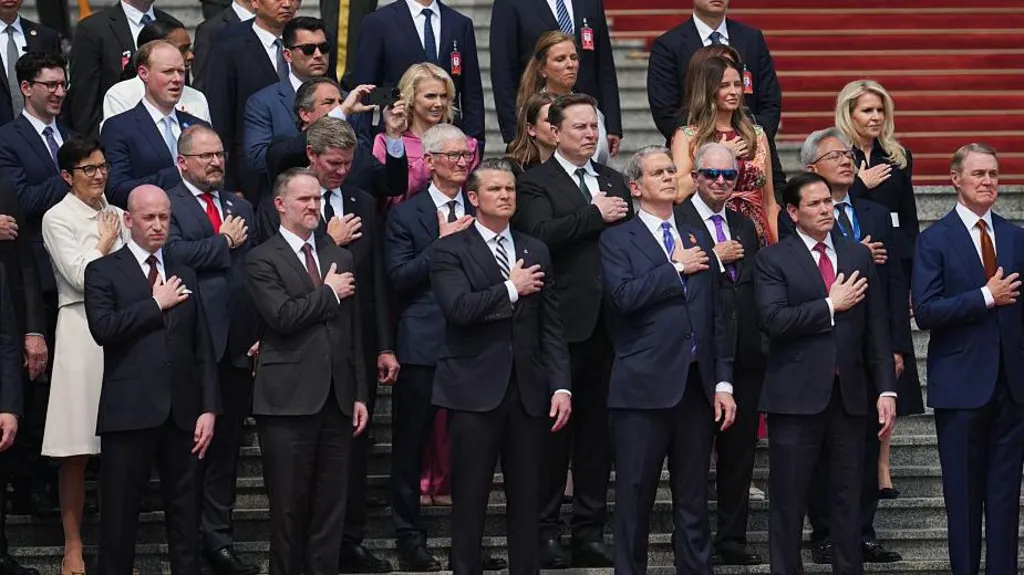
President Trump wrapped up his first state visit to Beijing since 2017 on Friday, calling his two-day summit with Xi Jinping "very successful" while leaving most of the actual deliverables either unconfirmed by Beijing or watered down from expectations. The headline disappointment was Boeing. Trump told Fox News China had agreed to buy 200 Boeing jets, with a potential further commitment of 750 planes, but the number came in well below the 500-plane "mega order" Jefferies analysts had flagged on the eve of the trip. China made no announcement on the deal. Boeing shares closed 4.7% lower Thursday. The semiconductor read-through was even harsher. Washington authorized Nvidia to export its H200 chips to China, but Beijing has not formally approved shipments, and Trump told reporters China hasn't bought any "because they chose not to. They want to try and develop their own." Nvidia fell more than 4% Friday, with Intel down 6%, AMD off 4%, SK Hynix down 7.7% in Asia, and European chip names ASML, STMicroelectronics, and Infineon all sliding between 5% and 5.5%. Nvidia CEO Jensen Huang's last-minute addition to the trip had fueled expectations that the summit might deliver a chip breakthrough. It did not. Trade Representative Greer said semiconductors "weren't front and center" at the meetings. Where the two sides really diverged was Taiwan and Iran. According to the Wall Street Journal, Trump said Xi directly asked whether the US would send troops to defend Taiwan in a conflict. Trump said he replied, "I don't talk about those things." Xi warned that the Taiwan question was the "most important issue in China-US relations." The White House readouts made no mention of Taiwan at all. On Iran, Trump claimed both sides agreed Iran can never have a nuclear weapon and that Hormuz must remain open. China's foreign ministry statement avoided explicitly endorsing the no-nukes position, saying instead that "this conflict, which should never have happened, has no reason to continue." Xi's team described the meeting as producing "constructive strategic stability" as a framework for the next three years. China Macro Group analyst Jack Lee told CNBC that Beijing is trying to turn Trump's transactional approach into "a longer-term operating framework for US-China relations" that could outlast his presidency. The trade truce reached in October still expires in November, but Trump invited Xi to the White House on September 24, creating a meeting before the deadline. For now, the relationship has stabilized without anything definitive being signed. Boeing and Nvidia investors are paying the price for that ambiguity. |
Trump Administration Pulls $1.3 Billion in Medicaid Funds From California
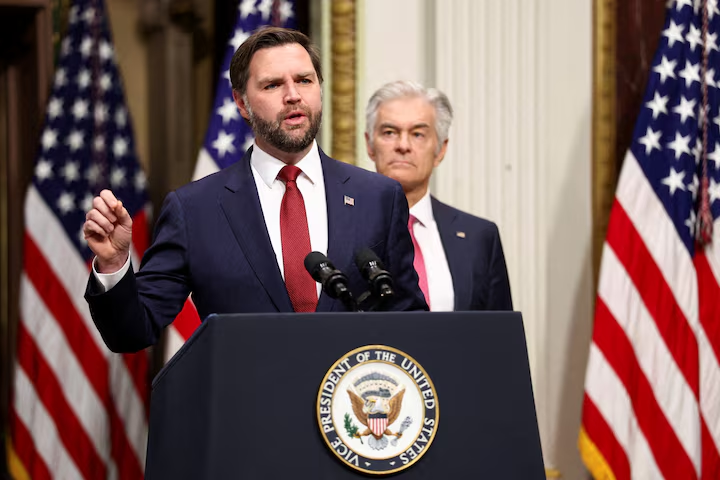
Vice President JD Vance announced Wednesday that the Trump administration is deferring $1.3 billion in Medicaid payments to California, citing concerns about fraud. The move is the largest Medicaid payment deferral on record and follows a similar action against Minnesota in February that withheld more than $350 million. According to Reuters, Vance also announced that the administration would notify all 50 states that it could freeze funding to their Medicaid Fraud Control Units if they fail to aggressively prosecute fraud. CMS Administrator Mehmet Oz told reporters the agency needs California to clarify $630 million in billing, $500 million in home health services, and $200 million in expenditures tied to coverage for undocumented immigrants. Oz called it "the largest deferral we've ever made." The administration also announced a six-month nationwide moratorium on new Medicare enrollment for hospice and home health agencies. Oz estimates total fraud, waste, and abuse in federal healthcare programs at roughly $100 billion. The administration's anti-fraud actions have so far focused on Democratic states. Vance acknowledged the pattern at the White House podium, saying that "mostly blue states" don't take Medicaid fraud seriously. California Governor Gavin Newsom's office pushed back hard, posting on X that "Vance and Oz are attacking programs that keep seniors and people with disabilities OUT of nursing homes." The state argues that In-Home Supportive Services costs roughly $30,000 per person annually compared to $137,000 for nursing home care, saving about $107,000 per person. The financial and operational implications are non-trivial. Medicaid is the largest source of federal funding to states, and freezing $1.3 billion creates immediate budget pressure on California's healthcare system. The Medicaid Fraud Control Units in all 50 states receive nearly $500 million in federal support per CNN, all of which is now contingent on satisfying the administration's enforcement standards. Georgetown's Andy Schneider questioned whether the approach addresses the underlying problem, noting it's "not at all clear how deferring $1.3 billion will actually reduce fraud" rather than just penalize patients who depend on the program. Minnesota's challenge to the February action is already in court. California is the likely next plaintiff. The administration has now created a template for using fraud allegations as a fiscal tool against state governments, with the financial cost falling on the providers and patients caught in the middle. |
Starbucks Cuts Another 300 Corporate Jobs as Turnaround Bills Come Due
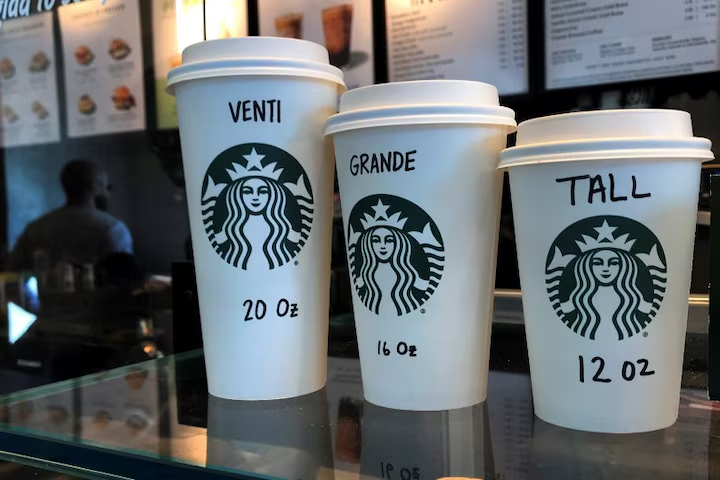
Starbucks announced Friday it is cutting 300 US corporate jobs and closing regional support offices in Atlanta, Burbank, Chicago, and Dallas. The moves will trigger $400 million in restructuring charges, split between $280 million in non-cash real estate impairment charges and $120 million in cash severance. The layoffs do not affect coffeehouse workers. The company is also reviewing its international support organization and expects more job cuts overseas. Starbucks shares were up 1.58% Friday on the news. This is the third round of corporate layoffs since CEO Brian Niccol took over in September 2024. The company eliminated 1,100 corporate jobs in February 2025 and another 900 nonretail positions in September as part of a $1 billion restructuring that also shuttered over 400 stores. Just days before Friday's announcement, Starbucks cut 61 roles at its Seattle headquarters in a technology reorganization. In Washington state alone, government records show Starbucks has laid off 2,062 people since May 2025. The fundamental tension is that Niccol's "Back to Starbucks" strategy is working at the top line but bleeding the operating margin. Q2 fiscal 2026 US same-store sales rose 7.1%, with transactions up 4.3%. It marked the second straight quarter of US traffic growth and what Niccol called the "turn in our turnaround." Net income climbed 33% year over year to $511 million. But Reuters reported operating profit margins have fallen by nearly half since the turnaround began in late 2024. Store operating expenses in the first half of fiscal 2026 were up 7% year over year. Higher coffee costs from tariffs are compounding the squeeze. Niccol has outlined $2 billion in cost savings over the next two years to bring the math back into balance. The corporate cuts are paired with continued investment elsewhere. Last month Starbucks committed $100 million to expand into the Southeast, including a new Nashville support office expected to house 2,000 employees within five years. A remote office in Niccol's hometown of Newport Beach, California, will remain open. The geographic shift has caused friction in Seattle. Former CEO Howard Schultz accused local officials of policies that "demonise businesses" in a Wall Street Journal column this week, citing the Nashville plans. Per Reuters, Starbucks' top executives stand to gain $6 million each if certain cost-cutting goals are met by 2027. The customers are coming back. The middle managers are paying for it. |
That’s all for today!/
