Hi there!
Welcome to FinSoar! US-Iran talks take center stage in global affairs. Meanwhile, India is shining a spotlight on its potential for data centre capacity, and Paramount and Netflix are in the final rounds of the battle for Warner Bros:
US-Iran Talks: Progress Without a Deal
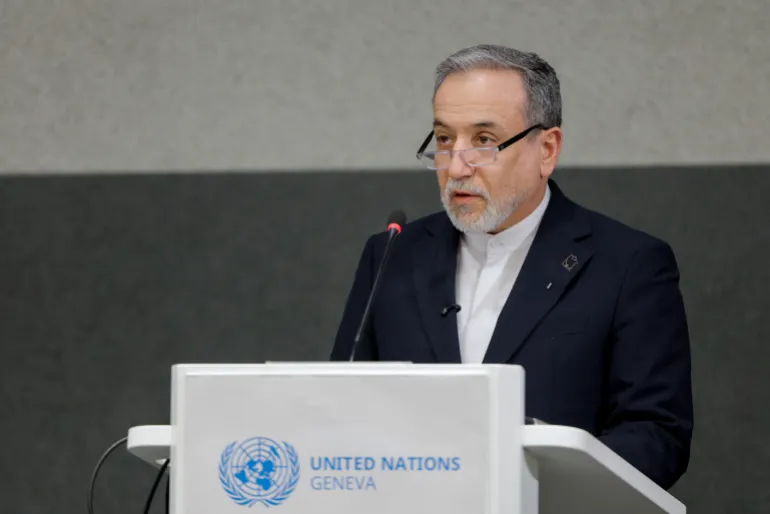
Iran's Foreign Minister, Abbas Araghchi. Image Credits: Valentin Flauraud/AFP The second round of indirect nuclear talks between the US and Iran concluded Tuesday in Geneva, with both sides reporting cautious progress. Iranian Foreign Minister Abbas Araghchi said the two countries had reached an understanding on "guiding principles" but stressed a deal was not imminent. The US delegation, led by envoy Steve Witkoff and Jared Kushner, has not commented publicly. The talks were held at the Omani ambassador's residence in Geneva, mediated by Omani Foreign Minister Badr Al-Busaidi. The first round took place in Muscat on February 6 without a breakthrough. This time, Araghchi described the atmosphere as "more constructive" and said both sides would exchange draft texts before setting a date for a third round. The backdrop was tense. Iran's Revolutionary Guard conducted live-fire naval drills in the Strait of Hormuz simultaneously with the talks, partially closing the waterway. Roughly 13 million barrels per day of crude oil transited the strait in 2025, accounting for 31% of global seaborne crude flows. The partial closure caused minor disruption but no major supply shock. The US has been building military pressure in parallel. A second aircraft carrier strike group is heading to the region, and 18 additional F-35 fighter jets arrived in the Middle East Monday. Trump told reporters he would be "indirectly" involved and warned Iran of "the consequences of not making a deal." Washington wants Iran to fully abandon uranium enrichment. Tehran insists enrichment is a non-negotiable right under the Nuclear Non-Proliferation Treaty and says it will only discuss its nuclear programme in exchange for sanctions relief. Iran has also refused to discuss its ballistic missile programme or regional proxy networks. Markets read the slight diplomatic progress as a risk-off signal for safe havens. Gold fell more than 2% on Tuesday to around $4,896 per ounce. Brent crude also slipped after Araghchi's comments eased immediate supply concerns, falling 1.8% to $67.48. Senator Lindsey Graham told Axios Trump will make a decision "in weeks, rather than months," whether diplomatic or otherwise. |
India's $200 Billion Data Center Bet
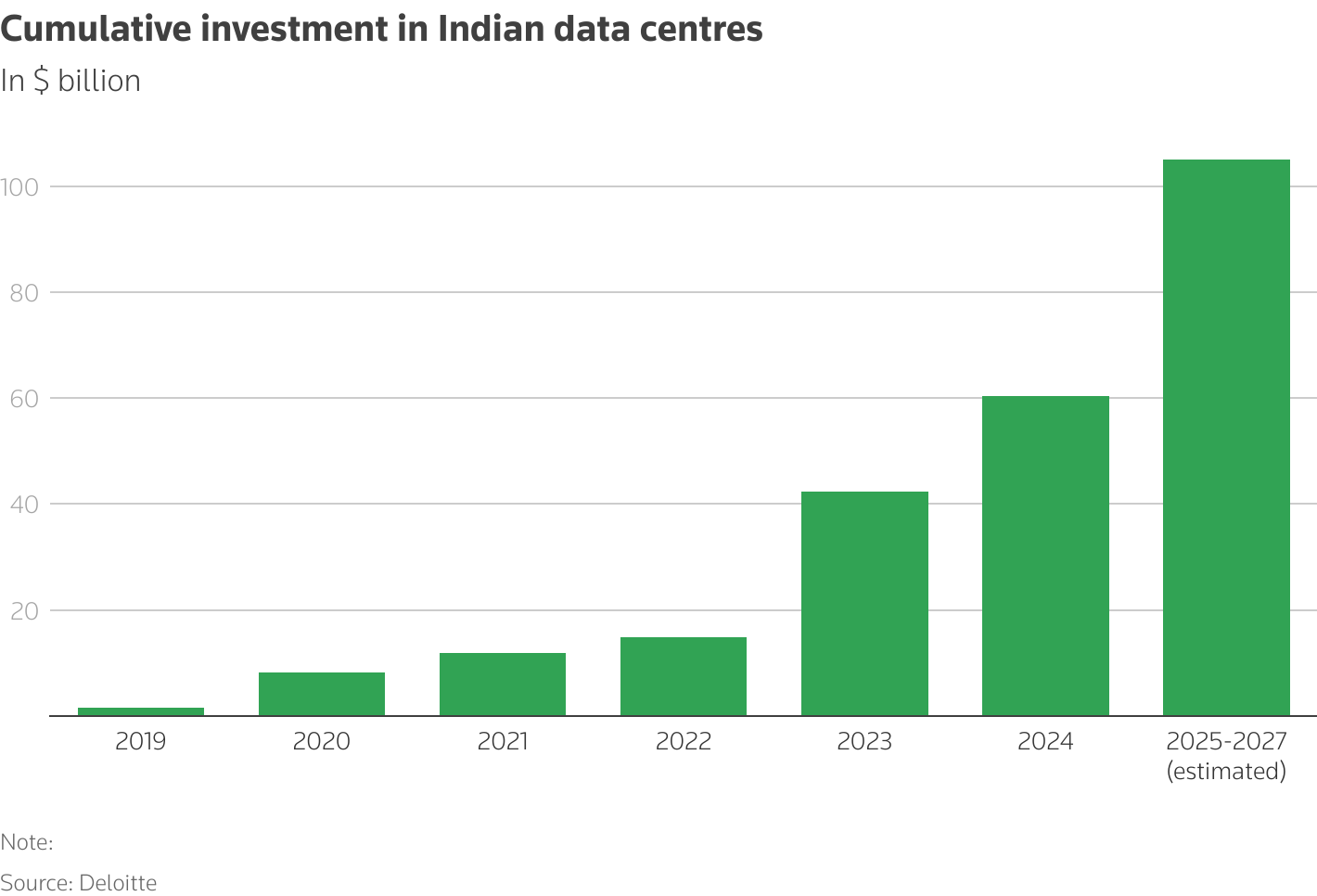
India is positioning itself as the next major AI infrastructure hub. Adani Group announced Tuesday it will invest $100 billion to build renewable-powered AI-ready data centers by 2035, the largest such commitment from an Indian company. The announcement came during India's AI Impact Summit in New Delhi, where OpenAI's Sam Altman, Alphabet's Sundar Pichai, and other major tech leaders gathered this week. Adani's plan calls for scaling its existing 2 gigawatt data center capacity to 5 gigawatts, creating what the company describes as the world's largest integrated data center platform. The investment is expected to trigger an additional $150 billion across server manufacturing, cloud infrastructure, and related industries, producing a $250 billion AI infrastructure ecosystem over the decade. Adani also plans to invest $55 billion to expand its renewable energy portfolio to power the facilities. Adani's move is part of a broader wave. India's electronics minister told the AP the country hopes to attract up to $200 billion in data center investment over the coming years. Google has pledged $15 billion over five years for an AI hub in southern India. Microsoft committed $17.5 billion for cloud and AI infrastructure. Amazon has committed $35 billion by 2030. It makes sense because India currently accounts for 20% of global data generation but holds just 3% of global data center capacity. The country is expected to become the world's largest data consumer by 2028. Development costs are among the lowest globally, electricity is a fraction of US prices, and the country has deep technical talent. The risks are real, too. India's data center water consumption is projected to more than double from 150 billion litres in 2025 to 358 billion litres by 2030. An S&P Global study predicts 60-80% of India's data centers will face high water stress this decade. India has 18% of the world's population but just 4% of its water resources. Adani Enterprises shares rose 2.7% on the news, making it the top gainer on the Nifty 50. The conglomerate's chairman faces a separate US federal indictment on bribery and fraud charges, with the SEC still attempting to deliver a summons that India's government has twice refused to facilitate. |
The Battle for Warner Bros. Enters Its Final Round
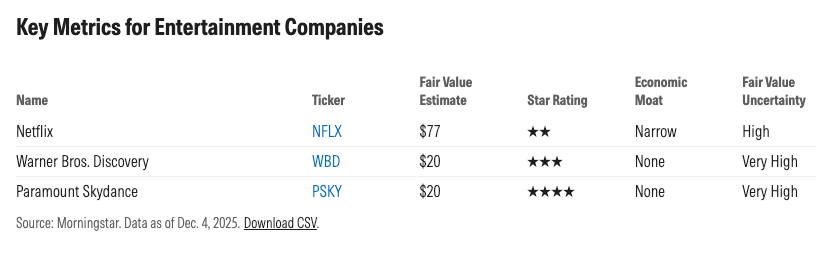
The bidding war for Warner Bros. Discovery reached a new stage on Tuesday. WBD gave Paramount Skydance seven days to submit its best and final offer, while simultaneously setting a March 20 shareholder vote to approve the existing Netflix deal. The board made its position clear: it remains "fully committed" to Netflix, but wants to extract the highest possible price. The numbers tell the story. Netflix agreed in December to acquire WBD's studios, HBO and streaming assets for $27.75 per share, or $82.7 billion. Paramount's hostile bid for the entire company, including CNN and cable assets, sits at $30 per share, valuing the whole business at $108.4 billion. A senior Paramount representative told a WBD board member last week the company would pay $31 per share if talks reopened, and even that wasn't its final number. Netflix granted WBD a limited waiver to explore the competing offer. Under the merger agreement, WBD can engage with a rival only if the board believes it could lead to a superior proposal. If Paramount ultimately tables a better offer, Netflix retains matching rights, meaning the streamer can simply raise its own bid. WBD's concerns about Paramount's offer centre on financing risk. The board wants clarity on who covers a potential $1.5 billion junior lien financing fee and whether equity funding, backed by Oracle founder Larry Ellison's personal guarantee, is fully certain. Paramount's bid is backed by $43.6 billion in equity from Ellison and RedBird Capital, alongside $54 billion in committed debt financing. Sovereign wealth funds from Saudi Arabia, Qatar and Abu Dhabi are also among the backers. Netflix was blunt in its statement, calling Paramount's plan to achieve $16 billion in cost savings "an unmistakable red flag for regulators." It also flagged national security concerns over the Gulf sovereign wealth fund financing. Markets liked the drama (and so did I). Paramount shares surged 6%. WBD rose 2.3%. Netflix fell 1.4%. WBD stock has risen 177% over the past year as the bidding war inflated its value from below $10 per share. Netflix still holds the financial upper hand, but if it wins, shares might plunge even more. Paramount has until February 23 to show its hand. |
That’s all for today!
