Hi there!
Welcome to FinSoar. Today I’m glancing back — and trying not to shiver — at the year we’ve just had. Tariffs, trade, AI, gold, and everything that made the markets:
2025 in Retrospect: Tariffs, AI, and Gold's $4,500 Moonshot
The S&P 500 closed 2025 up 17.5%, hitting records. The economy expanded 4.3% in Q3, crushing forecasts. But ask investors what they'll remember about 2025, and the answer is chaos. Trump's "Liberation Day" tariffs in April sent shockwaves through global markets, triggering some of the biggest moves in years. The S&P 500 plunged 15% over several days. The Vix surged to 57.5, well above its long-term average of 20 and the second-highest level since Covid. The MSCI All Country World index saw some of its biggest daily swings in decades as Trump unveiled tariffs and then retreated from many of his most aggressive levies. Trump launched tariffs on nearly every country in the world, plunging the US into trade wars. Tariffs arrived erratically, with Trump turning to them amid personal grudges or in response to political critics. US-China tariffs reached 145% and 125% respectively before both countries agreed to ease tensions in October. |
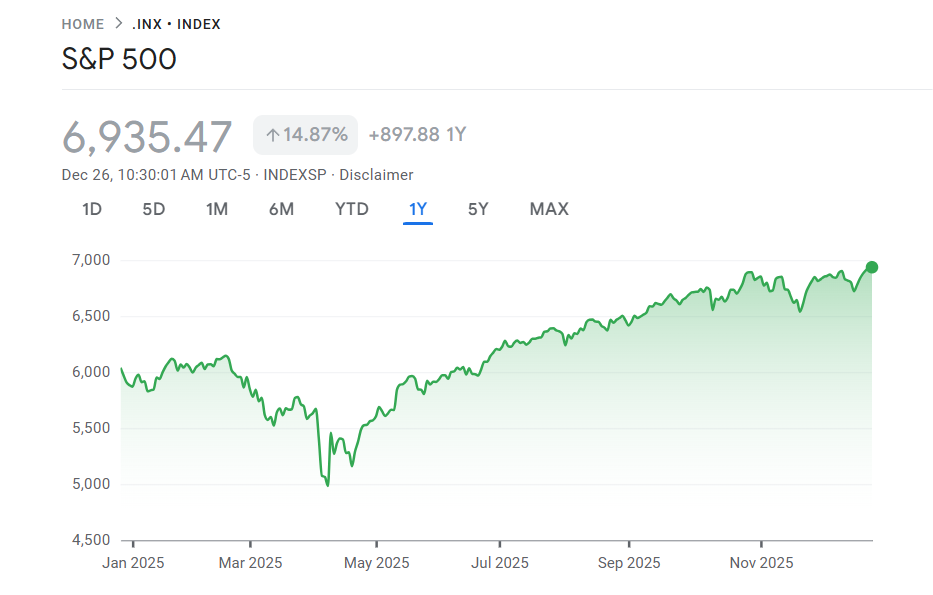
Then Came the Rebound
US tech megacaps' strong earnings and growing realization of AI spending's sheer scale gave traders positive news after the tariff turmoil. NVIDIA's share price more than doubled from its April low as it became the first $5 trillion company. With S&P 500 concentration around all-time highs, the fate of the US stock market is now more firmly tied to AI giants than ever. Amazon, Microsoft, Alphabet, and Meta pledged over $300 billion on AI data centers, GPUs and custom chips. But power emerged as the binding constraint. Individual campuses are pushing past 1 gigawatt, forcing utilities to scramble. Data centers, which accounted for roughly 4% of US electricity in 2023, are projected to consume up to 12% by 2028. Reality checked the hype when an MIT report suggested 95% of generative AI pilots fail to achieve measurable profit-and-loss impact, shifting market sentiment from exuberance to scrutiny. Venture capital poured into AI-native companies showing revenue growth, with AI accounting for 63.3% of all VC deal value in 2025. |
The Dollar Suffered Its Worst Year Since 2017
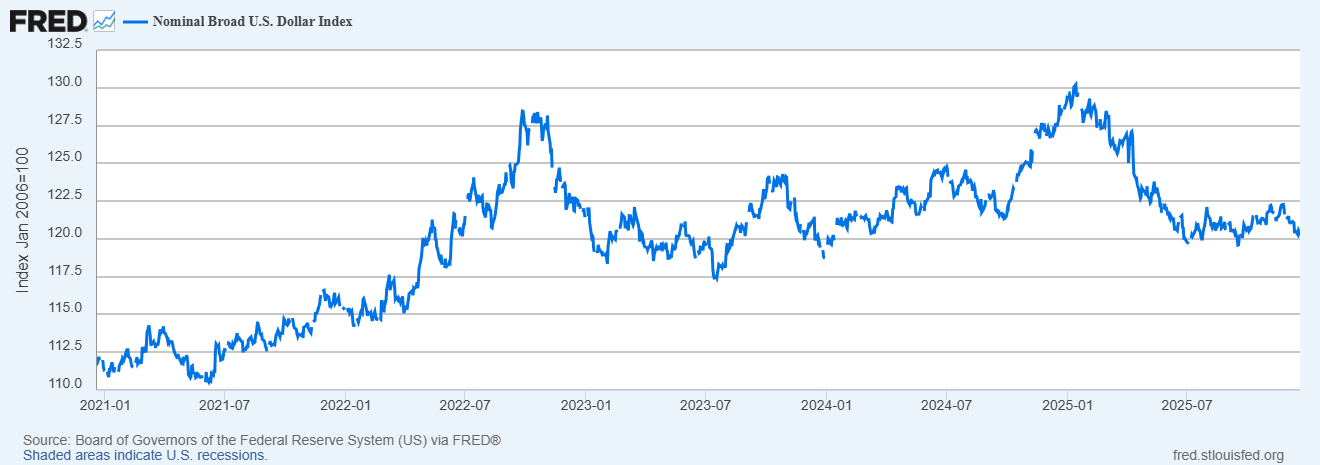
The dollar index has been heading south since just before Trump's inauguration, with its slide accelerated after Liberation Day. "You don't have to be a geopolitical enemy of the US to have a bit of skepticism about the dollar," said Steven Englander at Standard Chartered. Gold tapped into anxieties about tariffs, mounting US debts, economic downturn, and wars. Inflows into gold-backed ETFs hit their highest levels since the pandemic. Gold breached $4,500 per ounce, up 71%, enjoying its best year since 1979. Research from Duke's Fuqua School shows the introduction of gold ETFs in 2004 permanently pushed up gold's price. Total North American gold ETFs hold almost $200 billion, with another $175 billion outside the US. Goldman Sachs predicts gold will climb to $4,900 by December 2026. Silver surged 147% to around $72 per ounce. |
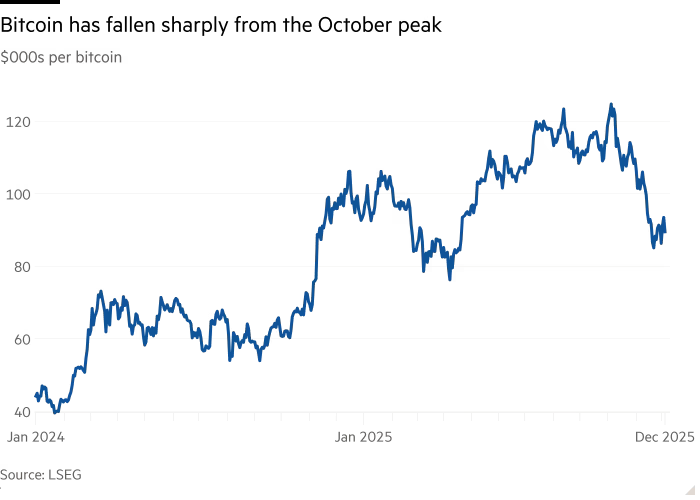
As for Crypto?
Crypto investors began overjoyed as Trump championed the industry, launching a crypto reserve and dropping lawsuits. But they're ending the year deflated as the rally gave way to the biggest downturn since 2022. Bitcoin lost a quarter of its value in two months. Trump's threat of 100% tariffs on China on October 10 triggered crypto's worst ever one-day selloff. The average decline among roughly 10,000 tokens reached 47%, liquidating over $19 billion in leveraged trades. What became "10/10" exposed fundamental weakness in crypto's infrastructure as market makers pulled back. Bitcoin is down 4% for the year despite Trump's support. The US passed the GENIUS Act, the first nationwide stablecoin legislation, requiring strict 1:1 reserve backing and licensing for issuers. The EU fully implemented MiCA, creating unified licensing for crypto firms. 2026 is shaping up to be the year when crypto moves further into mainstream, regulated financial systems. Japan's bond market became the worst-performing major bond market of 2025. Ten-year bond yields rose 0.9 percentage points to 2.04%, their highest in two decades, driven by rising inflation, government spending plans, and falling demand from traditional buyers. |
Through It All, Economic Data Became UnreliableThe 43-day government shutdown corrupted jobs reports, CPI readings, and GDP figures. Fed Chair Powell warned the data would be "not just more volatile, but distorted." Markets made decisions in the dark. Trump's tariff tracker shows the chaos: 10% baseline tariffs on almost everyone, 50% on steel and aluminum, 25% on autos, country-specific rates ranging from 10% to 41%, secondary tariffs threatened on countries buying Venezuelan or Russian oil, and dozens of exemptions and carve-outs negotiated case by case. Venezuela became a flashpoint. Trump ordered blockades of sanctioned tankers, seized ships carrying oil to China, and threatened Maduro directly. China and Russia backed Venezuela. Oil loading slowed. Brent crude spiked. The UN Security Council convened emergency meetings. Yet markets closed the year near records. The contradiction defines 2025: economic strength nobody trusts, regulatory clarity creating crypto chaos, AI infrastructure spending hitting power walls, and gold soaring on dollar doubts while the S&P climbs. This is the year in review. Next week, I'll take you through what we can expect from 2026. |
That’s all for today!
