Hi there!
Welcome to FinSoar. This week, the administration is investigating the Fed Chair Jerome Powell…over building bad buildings — at least the President thinks they’re bad — copper prices are at record highs, and so is your electricity bill. Or it might be…
DOJ Investigates Fed Chair Powell. He Says It's About Interest Rates, Not Buildings.
The President just asked Fed Chair Powell to cut interest rates…in what seems like a thinly veiled threat. Federal prosecutors served the Federal Reserve with grand jury subpoenas on Friday, threatening criminal indictment of Chair Jerome Powell. The investigation centers on Powell's June testimony to Congress about the Fed's $2.5 billion renovation of its Washington headquarters. The probe began in November, led by US Attorney Jeanine Pirro, a Trump ally and former Fox News host. Pirro's office didn't contact the White House, the Treasury Department, or the main Justice Department before issuing subpoenas. Powell responded with a rare video statement on Sunday night. "This new threat is not about my testimony last June or about the renovation of the Federal Reserve buildings," he said. "Those are pretexts. The threat of criminal charges is a consequence of the Federal Reserve setting interest rates based on our best assessment of what will serve the public, rather than following the preferences of the President." As far as the public is concerned, the renovation is paid for by tax dollars. Trump told NBC News, "I don't know anything about it, but he's certainly not very good at the Fed, and he's not very good at building buildings." However, in late December, Trump stated, "We're thinking about bringing a suit against Powell for incompetence" regarding the building costs. Treasury Secretary Scott Bessent told Trump late Sunday the investigation "made a mess" and could be bad for financial markets. Bessent wasn't happy and let the president know. Powell was expected to step down when Trump named his replacement in May, but now he's dug in. Powell's term as chair ends in May, but his term as governor runs through January 2028. These criminal charges may just be a move to oust the chair after his term ends, for good. Republican Senator Thom Tillis said he would oppose confirmation of any Fed nominee "until this legal matter is fully resolved." "If there were any remaining doubt whether advisers within the Trump administration are actively pushing to end the independence of the Federal Reserve, there should now be none," Tillis said. The dollar fell, and US equity futures slid on the news, though stocks closed at record highs on Monday. Gold rose. Although the markets didn't seem to respond much, eroding Fed independence could mean higher inflation and higher long-term interest rates. |
Your Electric Bill Is Up 7.4%. AI Data Centers Are Why.
US residential electricity prices rose 7.4% year-over-year through September, hitting 18 cents per kilowatt-hour. The Energy Information Administration expects prices to continue rising and outpace inflation through 2026. Data centers consumed 4.4% of US electricity in 2023. Government analysts estimate that will hit 12% by 2028. McKinsey projects data center energy use could nearly triple by 2030, consuming 11.7% of all US electricity. The damage is concentrated. Virginia saw prices jump 13%, Illinois 16%, Ohio 12%. Regions with significant data center activity endured price increases as high as 267% over five years. The PJM grid, serving 65 million people across 13 states, saw capacity costs surge from $2.2 billion to $14.7 billion. Data center demand made up $9.3 billion, or 63% of the total. Those capacity prices get passed to consumers in utility bills. Trump posted on Monday that Microsoft will "make major changes beginning this week to ensure that Americans don't 'pick up the tab' for their power consumption." "I never want Americans to pay higher electricity bills because of data centers," he wrote. No specifics provided. Microsoft plans data centers in Wisconsin, Atlanta, Texas, and Michigan. Meta signed agreements with three nuclear providers for 6.6 gigawatts by 2035, enough to power Ireland. Democratic Senators Warren, Blumenthal, and Van Hollen sent letters to Google, Microsoft, Amazon, and Meta demanding transparency. "Through these utility price increases, American families bankroll the electricity costs of trillion-dollar tech companies," they wrote. New York Governor Kathy Hochul announced Tuesday that data centers must pay for their own energy demand. New Jersey governor-elect Mikie Sherrill and Virginia governor-elect Abigail Spanberger both campaigned on lowering electricity bills. The grid needs $760 billion to $1.4 trillion in investment over 25 years. Someone has to pay for it. Tech companies say they will. So far, your bill says otherwise. |
Copper Hits Record $13,000. S&P Says 10 Million Ton Shortfall Coming By 2040.
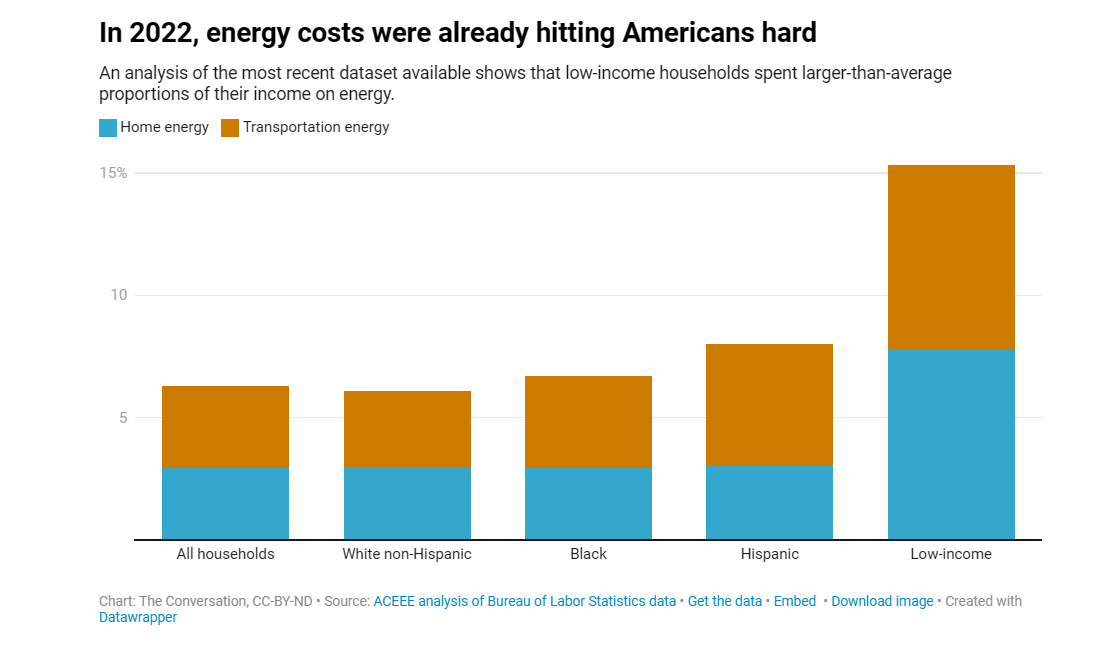
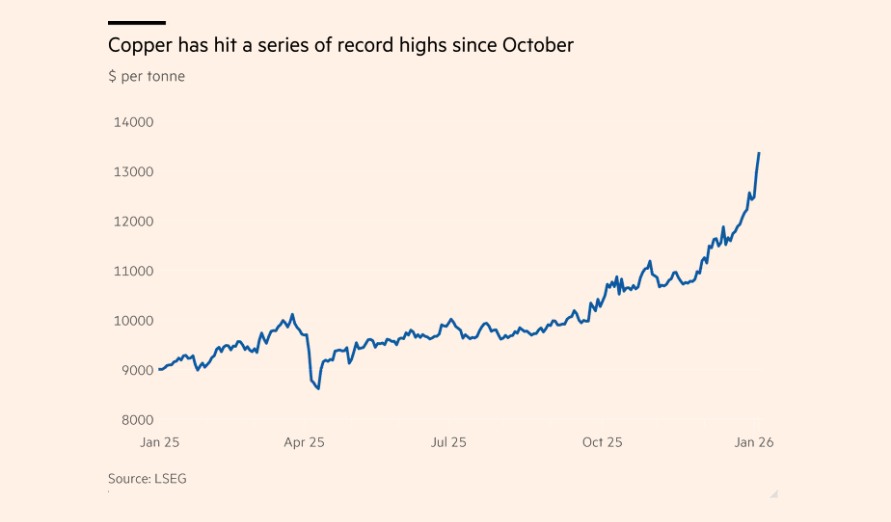
Copper soared to a record above $13,000 per tonne Tuesday, extending a rally that pushed prices up nearly a third since October. The metal ended 2025 with a gain of about 44%, up from around $9,000 a year ago. Supply disruptions at Freeport-McMoRan's giant Grasberg mine in Indonesia after a fatal mudslide in September helped trigger the rally. Workers at Capstone Copper's Mantoverde mine in Chile went on strike in January, adding to supply concerns. Tariff fears drove hoarding. Comex warehouses in the US jumped to a record 450,000+ tonnes from less than 100,000 tonnes a year ago. Macquarie estimates another 360,000 tons stored off-exchange, suggesting the global market was in a sizeable surplus of over 500,000 tons last year. S&P Global predicts demand will jump 50% to 42 million metric tons by 2040. Supply will peak in 2030, leaving the world short roughly 10 million metric tons by 2040. The shortfall represents "a systemic risk for global industries, technological advancement and economic growth," S&P said. The demand behind copper are AI data centers, electrification, defense applications, and potentially 1 billion to 10 billion humanoid robots by 2040. Which would be fine, if not for a little problem: It takes 17 years on average for a new mine to yield fresh copper after first discovery. Many major mines are aging and becoming less productive. "Copper prices need to rise further to persuade miners to generate significant new production," said SP Angel analyst John Meyer. "We see the breakeven price for development of the next generation of new copper mines in excess of $13,000 a ton." BMI analysts expect prices to average $11,000 this year and reach $17,000 by 2034. Strategic concentration risk: Just six countries account for roughly two-thirds of mining production. China commands about 40% of global smelting capacity. Benchmark analyst Albert Mackenzie said the price "got carried away." "There's too much based on speculation of, for example, what AI and electric vehicle demand could look like, things that aren't certain yet." The market believes the shortage story. For now. |
That’s all for today!
