Hi there!
Welcome to FinSoar. Here’s a fresh update on where markets are headed despite US-Venezuelan geopolitical tensions — investors say everywhere, and nowhere, and don’t seem to particularly care…
$150 Billion Tariff Refund Fight: Supreme Court Ruling Could Drop Friday
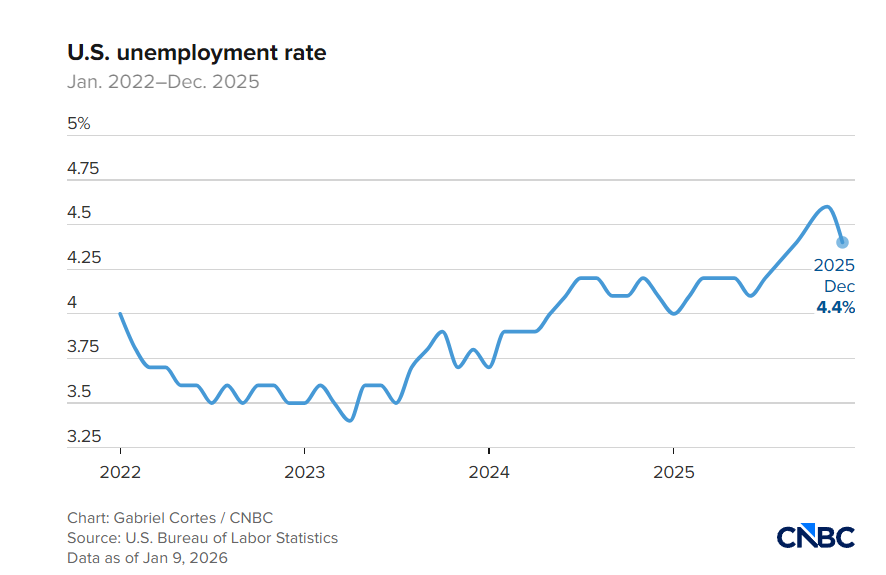
Image Credits: The White House The Supreme Court scheduled Friday as an opinion day, meaning justices could rule on the legality of Trump's sweeping tariffs. The court does not announce ahead of time which rulings it intends to issue. Trump invoked the International Emergency Economic Powers Act to impose tariffs on nearly every foreign trading partner, citing trade deficits and fentanyl trafficking as national emergencies. Lower courts ruled that Trump exceeded his authority. During November arguments, conservative and liberal justices appeared to cast doubt on the legality of the tariffs. Chief Justice John Roberts told the administration that imposing tariffs and taxes "has always been the core power of Congress." Justice Neil Gorsuch, a Trump appointee, said "Congress, as a practical matter, can't get this power back once it's handed it over to the president." Prediction markets show only a 28% probability that the court will rule in favor of the tariffs. Here's what is at stake: $133.5 billion in tariffs collected through December 14, now estimated at around $150 billion. Over 1,000 companies have filed preemptive lawsuits seeking refunds, including Costco, Reebok, Peloton, Revlon, Goodyear, and Barnes & Noble. Some companies aren't waiting. Wall Street firms are buying refund rights from importers for pennies on the dollar. US Customs published a new electronic refund process on January 2, with a mandatory deadline of February 6 for importers to register. Without registration, no refund. "It's not in the government's DNA to give back money. And Trump would not want to give back money," said Jim Estill, CEO of Danby Appliances, which paid tariffs on Chinese-made refrigerators and microwaves. Treasury Secretary Scott Bessent expects a "mishmash" ruling. Even if Trump loses, the administration has other authorities to impose tariffs, including the 1962 Trade Act. "There are lots of other authorities that can be used, but IEEPA is by far the cleanest," Bessent said. "The others are more cumbersome, but they can be effective." If the Supreme Court sides with Trump, legal experts say the president could gain sweeping power to impose not just tariffs, but sales taxes and property taxes. "If the government were to win, the president would have the ability to tax," said Timothy Meyer at Duke University. Win or lose, tariffs aren't necessarily going away. The only question is how messy the transition gets. |
50,000 Jobs: The December Report That Capped Off a Terrible Year
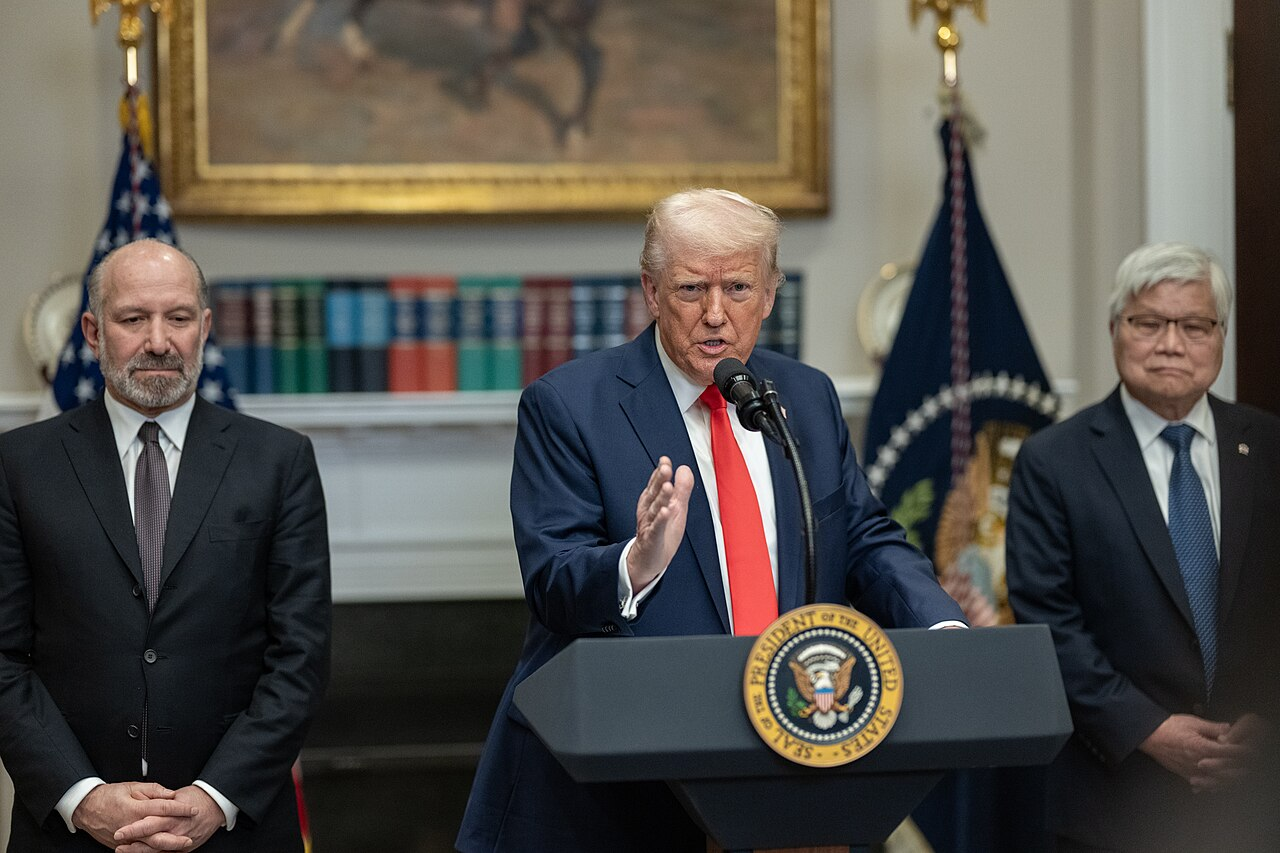
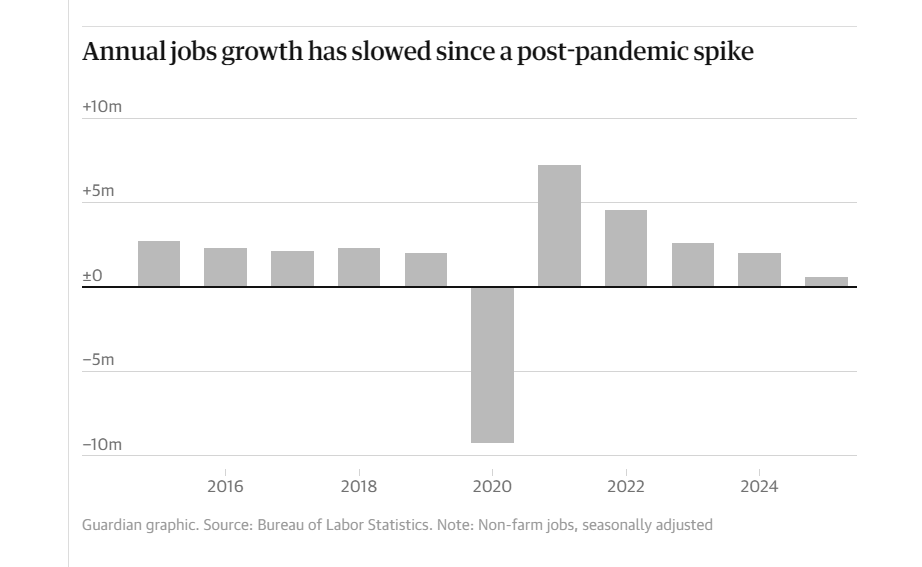
The US added 50,000 jobs in December, missing the 73,000 economists expected. Unemployment fell to 4.4% from 4.6%, which sounds good until you realize why. The economy added an average of 49,000 jobs per month in 2025, down from 168,000 per month in 2024. 2025 was the weakest year of employment growth outside of recession years since 2003. October and November were revised down by 76,000 jobs total. October's loss was revised to 173,000, worse than the initially reported 105,000. Healthcare added 21,100 jobs, and leisure and hospitality added 47,000. Retail trade lost 25,000 jobs, and construction shed 11,000. Same story all year. Healthcare and leisure/hospitality accounted for 84% of total job gains from January through November. For the remaining 78% of the economy, it's been a far different story. "Pretty much every other industry is in the throes of a 'hiring recession,'" said Heather Long at Navy Federal Credit Union. Wage growth held at 3.8% year-over-year, roughly in line with inflation. No real gains for workers.
Source: The Guardian Nearly a million more people who wanted full-time jobs were working part-time involuntarily. Around 5.3 million people fell into this bucket, up from 4.4 million a year earlier. The Fed cut rates three times in 2025. The central bank slashed borrowing costs by 175 basis points total. Hiring didn't respond. Economists increasingly view the labor market's challenges as more structural than cyclical. "Lowering interest rates may help to buoy the economy at the margin, but it is unlikely to push companies that are on temporary hold to add workers," said Stephen Stanley at Santander. "The Fed is certainly powerless to counteract the concerns related to AI." Markets barely moved. Stocks ticked higher on rate cut optimism. Weak data means more cuts. We'll find out by the end of January. Job openings also fell to 7.15 million in November, the lowest level in more than a year. Down from 7.45 million in October. Job openings are at their lowest since September 2024. Hiring activity fell to an estimated 5.12 million new hires in November, down from 5.37 million in October. Hires are at their lowest since June 2024. The hiring rate slunk to 3.2%, matching its lowest rate in more than a decade, excluding the pandemic. There were 0.9 job opportunities per unemployed person in November, meaning fewer openings than unemployed workers. That's down from two openings per unemployed back in 2022. The quits rate tells the same story. Voluntary separations held at 2% in November, similar to what it's been for a year. "For workers who are fed up with their current roles, they aren't willing to give up job security because they aren't confident that they'll be able to find something on the open market," said Daniel Zhao at Glassdoor. Layoffs remained low. The layoff rate was 1.1% in November, below the historical average of 1.4%. Companies won't hire. They won't fire either. Economists attribute this to high uncertainty from trade and immigration policy, stubborn inflation, high interest rates, and AI investment replacing hiring. "We are still waiting to see a catalyst for the job market to open up again," Zhao said. "Employers are still in a wait-and-see mode. As interest rates come down and some of that uncertainty fades, there is an opportunity for businesses to hire more, but it's certainly not a guarantee." Many seem to think the low-hire, low-fire state isn't sustainable. Either the bottom falls out and leads to a recession, or uncertainty lifts and hiring picks up. The perceived probability of finding a job hit a record low of 43.1% in December, according to the New York Fed's Survey of Consumer Expectations. The survey has been running since 2013. This is the lowest reading ever. Expectations of losing a job rose to the highest mean probability since April 2025. The probability of voluntarily quitting dropped to the lowest rate since July 2023. Workers see no opportunities. They're terrified of losing what they have. They won't quit because they don't think they can find anything else. |
Trump Eyes Greenland. Denmark Responds With $13.8 Billion Rearmament.
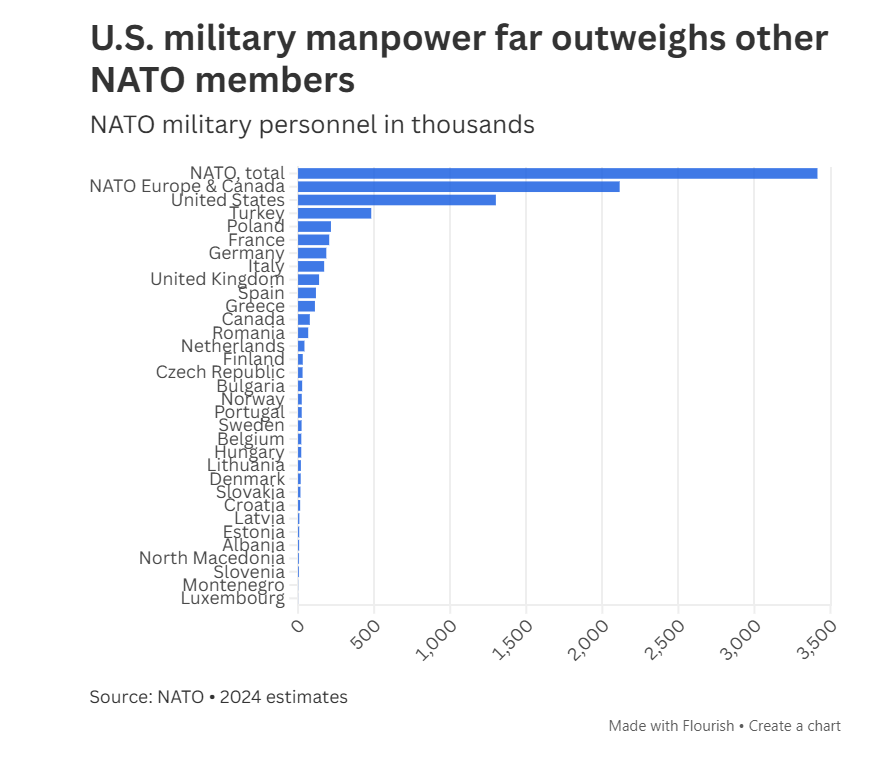
Trump said the US needs Greenland "very badly" and the White House confirmed all options are on the table, including military force. Days after capturing Venezuela's president, the rhetoric escalated fast. Denmark announced it would spend 88 billion Danish kroner ($13.8 billion) rearming Greenland, citing "the serious security situation we find ourselves in." European defense stocks rose for the fourth consecutive day, with the Stoxx Europe Aerospace and Defense index adding 3%. Behind closed doors, the calculus is different. US officials have discussed sending lump sum payments to Greenlanders ranging from $10,000 to $100,000 per person, according to four sources. A $100,000-per-person payment would total almost $6 billion for the island's 57,000 residents. The idea is to convince Greenlanders to secede from Denmark and potentially join the US. One option being floated is a Compact of Free Association, similar to agreements with Micronesia, Marshall Islands, and Palau. Greenland would likely need to separate from Denmark first. The strategic value is real. Greenland sits between the US and Russia, astride the GIUK Gap naval choke point linking the Arctic to the Atlantic. Arctic shipping routes are opening as ice melts, creating opportunities to substantially reduce Asia-Europe travel time. The island holds untapped oil and gas reserves, critical mineral deposits, and rare earth elements vital for wind turbines, electric vehicles, and military applications. China sought to leverage its near monopoly of rare earths against the US last year. The US already operates Pituffik Space Base in northwestern Greenland with around 150 service members, down from 6,000 during the Cold War. Denmark PM Mette Frederiksen warned that a US attack on Greenland would mean "everything would stop — that includes NATO and therefore post-second world war security." Defense analysts say European forces would not fire on US troops. "What European military commander is going to open fire on a US troop transport?" said Edward Arnold at Royal United Services Institute. Polls show most Greenlanders want independence from Denmark but do not want to be part of the US. The money might change that math. |
That’s all for today!

