Welcome back to another weekend with FinSoar! This week everyone’s betting on Fed rate hike, SpaceX’s historic IPO is cooling down, and an Intel-Apple partnership brokered by the government.
The Fed Turns Hawkish and the Yen Buckles
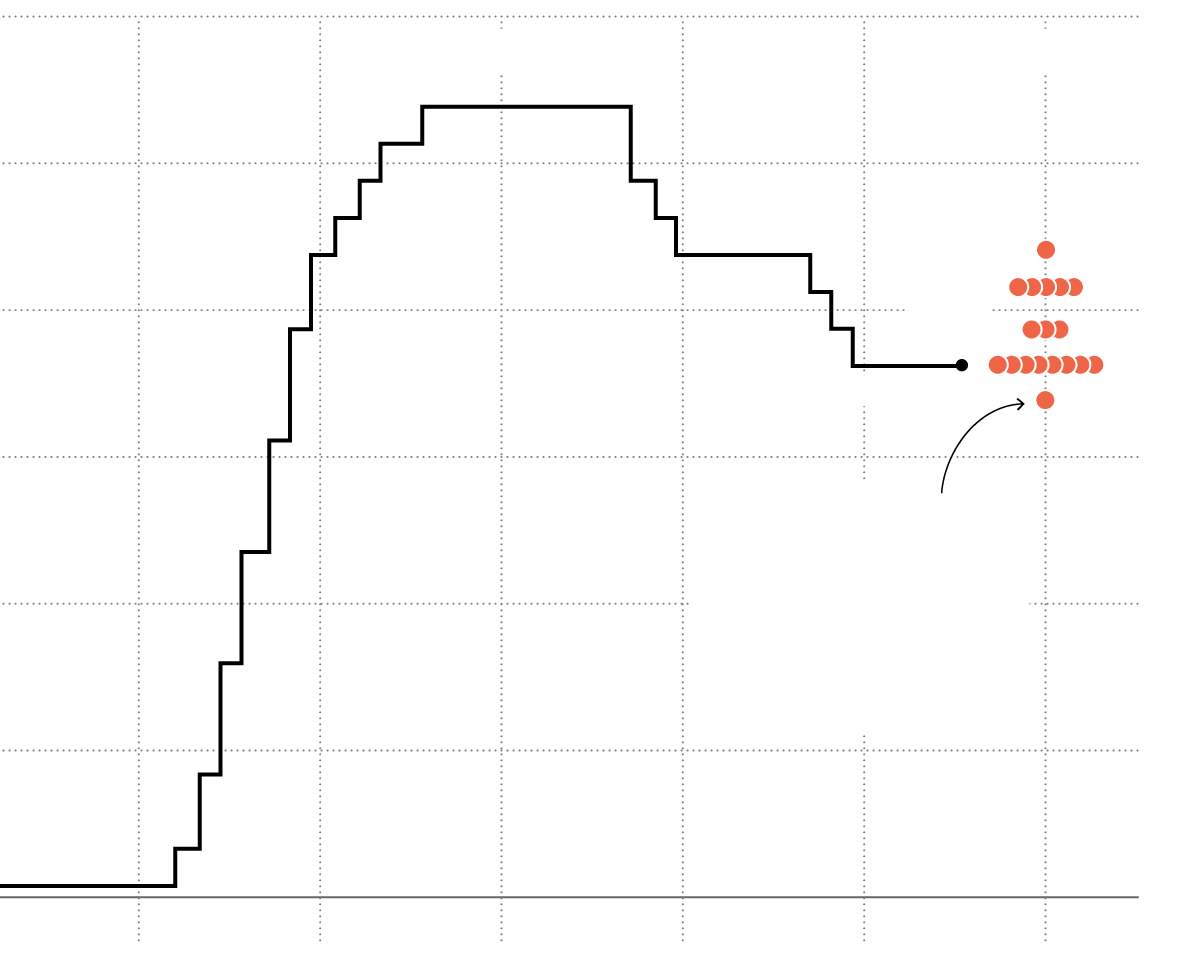
The Federal Reserve held rates steady at Kevin Warsh's first meeting as chairman this week, but the bigger story was a sharp pivot toward higher rates that sent the dollar surging and the Japanese yen toward a 40-year low. The Fed kept its benchmark at 3.5% to 3.75% for a fourth straight meeting, in a unanimous vote. The projections told the real story. According to the latest "dot plot," nine of 18 officials now expect the funds rate to end 2026 above the current range, with the median pointing to one quarter-point hike. In March, no policymaker had called for an increase. The driver is inflation. Officials raised their year-end inflation forecast to 3.6% from 2.7% in March, citing the war with Iran and the energy shock it unleashed. Warsh used the meeting to reshape how the Fed communicates. He scrapped forward guidance, cut the policy statement to 132 words from 341, and declined to submit his own dot, calling it "not helpful in the conduct of policy." He also announced five task forces covering communications, the balance sheet, data sources, productivity, and the Fed's inflation framework. Markets moved fast. Prediction platform Kalshi saw the odds of a 2026 hike jump to 57% from 35% days earlier. The dollar index climbed to a 13-month high, while gold sank 2.7% and stocks slipped. The yen took the hardest hit, breaching 161 against the dollar Thursday and falling as low as 161.80, its weakest since July 2024. A move past 161.96 would mark its weakest level since 1986. Tokyo's defenses have not worked. The yen stayed under pressure despite more than $70 billion in May interventions and a Bank of Japan rate hike to a 31-year high. Large speculative short positions have not eased, with Japan's tolerance for yen weakness "close to its limit." Finance Minister Satsuki Katayama said Japan was prepared to take "decisive action on speculative moves." The bind is real: a weaker yen boosts Japanese exports but raises imported inflation and erodes household purchasing power. For the Fed, the era of forward guidance is over. For the yen, the next test is whether 161.96 holds. |
SpaceX Frenzy Dies, Stocks Down
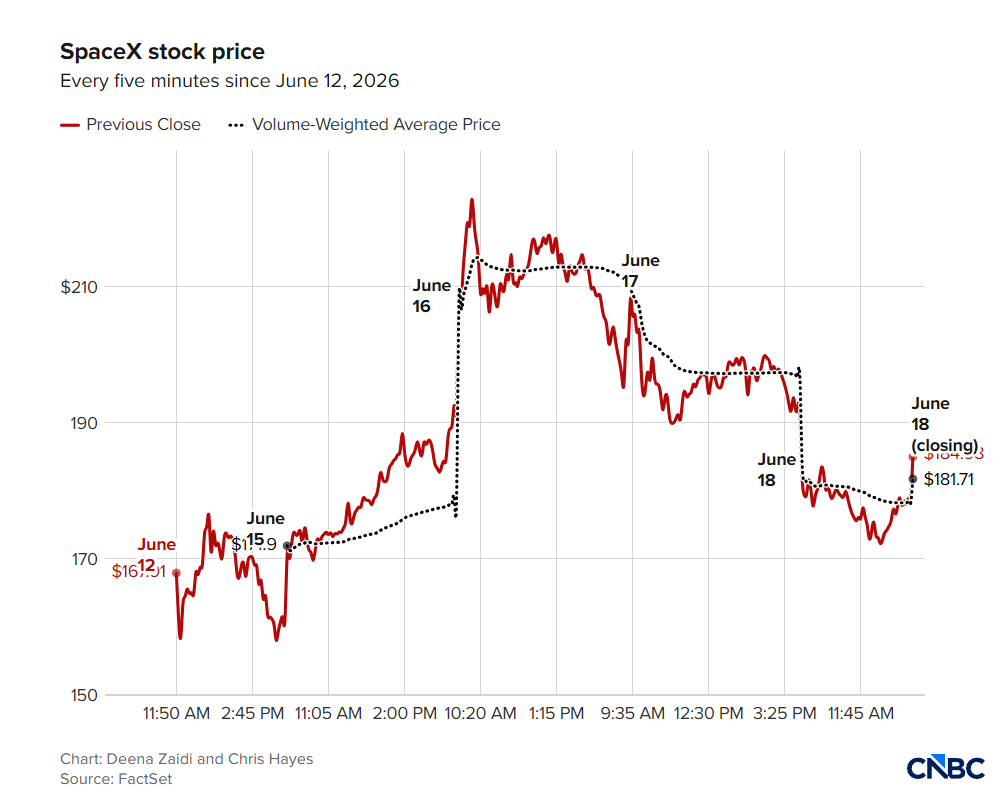
SpaceX shares fell for a second straight day Thursday, erasing most of the post-IPO surge that briefly made it the world's fourth-largest company. The stock dropped more than 6% to around $179, extending Wednesday's nearly 5% decline and marking a 20% dive from its Tuesday high above $225. That wiped roughly $620 billion off its market value in two days, dropping it to seventh from fourth. The slide nearly caught the average buyer. SpaceX's five-day volume-weighted average price sat at $181.71, meaning the typical post-IPO purchaser is now roughly breaking even. The retail investors who got allocations at the $135 offer price are still up, though many received just a handful of shares. The Cursor deal spooked the market. SpaceX's $60 billion all-stock purchase of the AI coding startup represents roughly 3.4% dilution of its IPO valuation. Morningstar trimmed its fair value estimate to $62 from $63, citing the "sizable dilution," and warned a best case prices shares at just $169. Then came the debt signal. Bloomberg reported SpaceX was weighing a $20 billion bond offering, with bankers set to meet investors as early as next week. Coming right after a record IPO, the raise underscores how much cash the company needs to fund its AI build-out, and the debt may have rattled holders. The funding gap is the core worry. A Fortune analysis found SpaceX has committed $62.6 billion, or 71% of its $86 billion raise, to obligations including a Tesla loan repayment, leaving about $23 billion for AI capex. With $31 billion spent on capex over five quarters, four times its operating cash, the war chest could be gone within a year. Wall Street is sharply split. Morningstar sees fair value near $62, while Arete's Andrew Beale slapped a $401 target on the stock, valuing SpaceX at about $5.3 trillion, or 80 times estimated 2027 sales. The valuation strains belief by traditional measures. SpaceX's price-to-sales ratio exceeded 130 on Thursday, against Nvidia's 20. |
Trump Says Apple Will Make Chips With Intel
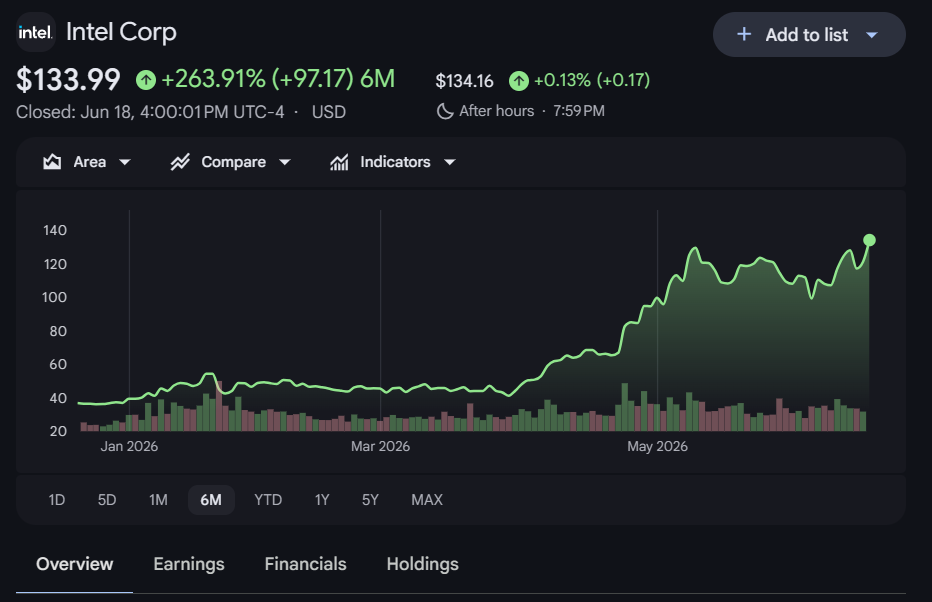
President Trump announced Thursday that Apple has agreed to design and manufacture chips with Intel in the US, a potential turning point for the struggling chipmaker, which the government owns a stake in. "Apple has agreed to work with Intel to design and build its Chips in America," Trump wrote on Truth Social, framing it as his latest effort to revive Intel. Neither company confirmed the deal. The market reaction was swift. Intel shares rose 7% to a record, adding to a roughly threefold gain this year, while Apple ticked up 0.8%. The deal would lock in steady demand from one of the world's largest electronics makers as Intel tries to close the gap with TSMC. This builds on months of groundwork. The Wall Street Journal reported in May that Intel had reached a preliminary deal to make some Apple chips after more than a year of talks. Commerce Secretary Howard Lutnick had met repeatedly with Cook, Musk, and Nvidia's Jensen Huang to push them toward Intel. The government's stake is central to the story. After acquiring a 10% stake for $8.9 billion last August, Washington played a key role in bringing Apple to the table. Trump noted Intel was worth about $100 billion at the time and now exceeds $600 billion, musing that he underpaid. For Apple, the logic is supply security. The company relies on TSMC for the chips powering its iPhones, Macs, and iPads, but TSMC has been stretched thin by surging demand from AI chipmakers like Nvidia and AMD. Cook has blamed limited advanced-chip availability for Apple's inability to meet iPhone demand. Just days earlier, Cook told the Wall Street Journal that product price hikes were "unavoidable" because of rising memory and storage costs driven by the AI boom, calling the situation "unsustainable." Intel's turnaround under CEO Lip-Bu Tan is gaining traction. Trump called for Tan's resignation last year over his China ties before reversing course. Intel has since signed Nvidia, which invested $5 billion, and Tesla as customers, the latter being the first major client for its next-generation 14A process. The benefits are years out. Analyst Ben Bajarin told the NYT that Apple is unlikely to make chips with Intel before 2028, likely starting with a small volume for Macs before expanding to iPhones. Chip development typically takes about 24 months. The validation may matter more than the volume. Intel lost its manufacturing lead to TSMC late last decade and missed both mobile and the AI wave. As Bajarin put it, an Apple commitment is "a massive validation," the kind of signal that makes other customers reconsider. For Trump, it is proof that his industrial-policy bet on equity stakes is paying off, at least on paper. |
That’s all for today!/
