Welcome to another week of FinSoar! The US-Iran ceasefire may be intact but heavily tested, Washington is stepping into AI regulation for security testing models before public release, and this March the trade deficit has widened to $60.3 billion.
Project Freedom Tests Iran Ceasefire's Pain Threshold
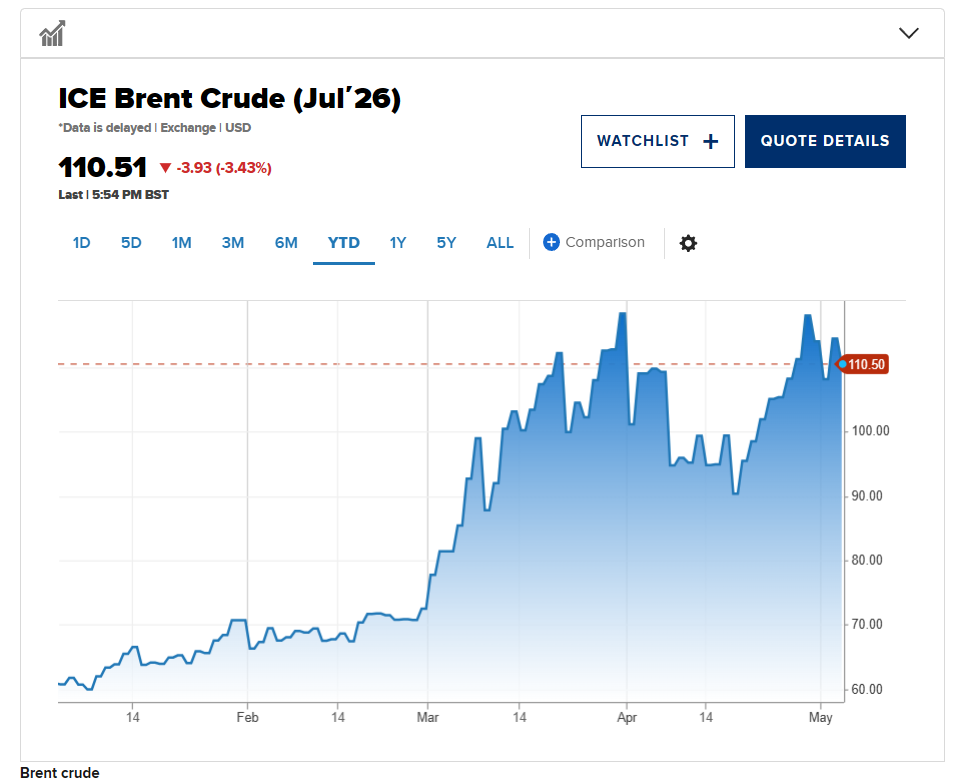
The fragile US-Iran ceasefire that has held since April 8 is now under sustained pressure as both sides traded fire across the Strait of Hormuz this week. President Trump's Project Freedom initiative, which deploys guided-missile destroyers, more than 100 aircraft, and 15,000 service members to escort commercial vessels through the waterway, kicked off Monday. Two US-flagged merchant ships transited the strait under naval protection, including a Maersk vessel that had been stranded in the Gulf for months. Iran responded with cruise missiles, drones, and small boats. CENTCOM Commander Adm. Brad Cooper said US forces destroyed seven Iranian fast boats and intercepted every threat without taking damage. The UAE said its air defenses engaged 15 missiles and four drones on Monday, the first such attack since the ceasefire began. One drone struck the Fujairah Oil Industry Zone, setting off a fire and injuring three Indian nationals. The Fujairah hub matters because the Habshan-Fujairah pipeline routes 50-60% of UAE crude exports around the strait directly to the Gulf of Oman. An ADNOC tanker was also hit by drones, and Oman reported an attack on a residential building housing workers. Iran has not officially claimed responsibility, with state media blaming "US military adventurism." Despite the exchange, US officials are working hard to preserve the ceasefire framework. Defense Secretary Pete Hegseth said Tuesday that "the ceasefire is not over," and Joint Chiefs Chairman Gen. Dan Caine described Iran's attacks as falling below the threshold of restarting major combat. Caine noted Iran had hit US forces more than 10 times since April 8 and that Iran's command structure "remains very fractured." Iranian Foreign Minister Abbas Araghchi countered: "Project Freedom is Project Deadlock," warning the US to be "wary of being dragged back into quagmire." The market read the détente as bullish. Oil prices initially jumped more than 4% Monday on the attack headlines, then reversed sharply after Hegseth's Tuesday briefing. Brent crude fell more than 2% to $111.45, and WTI dropped over 3% to $102.65. S&P Global Energy warned that even after the strait reopens, restoring upstream production will take at least seven months, with the supply crisis potentially extending into 2027. Goldman Sachs flagged that easily accessible buffers of refined products are being depleted rapidly, with naphtha, LPG, and jet fuel under particular strain. Trump told reporters on Tuesday that oil at $102 was "a small price to pay" for stopping Iran's nuclear program. The average gallon of US gas sits at $4.48, up roughly 50% since the war began. The ceasefire is technically intact, but the cost is mounting by the day. |
The Death of Washington's Hands-off AI Era
The Trump administration's deregulatory posture on AI is reversing in real time. Microsoft, Google, and xAI agreed Tuesday to give the Commerce Department's Center for AI Standards and Innovation early access to their frontier models for national security testing, joining existing partnerships with OpenAI and Anthropic. The agreements call for developers to share models with reduced or removed safeguards so CAISI can probe for cyber and military risks before public deployment. The center has already completed more than 40 evaluations, including on models that remain unreleased. The catalyst was Anthropic's Mythos model, which the company itself flagged as so adept at finding software vulnerabilities it could trigger a cybersecurity "reckoning." According to the New York Times, the White House is now considering an executive order to create an AI working group of tech executives and officials, with a formal government review process for new models on the table. The model under discussion resembles Britain's framework, which assigns government bodies to verify safety standards. White House Chief of Staff Susie Wiles and Treasury Secretary Scott Bessent have stepped into the AI policy lead after AI czar David Sacks departed in March. The sudden move is jarring against VP JD Vance's February 2025 Paris speech, warning that "excessive regulation of the AI sector could kill a transformative industry." A Pew Research poll found 50% of Republicans and 51% of Democrats are more concerned than excited about increased AI use in daily life. The Mythos episode crystallized a specific fear. The NSA has reportedly been using Mythos itself to assess vulnerabilities in US government software, while the White House has opposed Anthropic's plan to expand public access. The administration also wants to evaluate whether new models could yield cyber capabilities useful to the Pentagon and intelligence agencies. The Anthropic dispute hangs over everything. Defense Secretary Pete Hegseth labeled Anthropic a "supply chain risk" in March after CEO Dario Amodei publicly raised concerns about military AI use. The Pentagon then signed agreements last week with Google, OpenAI, Amazon, Microsoft, SpaceX, Oracle, Nvidia, and Reflection to deploy AI across classified networks. Anthropic was conspicuously absent and is suing over the supply-chain designation, with the case set for September. Anthropic tools, including a version of Claude, are still being used in the military's Maven targeting system in the Iran war. Bloomberg reported that any future Anthropic deal with CAISI may be complicated by the ongoing legal fight. Microsoft was down 0.6% on Tuesday on the announcement, while Alphabet rose 1.3%. The signal to investors is clear: the era of AI as a policy-free zone is closing. The era of negotiated access has begun, and which firms get to negotiate from a position of strength is now being decided in real time. |

Trade Gap Widens as AI Capex Pulls in Imports
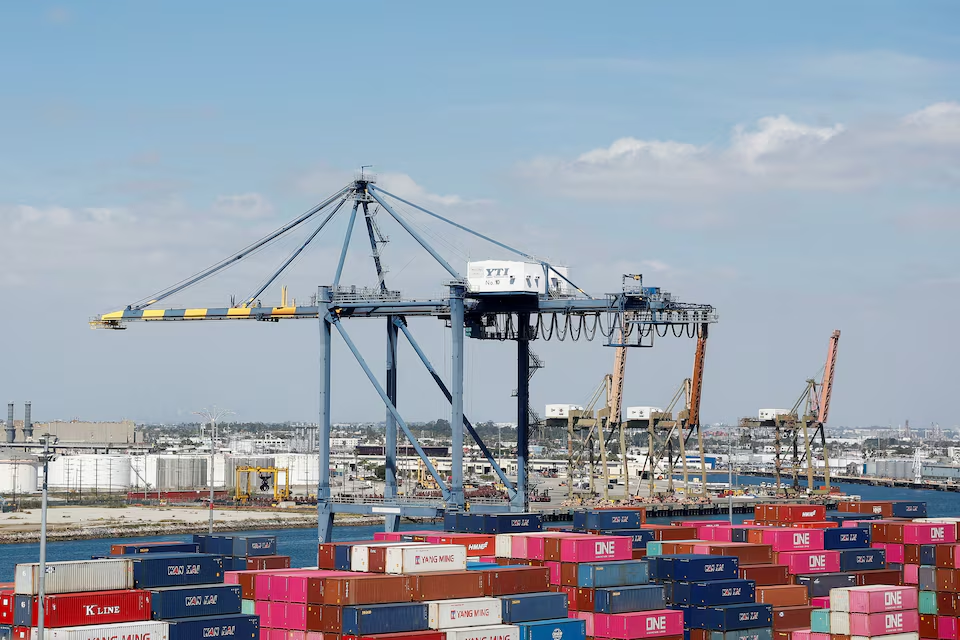
The US trade deficit widened 4.4% in March to $60.3 billion, with the Commerce Department data showing imports outpacing exports as the AI buildout pulled in capital goods. The figure came in slightly below the $60.9 billion economist consensus. Imports rose 2.3% to $381.2 billion, while exports climbed 2% to a record $320.9 billion, according to Bloomberg. Trade subtracted 1.30 percentage points from Q1 GDP growth, which came in at a 2.0% annualized rate. The composition tells the structural story. Capital goods imports hit a record $120.7 billion, with computer accessories up $2 billion as US firms continue absorbing foreign-made AI hardware. ING economist James Knightley told Barron's the data confirms that "imports tied to the tech AI roll out point to sustained investment through 2026." The household side held up too, with consumer goods imports up $2.4 billion and motor vehicles and parts climbing $3.6 billion. The export side reflected the war. Crude oil exports jumped $2.8 billion, other petroleum products rose $1.7 billion, and fuel oil shipments climbed $1.6 billion as the Strait of Hormuz disruption redirected global energy flows. The US petroleum trade surplus hit a record in March, and soybeans pushed food and beverage exports to their highest level since August 2022. The data is the first clear snapshot of trade since the Supreme Court's February 20 ruling struck down the bulk of Trump's global tariffs. The administration replaced them with a flat 10% duty under Section 122, which expires in July unless Congress reauthorizes. Two new Section 301 trade investigations are now underway — one targeting countries without forced-labor import laws, the other focused on what the administration calls "excess capacity" among 16 large trading partners. Industry testimony begins this week. Trump is scheduled to visit Beijing next week for a meeting with Xi partly focused on trade. The bilateral picture remains lopsided. Reuters reported that goods deficits persist with China, Taiwan, Vietnam, Mexico, Canada, India, South Korea, Saudi Arabia, and Israel, while the shortfall with the EU widened by $4.1 billion to $9.2 billion. Oxford Economics' Grace Zwemmer expects the deficit to narrow in April as oil and petroleum exports surge further. The trade balance is now a moving target shaped by AI capex on the import side and a war premium on the export side. |
That’s all for today!/
