Welcome to a weekend with FinSoar! Today I’m looking at Trump’s forced labor tariffs — same old, same old — and the week ahead for the Fed, as well as a Google/Verizon partnership:
The Fed Meets Wednesday and Nobody Knows What Warsh Will Do
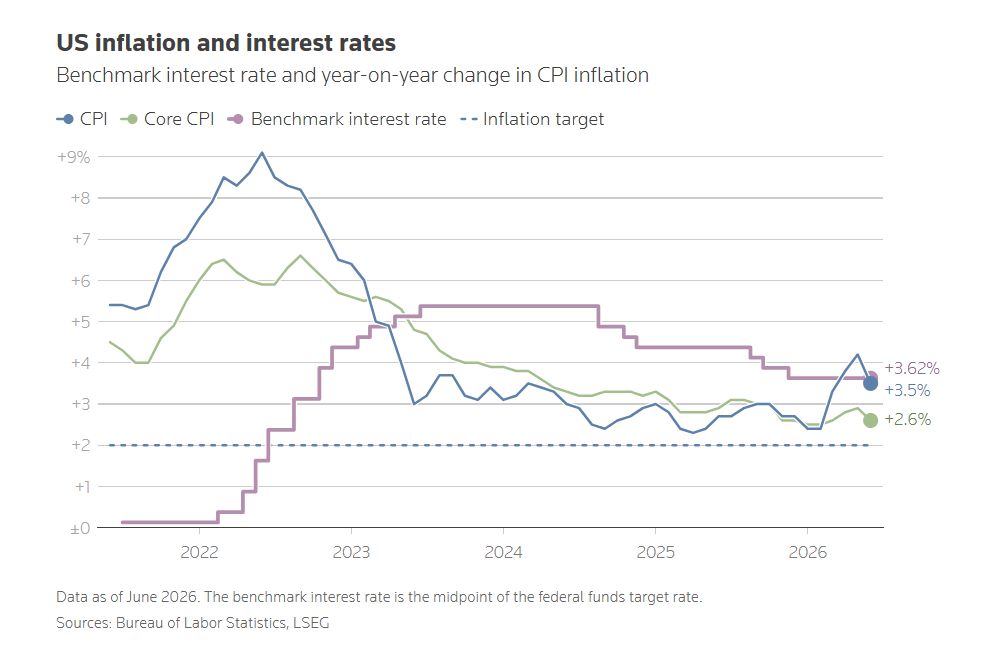
Rates are almost certainly on hold at 3.5% to 3.75%. Almost. Futures markets put the odds of a hike next week at 38%, up from 12% a week ago. That jump has one cause. Brent crude hit $100 a barrel on Thursday as fighting between the US and Iran escalated, the first time since late May. US petrol averaged $4 a gallon. Energy is doing to the inflation outlook what tariffs did last year, and the Fed has already looked through one Iran-driven price surge this spring. A second is harder to dismiss. At June's meeting, half of Warsh's 18 colleagues expected to raise rates this year, and half did not. Hawks argue underlying inflation has been stuck near 2.5% for about a year, and that lofty equity markets suggest the economy could take a hike. Dallas Fed's Lorie Logan put it as modest restriction now over severe restriction later. The other camp points to June data: energy prices fell, core CPI was flat, and the jobs report showed no wage pressure. Then Thursday's labour data complicated things again. Initial jobless claims fell to 187,000, the fewest since 1969, when the US population was 60% of its current size. That gives the Fed room to worry about prices rather than jobs. Warsh is a wildcard. He has vowed to restore price stability, declined to submit individual projections in June, and says he wants messier meetings that are not settled in advance. One UBS economist said Warsh could tip the balance either way. BNP Paribas will not rule out a shock hike. Markets are already pricing the sequel. Futures see roughly 82% odds of a September hike and two quarter-point increases by January 2027. The 10-year Treasury yield topped 4.7% on Thursday, its highest since early 2025, which is competition equities do not need in the busiest week of earnings season. One former Fed economist summed up the position neatly. The deciding variable is Iran, which the Fed does not control. They are stuck. |
Verizon Rents Google Its Fibre, and the Market Likes It
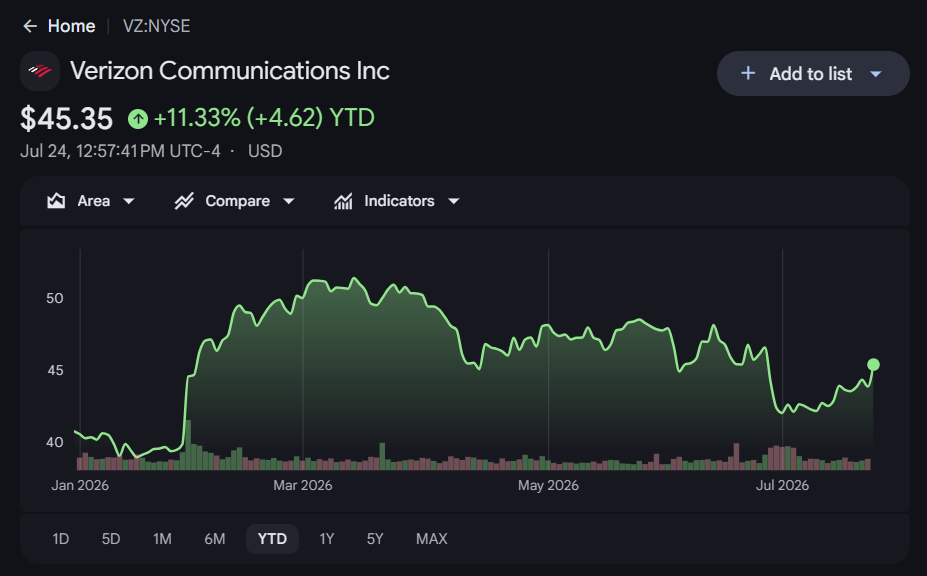
Verizon told investors on Friday it signed a deal with Google worth more than $1 billion. The product is dark fibre, connecting Google's data centres to each other. The stock rose 3%. Dark fibre is cable already in the ground that nobody is lighting up. Verizon owns a great deal of it. Google needs enormous capacity between data centres and would rather lease than dig. CEO Dan Schulman said more deals are coming, and that together they should be worth multiple billions in revenue over the next several years. Verizon frames this as building a standalone connectivity business aimed at multinationals. The AI buildout has handed telecom operators a way to monetise networks they already paid for, as hyperscalers hunt for high-capacity links between sites. Fibre that sat idle for years now has a bidder with a budget. The rest of the quarter was mixed. Revenue of $34.3 billion came in well under the $35.16 billion analysts expected, hurt by falling equipment sales as customers hang onto phones longer. Adjusted profit of $1.30 beat the $1.27 estimate. Verizon raised full-year guidance to $4.99 to $5.04 a share and lifted its free cash flow growth forecast to 9% to 10%, up from about 7%. Subscribers were the other bright spot. Verizon added 184,000 monthly-bill paying wireless customers against expectations of 103,900. The cost programme continues. Verizon says it remains on track for at least $9 billion in opex and capex savings. The shape of the quarter is a telco selling fewer handsets, keeping more customers, spending less, and finding a new buyer for infrastructure it already owns. Growth from AI does not have to mean building AI. Sometimes it means owning the road the traffic runs on. |
Trump Rebuilds the Tariff Wall, This Time With Forced Labour
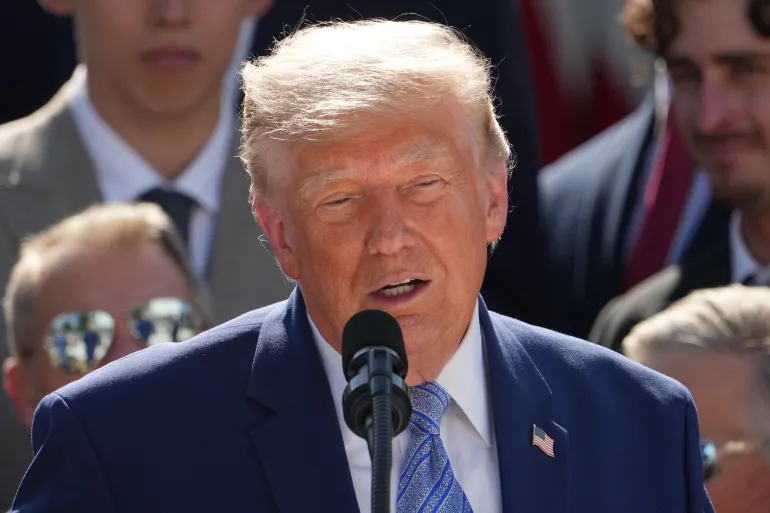
The old tariff expired at 12:01am Friday. The new one took effect at 12:01am Friday. Same floor, different statute, and a justification almost nobody outside Washington accepts. Sixty economies now face duties of 10% or 12.5%, covering 99.4% of US imports. Countries with forced-labour import bans on the books, including Canada, Mexico, India, and the UK, got 10%. Those without, China among them, got 12.5%. The legal basis is Section 301 of the 1974 Trade Act, which replaces the Section 122 stopgap that ran out after its 150-day limit. That sequence is the whole story. The Supreme Court struck down Trump's emergency-powers tariffs in February and ordered roughly $160 billion refunded. Section 301 is sturdier — Trump used it on China in his first term and it survived the courts. It has never been used across dozens of countries at once. Markets took it badly in Asia and shrugged in Europe. The Hang Seng fell 11.4%, the Kospi 6.2%, the Nikkei 3.1%. European indices wobbled and mostly recovered. Bond yields edged up on inflation risk. Australia's trade minister called the tariffs unjustified. The EU's Kaja Kallas pointed to paid vacations and European labour conditions and said the claim was not really grounded. No major partner announced countermeasures. The exemptions soften the blow considerably. Oil and gas, fertiliser, some foods, autos, metals, pharmaceuticals, aircraft, and critical minerals are out, along with 471 products added to the exclusion list. One former trade official called the economic impact more status quo than anything. A second Section 301 probe is running, targeting 16 economies over excess industrial capacity. That one covers 70% of US imports. |
That’s all for today!/
