Welcome to another week of FinSoar! Today, we have a lawsuit racking up fees every 90 days, a moratorium on data center construction, and IBM’s warnings to the market:
New York Becomes the First State to Freeze Data Center Construction
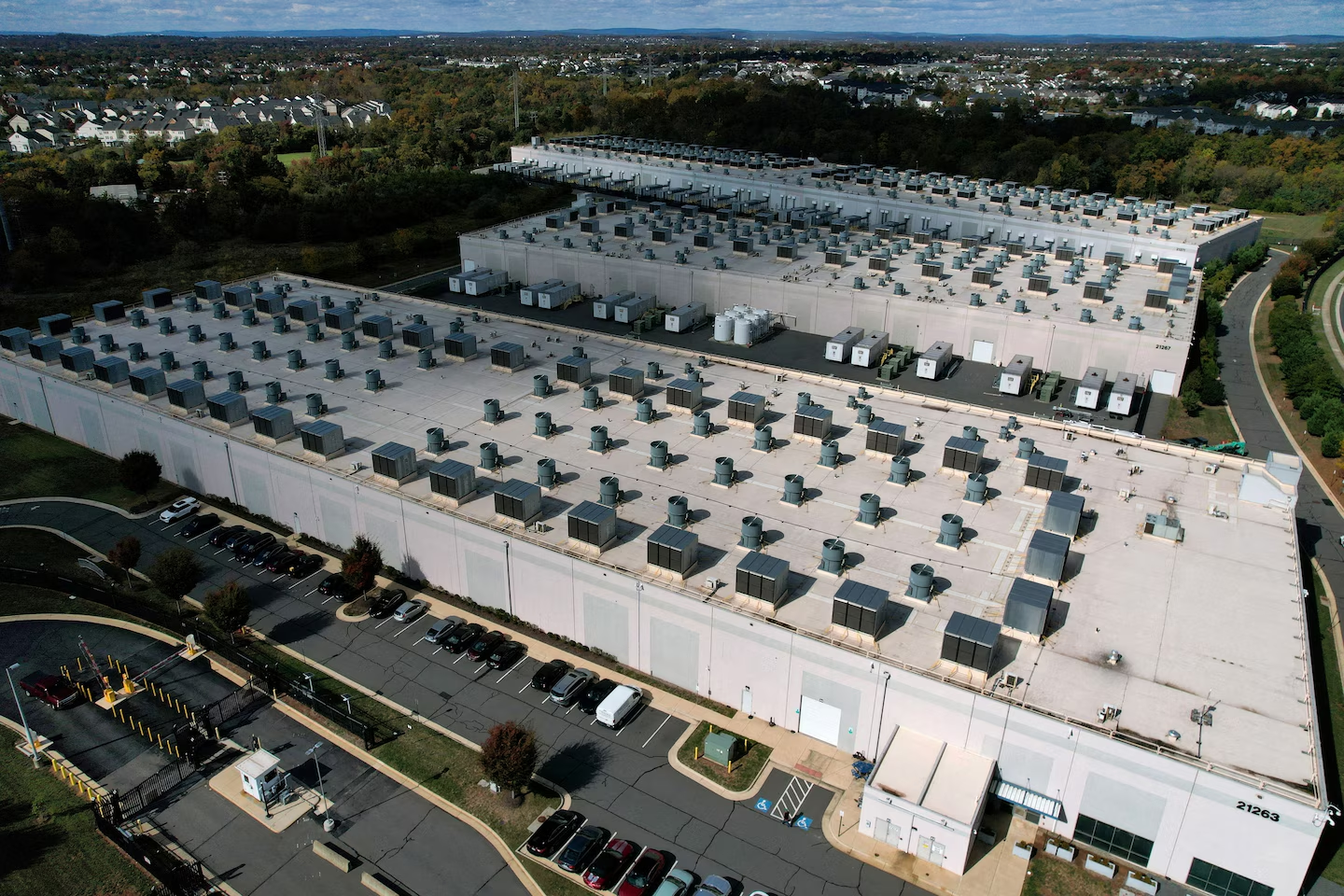
New York halted construction of large new data centers on Tuesday, becoming the first US state to impose a moratorium as backlash grows over the AI boom's strain on power grids, water supplies, and utility bills. Governor Kathy Hochul signed an executive order pausing new builds for up to a year. The state will lift the freeze once it finalizes new environmental standards. The ban applies to data centers drawing 50 megawatts or more, exempting hospitals, universities, and smaller institutional facilities. The rationale is cost and resources. Hochul said data center development threatens to hike utility bills and deplete natural resources, creating uncertainty for residents. During the freeze, officials will draft a Generic Environmental Impact Statement to hold new facilities to consistent standards on water use and air quality. The politics are unmistakable. Hochul is running for reelection in November and has recently signed an AI safety bill and taxed luxury second homes, moves aimed at her base. The executive order also front-runs the legislature. Lawmakers passed their own moratorium bill last month with a lower 20-megawatt threshold, which could restrict more projects. Hochul has not said whether she will sign it, using the executive action to enact a pause while she reviews the tougher version. The backlash is national and bipartisan. A May Gallup survey found 71% of Americans oppose data centers in their communities, a higher share than the 53% who oppose nuclear plants. Opposition runs across party lines, at 75% of Democrats, 63% of Republicans, and 74% of independents. New York is not an obvious flashpoint. Its expensive land, high electricity prices, and tight power supply have limited data center interest compared with Texas and Ohio. Still, more than 12 gigawatts of very large energy loads are queued to connect to the state grid. Maine's governor vetoed a similar freeze in April, and Democratic governors in California, Michigan, and Pennsylvania have backed data center growth. New York's break shows a widening split among Democrats over whether the AI infrastructure race is worth the local cost. |
IBM Plunges 22% as the AI Boom Eats Software Budgets
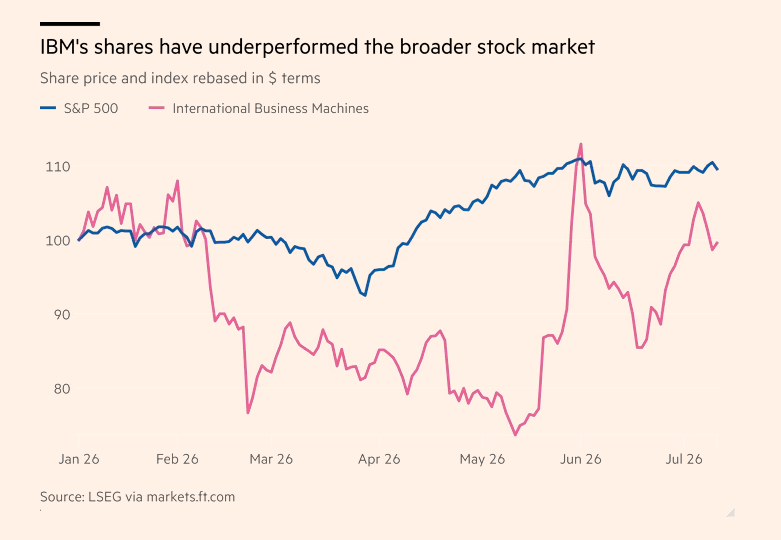
IBM shares cratered more than 20% on Tuesday after the company warned that quarterly results would miss badly, blaming a sudden shift in corporate spending away from software and toward AI infrastructure. The stock's 22% drop put it on track for its biggest daily decline since 1987. The preliminary numbers fell short across the board. IBM reported adjusted earnings of $2.93 a share on $17.2 billion in revenue, below the $3.01 and $17.86 billion analysts expected. CEO Arvind Krishna said that in the final weeks of June, clients shifted capex toward servers, storage, and memory to lock in supply-constrained infrastructure before expected price increases. He admitted the company had anticipated some impact but not the magnitude of the shift. Krishna did not dodge the blame. "This quarter we faltered," he wrote, saying IBM did not adapt quickly enough and that numerous large deals failed to close on schedule, driving most of the miss. Infrastructure revenue fell 7% in the quarter against an expected low-single-digit decline, while software revenue rose 5%. IBM had expected strong mainframe and related software sales, but clients redirected budgets to computing hardware bought elsewhere. The warning hit the whole sector. The iShares Expanded Tech-Software ETF fell more than 4%, with Microsoft, ServiceNow, Salesforce, and Intuit down 3% to 5%. Software investors have long feared AI could automate routine work and threaten the industry, and this showed even the hardware boom is now eating software budgets. IBM has spent tens of billions on acquisitions like Red Hat, HashiCorp, and Confluent to recast itself as a faster-growing software group. The AI cycle is now funneling budgets toward infrastructure and raising fresh questions about established software businesses. |
Twelve States Sue to Block the $110 Billion Paramount-Warner Deal
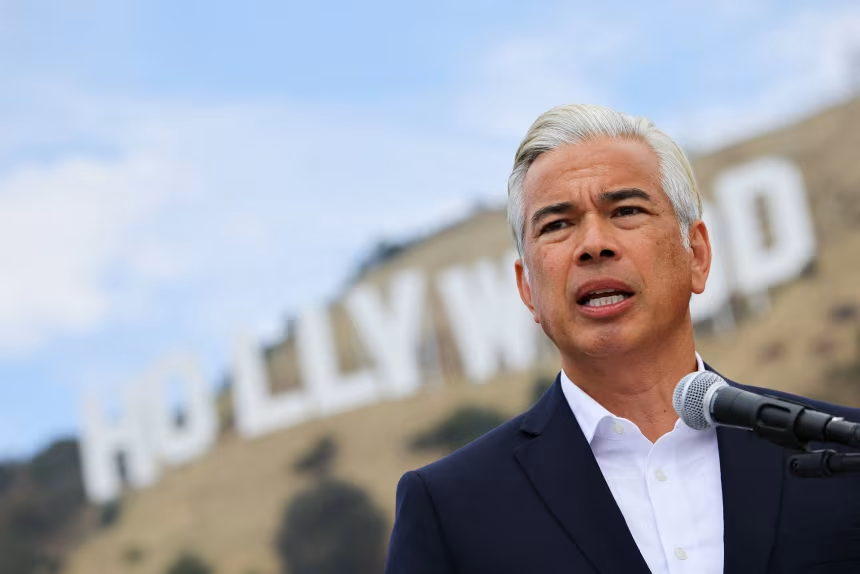
A coalition of 12 states sued to block Paramount's $110 billion acquisition of Warner Bros. Discovery, the sharpest challenge yet to a merger the Justice Department already approved. The suit, led by California Attorney General Rob Bonta, was filed in federal court in California's Northern District. All 12 attorneys general are Democrats. The market concentration is the core claim. The states argue the combined company would control 27% of basic cable licensing and 75% of wide-release film distribution. Bonta said the merger would mean higher prices, lower quality, and less content for audiences "on every sofa and movie theater seat in the U.S." The complaint targets three markets and notes that the five legacy studios already control 86% of theatrical distribution and 90% of blockbuster distribution. The states moved to freeze the deal. They asked the court for a temporary restraining order and a preliminary injunction to halt the merger during litigation. Starting October 1, Paramount owes Warner shareholders a ticking fee of about $650 million every 90 days the deal is set back. If the merger is not consummated by June 4, Paramount must pay Warner $7 billion. The deal hands the Ellison family control of CBS News and CNN, and President Trump has publicly praised Larry and David Ellison while urging CNN's sale. Bonta spoke of "red flags in the air everywhere," and the states believe the administration has abandoned antitrust enforcement. There is precedent for state success — a similar coalition froze Nexstar's takeover of Tegna ahead of a trial set for next year. Paramount called the suit "wrong on both the facts and the law," warned that delay would cost California entertainment jobs, and floated moving its headquarters out of the state. For a deal that sailed through Washington, the hard part may just be starting — with each quarter of litigation now carrying a $650 million meter. |
That’s all for today!/
